Understanding Spine Injury ICD 10 Codes

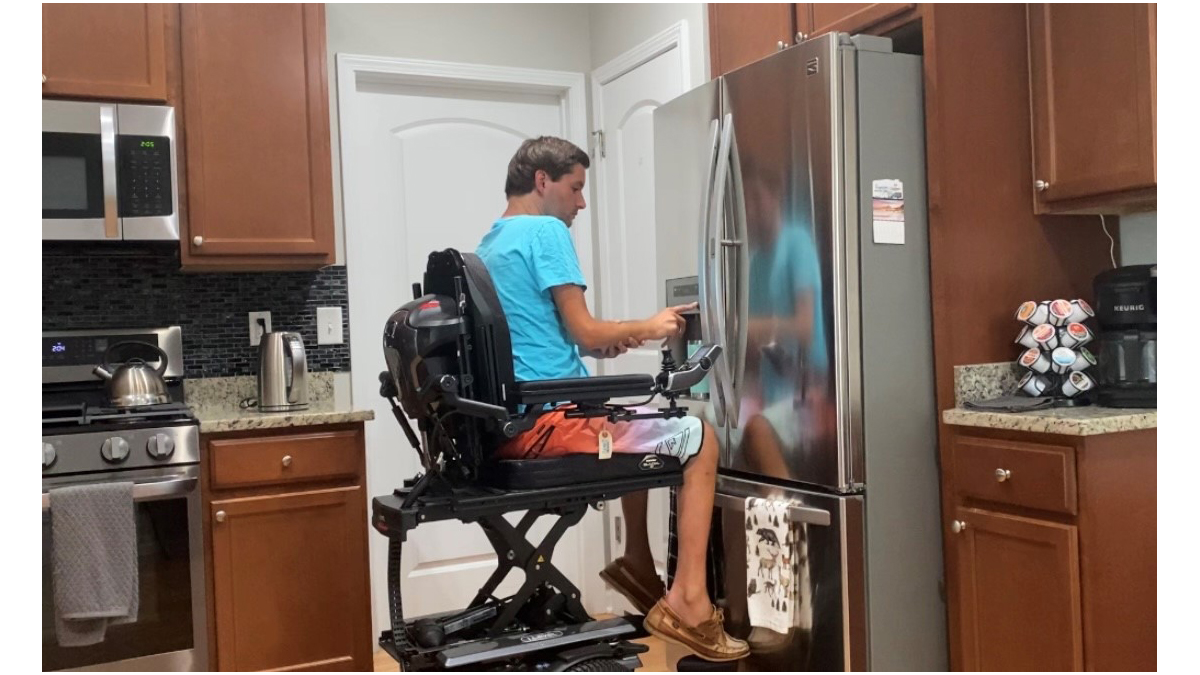
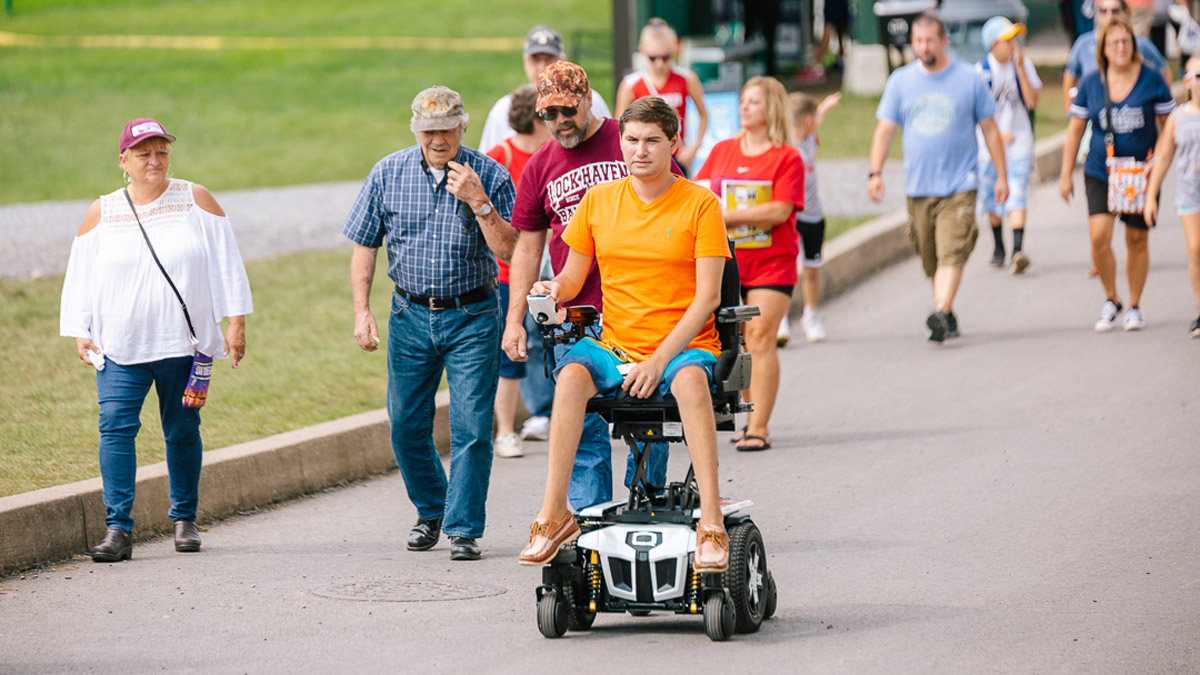
Paul Amadeus Lane uses a Quantum Rehab Wheelchair with iLevel
Paul Amadeus Lane in his Quantum Rehab Wheelchair

According to the United Spinal Association, approximately 17,700 Americans acquire a spinal cord injury every year. Roughly 78 percent of those individuals are men, their average age is 43. Most spinal cord injuries happen due to a vehicle accident, falls, violence and medical/surgery complications. Read on to learn more about SCI, spine injury ICD 10 codes for reimbursement/billing and complex rehab technology that can help SCI patients.

Today, individuals who become paralyzed or sustain a spinal cord injury are fortunate to have access to power wheelchairs and complex rehab technology. A Quantum Rehab wheelchair is customized with different seating, positioning and electronics to meet the needs of individuals living with a spinal cord injury. Once diagnosed, a SCI patient can work with their clinician to obtain the right equipment, including seating and positioning, to support mobility and quality-of-life needs.

Understanding Spine Injury ICD 10 Codes
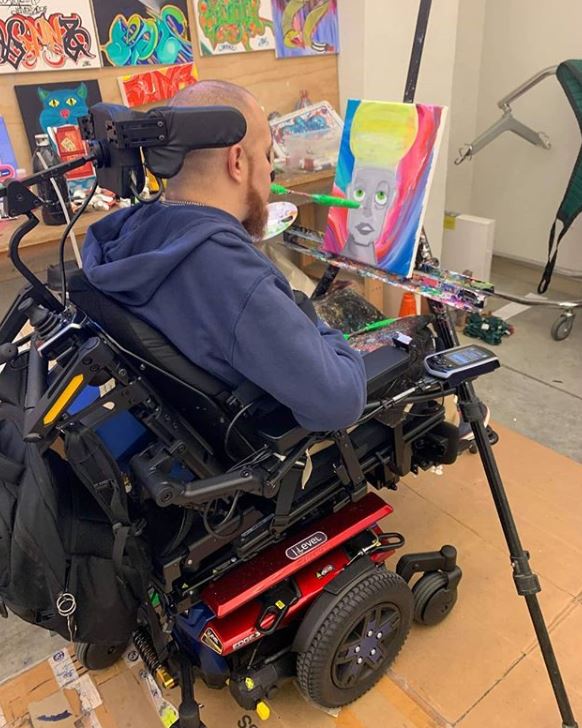
Jesse was diagnosed with a spine injury ICD 10 code and obtained access to CRT equipment
Jesse in his Quantum Rehab Wheelchair

Before equipment can be purchased through insurance, the right diagnosis needs to be made for reimbursement purposes. The ICD 10 code for a spinal cord injury varies, depending on the specific diagnosis. For example, an unspecified injury to the L3 level of lumbar spinal cord has an ICD 10 code of S34.103. This is a billable/specific ICD-10-CM code that can be used to indicate a diagnosis for reimbursement. If the injury is unspecified at an unspecified level of the cervical spinal cord, the spine injury ICD 10 is S14.109A.

Spinal Cord Injuries and Complex Rehab Technology

After a diagnosis, a spinal cord injury patient should work with their clinician on finding mobility equipment that meets their needs. A Quantum Rehab Wheelchair offers the latest advanced technologies to increase the independence of those living with spinal cord injuries. Optional iLevel® power adjustable seat height is compatible with the Stretto Power Chair and allows a user to operate the power chair at seated or standing height. A user can elevate 12 inches while driving at 3.5 mph, helping them complete activities of daily living, such as reaching, grooming, cooking, toileting and transferring.

The 4Front® 2 Power Chair is another option for SCI patients. The 4Front 2 is equipped with Smart Traction Control, which offers increased speeds up to 6.25 mph and upgraded drive performance. Optional power adjustable safe seat elevation raises the power chair seat 10 inches, allowing the user to drive while elevated, up to 3.5 mph, providing greater access and inclusion. 

Return to Funding page

Return to Health and Wellness
Talking to People About My Quantum Rehab Wheelchair

When you have a disability, you become accustomed to a certain way of living. This way of living will seem normal to you. To a non-disabled person, the way you live your life is completely different from how they live their life. When an opportunity presents itself to educate people on life with a disability, I jump at the chance. More often than not, my Quantum Rehab Wheelchair is the very thing that starts the conversation.

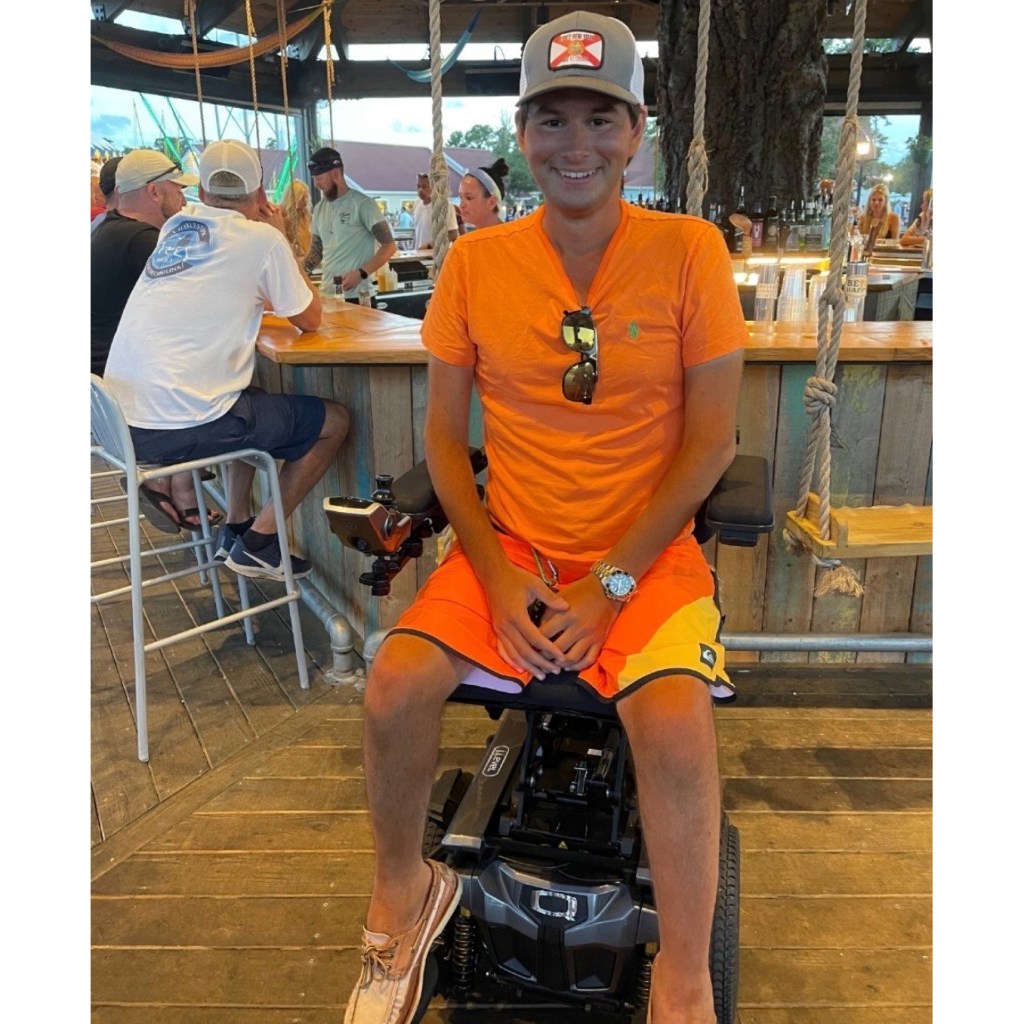
Elevated at iLevel in My Quantum Power Wheelchair

Josh elevated at iLevel in his Quantum Rehab Wheelchair

I often get asked questions about iLevel® technology and my Quantum Power Wheelchair. If I go to any restaurant or bar, 95 percent of the time, somebody will come up to me or the person I am sitting next to will make a comment about my Quantum Rehab Wheelchair. A lot of people have never seen a wheelchair elevate, especially up to a bar or a high-top table. This opportunity to educate is what I love.

Talking About My Quantum Rehab Wheelchair

When people initiate these conversations, I’ll explain to them all the different things I can do thanks to having elevation on my wheelchair, such as being able to look someone in the eye. Plus, iLevel allows me to turn and shake someone’s hand and have an eye-to-eye conversation. Every time I tell them more about what my Quantum Rehab Wheelchair allows me to do, they are blown away. Most people never think about those who use power chairs and how there is a lot in life that is inaccessible to us at lowered seat height.

Being in power chairs is one of those things that you don’t think about until you or someone you love needs to use a power chair. Unless you or someone you love uses a mobility product, you can’t understand how different the world becomes to those of us at lowered seat height.

About Josh McDermott: Josh is a brand ambassador for Quantum Rehab®. He is a public speaker and has served as a goodwill ambassador for the Muscular Dystrophy Association. Josh lives in New York and loves to travel. Click here to learn more about Josh.


For more great blogs from our brand ambassadors and Q Roll Models, visit lifeatilevel.com today!

Return to the Life At iLevel page

Return to Lifestyle

How to Play Wheelchair Rugby

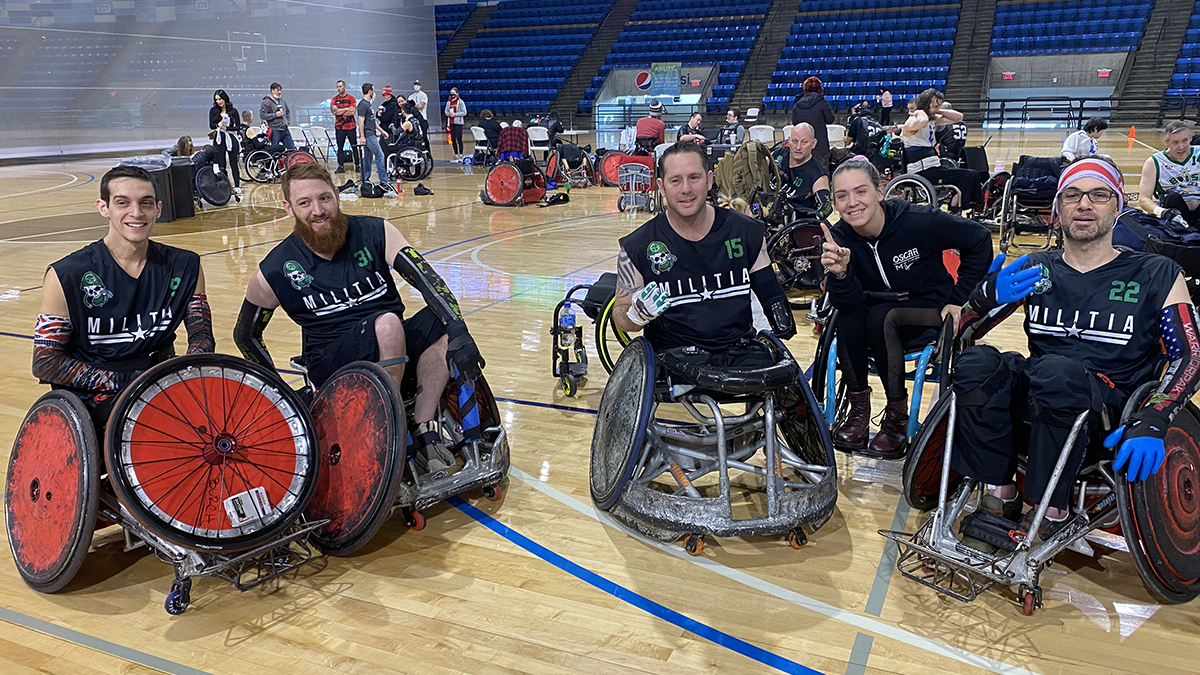
Last year, I started playing wheelchair rugby. I have to say it’s really cool and so much fun. I was a rookie last year, playing in a professional league against guys and girls who have played for years. Although I was wet behind the ears, I felt like I could hold my own, even as a rookie.

How to Play Wheelchair Rugby

Wheelchair rugby combines different elements of rugby, basketball and handball. The game is played with a volleyball on an indoor, basketball-sized court. Each team has an area referred to as the “key,” which is marked with cones and players must defend their goal line against the opposing team.

One game of wheelchair rugby consists of four quarters, eight minutes long each. Points are scored when a player carries the ball over the opposing team’s goal line. For a goal to count, two wheels of the player’s wheelchair must cross the goal line while maintaining firm possession of the ball. Players must dribble or pass the ball every 10 seconds. Otherwise, the opposing team takes possession of the ball.

Player Classifications

Wheelchair rugby is a mixed team sport, both male and female athletes who have some type of disability that causes limited arm and leg function, can participate. Some eligible disabilities include impaired muscles, athetosis, impaired passive range of movement, ataxia, hypertonia or limb deficiency. Classifications categorize players into different sport classes. There are seven sport classes: 0.5, 1.0, 1.5, 2.0, 2.5, 3.0 and 3.5. The 0.5 sport class means that a player has the most significant limitation in activity, while the 3.5 sport class indicates that a player has good arm and hand function, and some trunk function. Each team can have four players on the court at one time, however, their total classification points cannot exceed 8.

Special Wheelchair Rugby Chairs

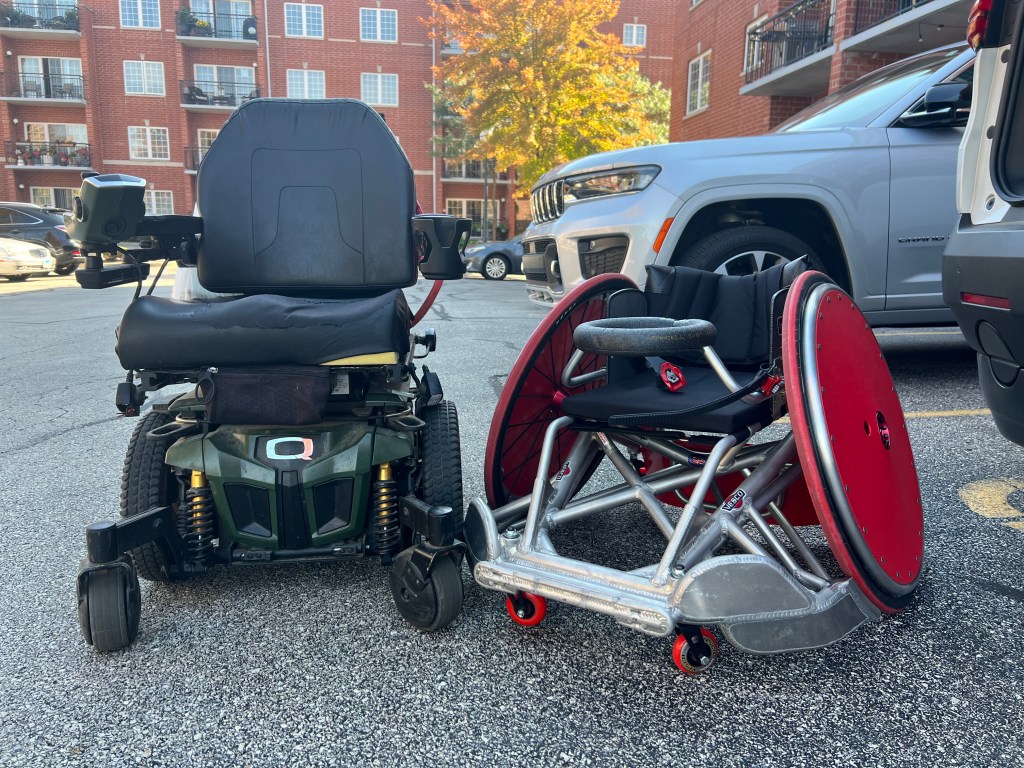
Because wheelchair rugby is a full contact sport, I would never play with my Quantum Rehab Wheelchair. Instead, we compete in manual wheelchairs specifically designed for the game. There are two types of chairs: offensive and defensive. Offensive wheelchair rugby chairs are designed for speed and mobility and are equipped with a front bumper and wings to prevent other wheelchairs from hooking them. I just ordered my very own rugby chair. It was delivered to me yesterday and I’m beyond excited.

Left: Bryan's Quantum Rehab Wheelchair. Right: Bryan's new wheelchair rugby chair.

Getting Ready to Play

This year will be my second year playing and I’m so stoked to get better and better. I have huge potential to be a force in this league. I have every intention of doing just that. Now, I need get in shape, build up my endurance and stamina and put time in the new chair. These guys are going to need to watch out for me. After last year, I’m coming for them. Wish me luck!

About Bryan Anderson: Bryan grew up and resides in Illinois. Injured by an IED in October 2005, Bryan is one of the few triple amputees to survive his injuries in Iraq. He uses a Quantum Rehab Wheelchair for mobility and is an ambassador for the Gary Sinise Foundation and a spokesperson for USA Cares, which is focused on assisting post 9-11 veterans. Click here to learn more about Bryan.

For more great blogs from our brand ambassadors and Q Roll Models, visit lifeatilevel.com today!

Return to the Life At iLevel page

Return to the Sports page

My Quantum Power Wheelchair Allows Me to Enjoy Life

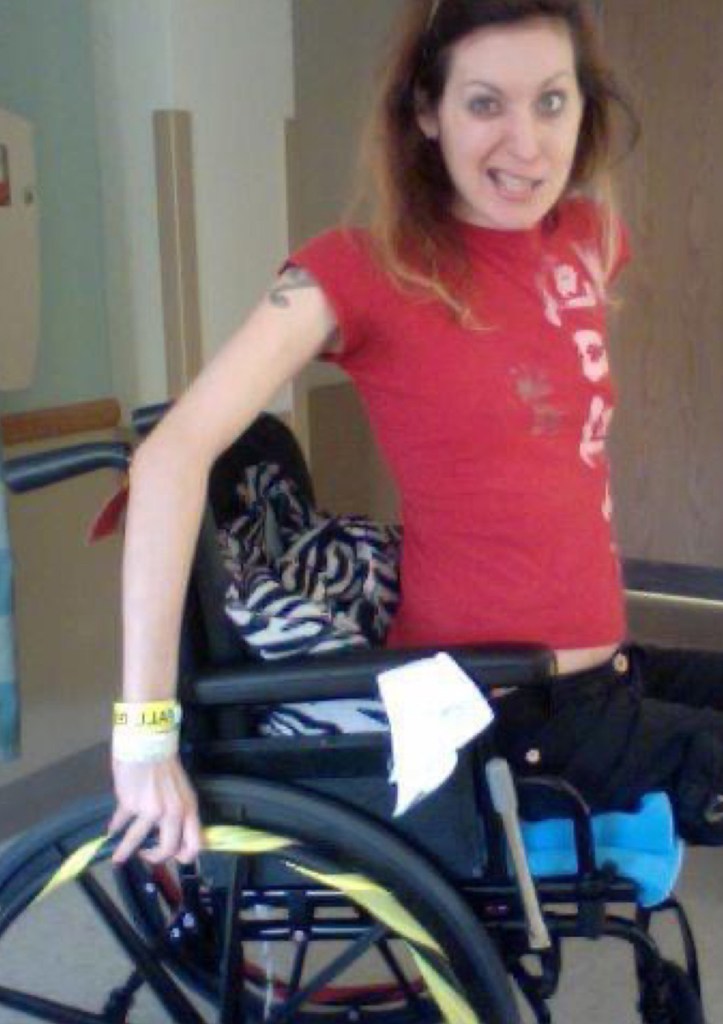
Anomie in her manual wheelchair

I started using a manual wheelchair in 2012, after a fall from spine surgery took away the mobility in my legs. I have a connective tissue disorder that’s caused me to need multiple surgeries on my brain and spine. From previous surgery complications, I already had quadriparesis (weakness of all my limbs.). The rehab center I went to did not take my medical history into account at all and gave me a manual wheelchair to use. I told the doctors in the rehab center that I have weakness in my arms and Ehlers Danlos Syndrome. I remember a doctor telling me: “I’ll admit I know nothing about your syndrome, but I know REHAB!” He told me that using a power chair was “giving up” and that I needed to keep pushing to get stronger. Over time, I would eventually discover (through owning a Quantum power wheelchair) that using a power chair does not mean you are giving up.

Obtaining My First Power Wheelchair

When I got out of the rehab center, I was finally able to see physical therapists that understood my syndrome. It was pretty obvious to them that every time I pushed a manual wheelchair my shoulders were subluxing (partial dislocation). It was causing me extreme amounts of pain. They had no problem writing me a script for a power wheelchair. After getting a power chair, I began to focus on healing and physical therapy for my post-surgery injury.

The Importance of a Custom Fit Power Chair

Anomie in her first power chair

My first power wheelchair was not meant for someone with a spinal cord injury. I was so grateful just to be able to go places without needed someone to push me that I didn’t complain. The seats were hard leather, so it pushed against and aggravated my injury pain. I just told myself that this is how it is to be in a wheelchair. just suck it up.

It wasn’t until I met other wheelchair users that I learned about gel seats and foam for spinal cord injuries. I realized that if I had had the right seat, I wouldn’t have had to put up with pain all those years.

Power Positioning on My Quantum Power Wheelchair

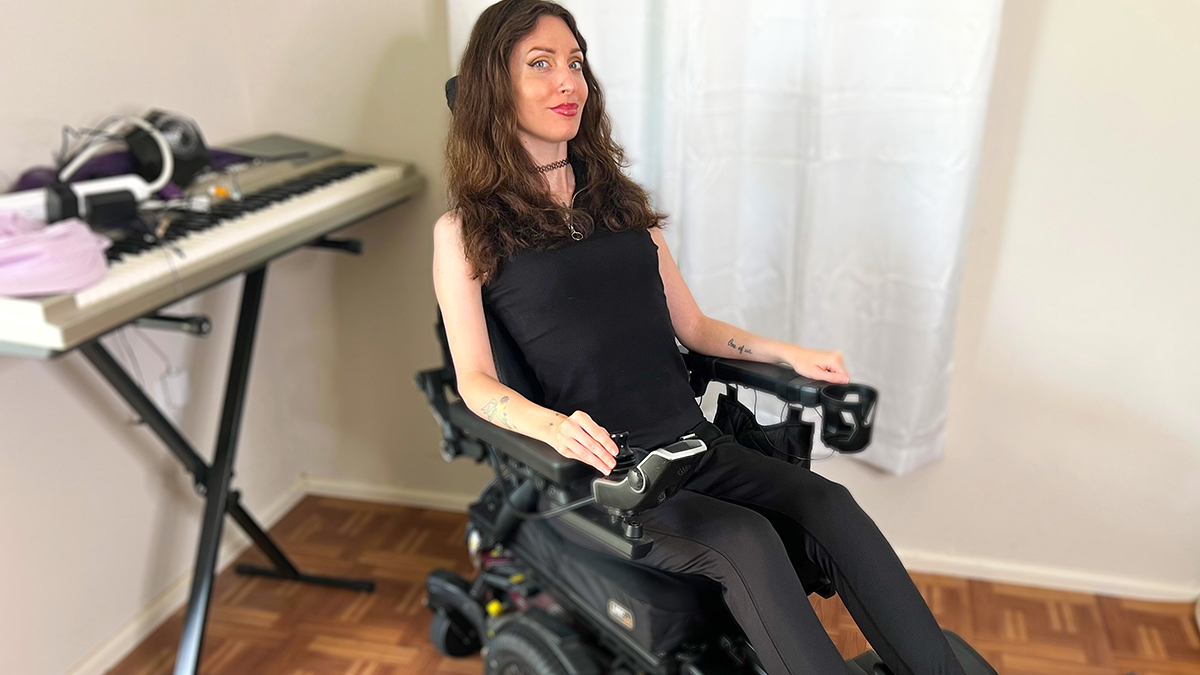
The Quantum power wheelchair I have today can recline. This is very important due to my POTS and vertigo. When I experienced POTS attacks while using my previous power chair, I had to learn how to slide out of it onto the ground to stabilize my blood pressure without injuring myself. It was not safe at all. With my Stretto, I can remain in my chair and recline. I don’t need to risk injuring myself because of my medical needs.

My Quantum Power Wheelchair and iLevel Technology

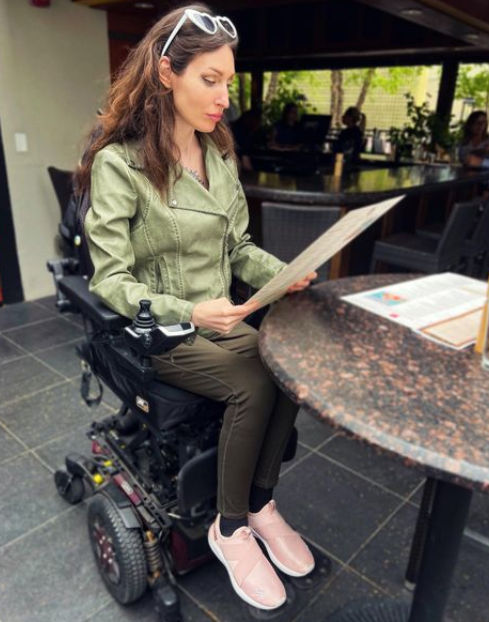
Anomie elevated in her Quantum power wheelchair

The elevation on my Quantum power wheelchair has given me a much better life than my old power chair. I use it for doing things independently and even use it for physical therapy. I can’t do a sit-to-stand by myself. By using seat elevation, I keep those muscles as strong as possible.

I think about that doctor who said that using a power chair was “giving up.” There is no one-size-fits-all for wheelchairs and wheelchair users. Every person deserves the correct assessment for their disability needs. Having greater needs doesn’t make you weak. If I had received a Quantum power wheelchair at the beginning of my injury, it would have saved me so much pain and grief. Having the wrong wheelchair made me more disabled and made me want to give up. Today, with the help of my Stretto, I spend my energy on enjoying life.

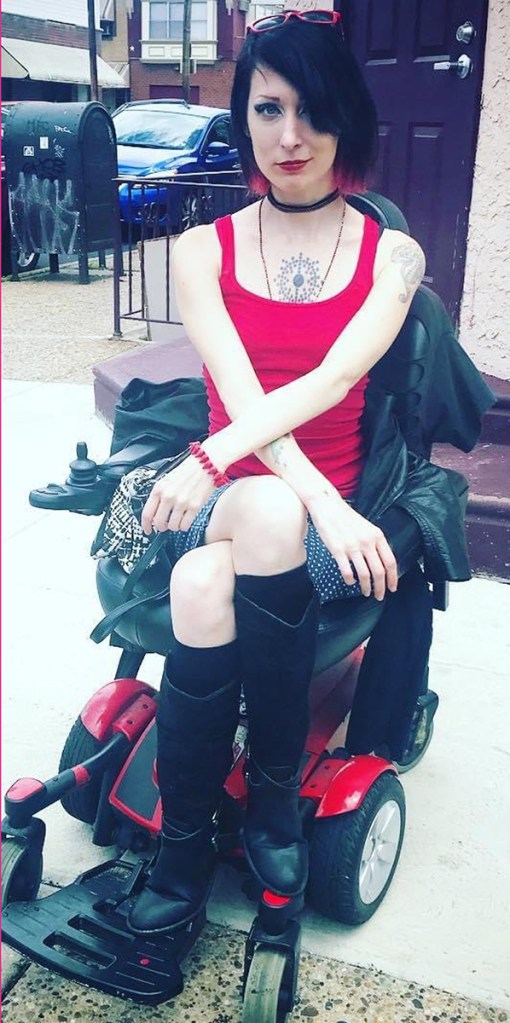
Anomie Fatale: Anomie is a musician who performs at shows and open mic nights in Philadelphia. She is the current titleholder for Ms. Wheelchair Pennsylvania USA 2022 and is passionate about helping others. Click here to learn more about Anomie.


For more great blogs from our brand ambassadors and Q Roll Models, visit lifeatilevel.com today!

Return to the Life At iLevel page

When Your Disability Fights Back

In life, we often face challenges. Challenges for a non-disabled person are completely different for those who have disabilities. If you have a progressive illness like me, challenges can come out of nowhere. It is very rare for me to have a day where my disability gets in my way, or my body just lets my mind know that what I want to do is not going to happen. When my disability fights back, it really bothers me. I always try to tell myself tomorrow is another day and if I can just get through this day, I’ll be all right.

A Normal Day in My Quantum Rehab Wheelchair

Recently, I had a day where my illness was kicking my butt. I woke up, transferred into my Quantum Rehab Wheelchair and went to the kitchen to make a cup of tea. When my tea kettle began to whistle, I went to lift it up and I could barely lift it. So, I repositioned and tried again. I still couldn’t lift it. So, I went to get dressed and it was extremely difficult for me. My body was very stiff and I couldn’t move, and my back was hurting on top of it. So, I drove my Quantum Rehab Wheelchair back out into the kitchen to try and lift the teapot and I still couldn’t lift it.

Listening to What My Body Tells Me

At that point, I myself that I needed to listen to what my body was telling me. When you live alone and your disability fights back, it can really overwhelm you. So, that day ended up being a day of relaxation and rest. I got back into bed and turned on my television. I ordered my breakfast and tea to be delivered and just took it easy for the rest of the day. Even though I was extremely bored watching television and spending time in my bed all day, I knew this was what I needed.

At the end of the day, whether you have A disability or not, we can all relate to challenges and struggles. It’s how you get through those challenges and struggles that defines you as a person.

About Josh McDermott: Josh is a brand ambassador for Quantum Rehab®. He is a public speaker and has served as a goodwill ambassador for the Muscular Dystrophy Association. Josh lives in New York and loves to travel. Click here to learn more about Josh.


For more great blogs from our brand ambassadors and Q Roll Models, visit lifeatilevel.com today!

Return to the Life At iLevel page

Quantum Partners with Team Gleason to Provide Seat Elevation

DURYEA, PA – (Sept. 23, 2022) – Quantum Rehab® has entered into a multiyear sponsorship of Team Gleason Foundation which includes a commitment that no person living with Amyotrophic Lateral Sclerosis (ALS) goes without power seat elevation such as iLevel®.

Power seat elevation systems improve daily functionality and quality of life by allowing operation of the power chair with the seat fully elevated. Quantum Rehab is a premier global innovator of consumer-inspired complex rehab products. Team Gleason provides critical equipment, technology, long-term innovative care services, and life adventures for people living with ALS in all 50 states. 

John Storie, Quantum Rehab (left), and Blair Casey, Team Gleason (right)

Together, both organizations aim to improve access to and development of advanced equipment and technology to serve persons and families living with ALS. This partnership aligns with Team Gleason’s “Boundless” campaign which aims to raise $30 million in critical funds to meet the growing demand for its unique program services, enhance the development of assistive technology innovation, and expand advocacy to push legislation – which has the power to affect every person living with ALS, and their families and caregivers.

“Quantum Rehab’s commitment to the ALS community enhances independence, while providing the highest level of customer service,” said Blair Casey, Executive Director at Team Gleason Foundation. “Through this sponsorship, Quantum and Team Gleason have reached those living with ALS throughout the United States. This furthers Team Gleason’s goal to increase the total number of ALS patients we serve annually, from 2,600 to 8,000 each year, by 2027.”

John Storie, Vice President of the Eastern U.S. Quantum Rehab, says Quantum is excited to continue working with Team Gleason to improve the lives of the ALS community.

“Quantum is pleased to further our support of Team Gleason,” Storie said. “We know our donation of power seat elevators, such as our iLevel® technology, is important because it will help people living with ALS to have increased independence and gain access to areas of their homes they previously could not.”

“I love my new Quantum chair,” says Mary P. of Henderson, Nevada, who lives with ALS. “The addition of the iLevel® seat elevation system has truly made the need for a wheelchair much less difficult to accept. With ALS, I am becoming less and less independent every day. Learning to drive a power wheelchair has been a new adventure and being able to raise myself up has been very empowering. This grant has allowed me to regain a bit of that precious independence and I feel more human again.”

About Team Gleason

The Team Gleason Foundation is a 501c3 non-profit organization founded by former New Orleans Saints player, Steve Gleason, after his diagnosis with Amyotrophic Lateral Sclerosis (ALS) in 2011. Team Gleason aims to help provide individuals with neuromuscular diseases or injuries with leading edge technology, equipment and services, and to create a global conversation about ALS to ultimately find continued solutions and an end to the disease. Visit teamgleason.org.

About Quantum Rehab®    

Quantum Rehab® is a premier global innovator of consumer-inspired complex rehab products, including the Stretto, Edge® 3, 4Front® 2, and Quantum Series of power bases, iLevel® seat elevation technology, TRU-Balance® 3 Power Positioning Systems, Q-Logic 3 Advanced Drive Controls, and Stealth Products® cushions and positioning components. Visit quantumrehab.com.

Embracing a New Season: Accessible Fall in California      

Fall is upon us! Typically, I am not excited about the shift in seasons. In the past, around this time when others are preparing to indulge in all things pumpkin spice and extra layers of clothing, I’m sulking about putting away my summer maxi dresses and hiding my cute pedicure under closed-toe shoes.

This year, however, is a bit different. It’s my first fall season as an Angeleno (aka resident of Los Angeles, CA) and I’m excited about trying out some new activities. Not only is the weather a bit more to my liking, but the idea of trying new things in a place I’ve never lived makes me ready for some accessible adventures. So, here are three activities I’m looking forward to indulging in for fall in Cali.

All Things Apples

red apples on tree
Photo by Tom Swinnen on Pexels.com

From pies to doughnuts, to cider to just the fruit itself, apparently apple picking is a popular activity in southern California throughout the fall. I’m looking forward to checking out one of the U-pick farms in nearby San Bernardino County or even trekking a bit further down to Julian, a town in San Diego County. Apparently, it boasts some of the best pies in SoCal.

S’mores by the Fire

food dawn sunset coffee
Photo by Calvin Hanson on Pexels.com

As a lifelong Girl Scout (I not only participated as a child but worked for a Girl Scout Council for almost a decade), there is one food group that I will never have enough of…S’MORES!

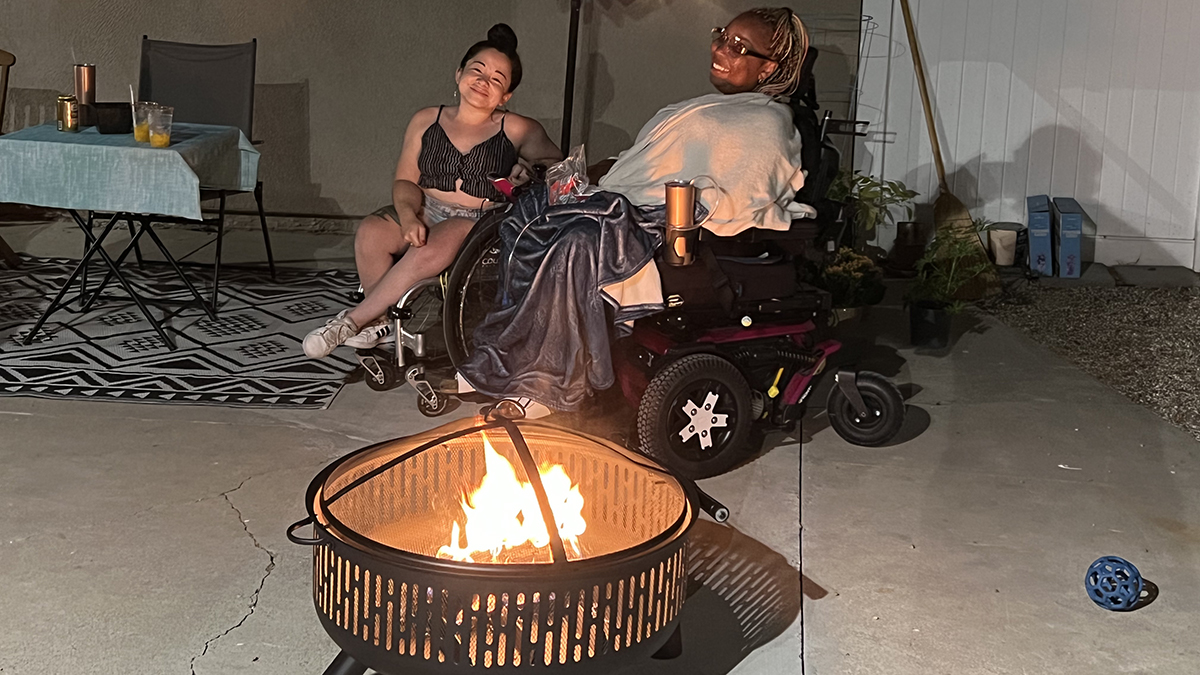
While I’m not a fan of marshmallows on their own, there’s nothing like roasting them over a fire, melting them and sticking them in between a Hershey and some graham crackers. This fall, I can’t wait to sit by the new fire pit in our backyard and enjoy the company, warmth and delicious flavor of this dessert sandwich.

Enjoy an Outdoor Movie

Because the warmer weather does last a bit longer here, the idea of sitting under a big screen in the dark under a cozy blanket sounds pretty appealing. Multiple local pop-up cinemas are continuing their schedules through October. Who knows? I might even cave and watch a horror film for once!

What plans do you have for fall?

About Andraéa LaVant: Andraéa is a disability consultant and worked as an impact producer for Crip Camp, a feature-length documentary on Netflix. Andraéa lives in California and uses a 4Front 2 Power Chair.


For more great blogs from our brand ambassadors and Q Roll Models, visit lifeatilevel.com today!

Return to the Life At iLevel page

Return to Lifestyle page

We Need More Disabled Parking Spaces

Recently, I encountered a challenge in parking my accessible van. I had to circle a parking lot that had a bunch of wheelchair accessible parking spots, but none were available. Are there enough handicap parking spots? Do businesses offer enough disabled parking and wheelchair-accessible spaces? Is it even up to the business or is it up to the town or city for how many spots are placed in a parking lot?

The Lack of Disabled Parking Spaces

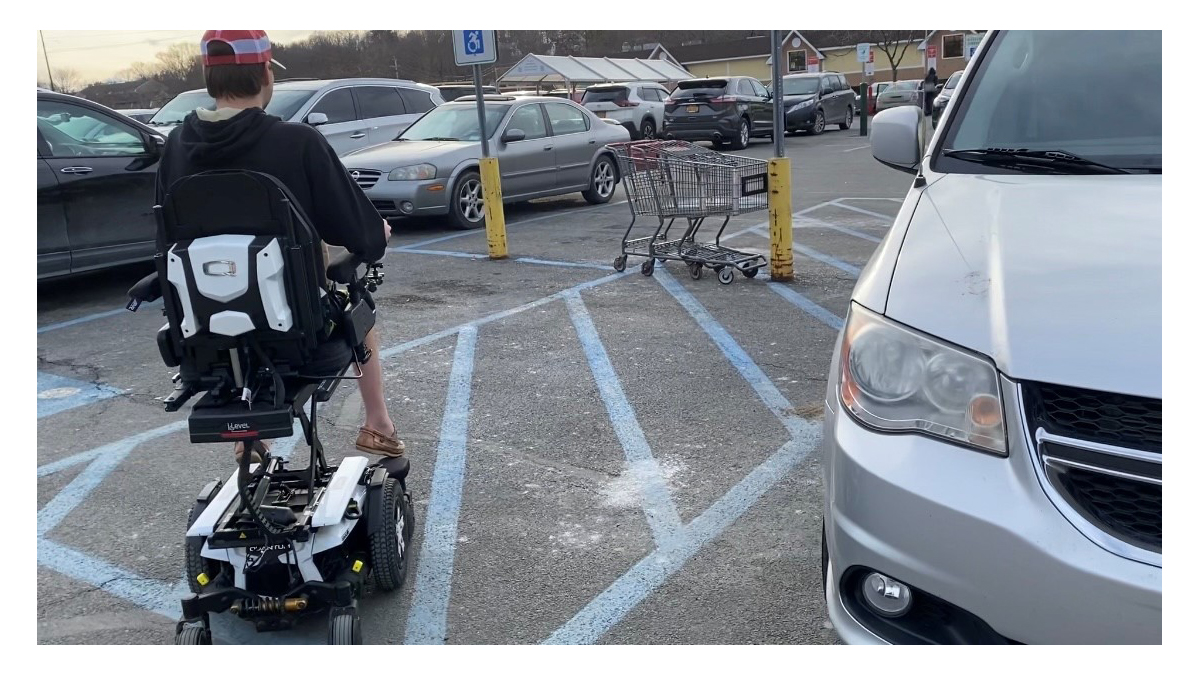
Josh in his Quantum power wheelchair

After going up and down six different rows of parking twice (each of the six rows had handicap spots on each side), I became frustrated. Do I keep driving around this parking lot, waiting for someone to pull out of a wheelchair accessible space? I ended up driving six miles to another store where I did find handicap parking available.

I really struggle with the fact that I could not find parking at this major grocery store. It was not a holiday weekend and there were no events going on that would cause an influx of people to be visiting a grocery store. I’ve encountered parking problems at smaller businesses or stores, specifically in strip malls where there might be only two spots available or a restaurant where there might only be two or three handicap parking spots.

When No Disabled Parking is Available

When I arrive at my destination and there is no accessible parking available, I drive my van to the end of the parking lot where there aren’t any cars. I park sideways across the white lines, so that my ramp sticks out into one of the rows. This prevents someone from parking next to me and blocking access to my ramp. When I return to my vehicle, I can drive up the ramp easily in my Quantum power wheelchair.

Another tactic I’ve used for parking is that I try to take up two regular spaces, by parking my vehicle in the middle of the white line next to where the cart return is. This prevents people from parking next to my ramp and blocking me in. This is a last resort, however, because parking next to the cart return increases the chance that a cart will hit my van.

Handicap License Plates vs. Handicap Parking Permit

disabled parking signs on asphalt pavement
Photo by Jakub Pabis on Pexels.com

I understand that when you are assigned a disabled parking tag it is for a reason. Still, one could argue that an individual who uses a Quantum power wheelchair and drives a van with a side-entry ramp should get priority over someone with a handicap parking permit who is driving a four-door sedan. This person could park their car close to the entrance and get into the store just fine.

I have permanent disabled parking license plates on my vehicle. I do not have a placard or tag that hangs from my rearview mirror. I think that every parking lot should have one space designated for license plate-only disabled parking. This would provide more accessible spots for vans with wheelchair ramps. I understand that may this would not work at a smaller parking lot for a restaurant or a strip mall, however, at a big store like Costco, I think this might be beneficial. My plan is to bring up this issue at the next board meeting for my town and see what they think!

About Josh McDermott: Josh is a brand ambassador for Quantum Rehab®. He is a public speaker and has served as a goodwill ambassador for the Muscular Dystrophy Association. Josh lives in New York and loves to travel. Click hereto learn more about Josh.

For more great blogs from our brand ambassadors and Q Roll Models, visit lifeatilevel.com today!

Return to the Life At iLevel page

Return to Lifestyle

How to Educate Kids About My Quantum Power Wheelchair

A few days ago, my mom and I went back to school shopping. It was a full day of errands that ended with ice cream. Anytime I go out in public, there are always people who stare at me and my Quantum Power Wheelchair. Over 99% of the time, these people are children. While they all stare for different reasons, children either know what a power wheelchair is or don’t, and it shows.

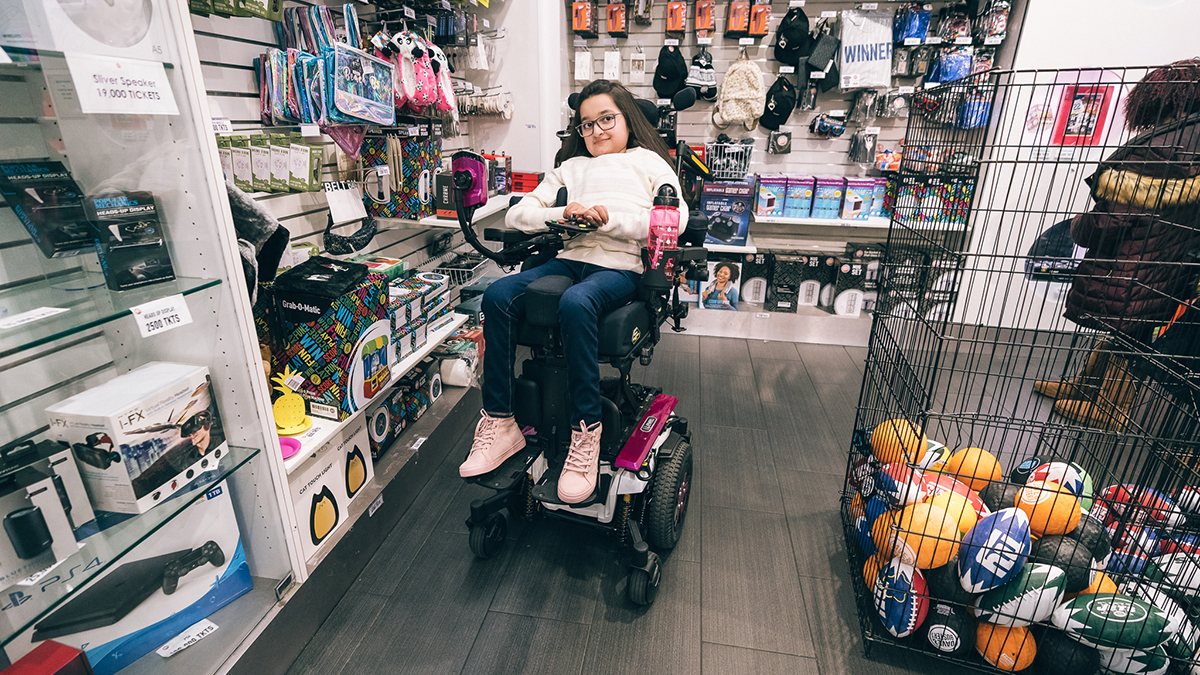
Our first stop was the mall. As we went through the aisles, I noticed several children staring, as per usual. Amongst the many stares, there are always a few kids who say something. They might ask their parents a question about me or say something out loud. Sometimes, they come up to me and ask me what’s wrong. This is my favorite, because it shows that the child is curious and is actually interested in learning about people who are different from them. People who have disabilities or use a Quantum power wheelchair, like me.

How I Answer Questions About My Power Chair

When I was younger, I never knew how to answer their question. My parents explained it to me. While I understood what I had, I never knew how to explain it to someone else. As I’ve gotten older, before I answer their question, I always make it a point to change my question based on the child’s age. If they are younger, I try to make it easy for them to understand and say something along the lines of: “When I was younger, I couldn’t walk like the other babies, so I drive around in my car!” If they are older, I only hope that their parents took the time to explain that some people are different. Most of the time, this is the case. When it isn’t, I take the time to explain that I have a degenerative disease that makes it impossible for me to walk. I try not to make it sound so morbid. So, I usually add that I get to roll around in my sweet ride!

Showing Kids Some Features on My Quantum Power Wheelchair

Sakina in her Quantum Power Wheelchair

I even show them what my Quantum Rehab Wheelchair with iLevel® technology can do! I turn the front and rear fender lights on and off and elevate and lower my power chair seat. Back when we didn’t have to wear masks, I always made it a point to smile at anyone who stared at me. Sometimes they smile back. Sometimes, they run away to their parents. This is when I can tell that they have no idea whatsoever about wheelchairs, like Quantum power wheelchairs. These are the kids whose parents haven’t taught them about people who are different and have disabilities.

Driving My Quantum Power Wheelchair into the Van

And then there are the kids whose parents did! My favorite interaction wasn’t exactly an interaction. I don’t think the child knew that I heard him. I am so glad that I did! After leaving Walmart and going to get ice cream, my brother opened the ramp to our van. As I got in, I could hear a little boy talking to his mom as she was loading the groceries into her car. He said, “Wow Mommy! That’s so cool that her wheelchair can fit into her van! She can just drive straight inside! That’s so cool!” In that moment, I wanted to hug that mother. She had taken the time to teach her son about wheelchairs and the right terminology to say. I can only hope that more people are like her.

Getting Ice Cream While in My Quantum Rehab Wheelchair

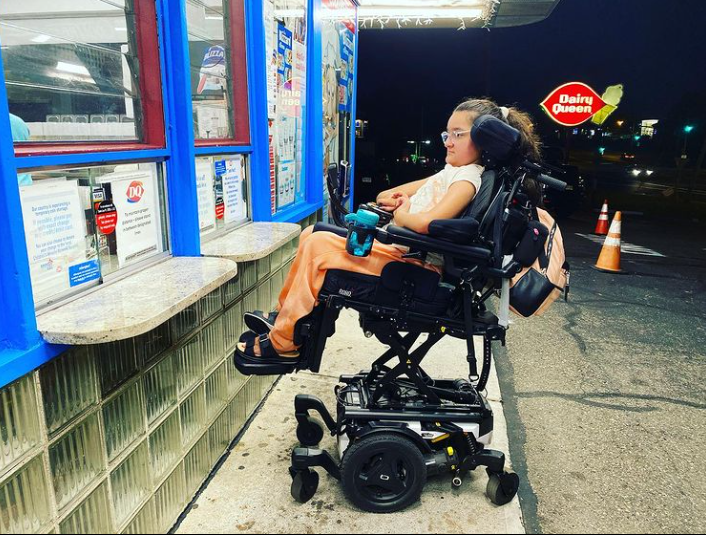
Our final interaction was when we were eating ice cream. Two toddlers were running inside the ice cream shop and they stopped and looked at me with their heads tilted. The little girl tugged on her dad‘s pants and asked, “What’s that?” as she pointed to me. Her dad calmly said: “A wheelchair.” She then came up to me and asked me the same question. I responded with the same answer. She said, “Cool,” and proceeded to get her ice cream. While this interaction was absolutely adorable, I also greatly appreciated how the father said “wheelchair” and the kids already knew and didn’t question what that was.

If you are able-bodied and a parent or guardian, take the time to teach your child and others around you about people who have disabilities. You don’t know how much of a difference it makes in someone else’s life. If you are disabled, you can agree just how much of a difference it makes!

About Sakina Shamsi: Sakina lives in New Jersey with her parents and brother. Although she has spinal muscular atrophy type II, Sakina lives a full and independent lifestyle. She is active in the disability community and enjoys horseback riding, baking and crafting. Click here to learn more about Sakina.


For more great blogs from our brand ambassadors and Q Roll Models, visit lifeatilevel.com today!

Return to the Life At iLevel page

Return to Lifestyle

Top Accessible Features for Power Chair Users in the Home

Izzie and David are Quantum power chair users

To buy or build a house? That is the question my fiancé and I are currently asking ourselves. To better answer that question, we need to decide whether we want to deal with construction now or later. With two power chair users in the home, there is going to be mandatory modifications and accessibility features needed to accommodate us.  

For example, no matter where we live, there needs to be wheelchair ramps, grab bars a roll-in shower, roll-under sinks and enough room for us to both fit in most of the living quarters together. Still, what about those accessibility features that are not required to live but would make life a lot easier if we had them? Below is a list of accessibility features for my dream accessible home.

Raised Power Sockets

Most power sockets/wall-plugs are closer to the ground, forcing a power chair user to bend over to plug something in. If the plugs are higher up the wall, there is less bending. I can reach it better while in my Quantum Rehab Wheelchair.

Pockets Doors for Power Chair Users

Navigating narrow doorways and small rooms can be challenging with wheelchairs, especially when a door is on hinges. Pocket doors that slide into the wall can open up a room and give a Quantum power wheelchair user more room to maneuver.

Roll Under Stove-Top and Built-In Oven

Having a roll under stove top would make it easier for me and my fiancé to use all four burners on a stove, instead of just the front two. Then, having the oven raised and built into the cabinet would give us greater access to pull things out of the oven.

Power Chair Roll-In Pantry

clear glass jar lot
Photo by monicore on Pexels.com

Imagine having one room that you could roll into and all your food and essentials are in one place, instead of having to search cabinet after cabinet. I want everything in one place and on display. Cue Clea and Joanna from The Home Edit on Netflix.

Open-Drawer Appliances

Microwaves and dishwashers are now available to pull out like a drawer. Being able to open a dishwasher like drawer can make it easier for a Quantum power wheelchair user like me to roll up closer and load the dishes.

Built-In Laundry Baskets

For me, the hardest thing about doing the laundry is shuffling the clothes to and from the laundry area. Having laundry baskets built in by the washer and dryer would allow us to grab the clothes from the baskets and put them directly in the washer. This is so much easier, as opposed to moving laundry baskets all over the house.

About Isabella Bullock: Isabella, or Izzie for short, is an employment specialist for the Center of Independent Living. She is an iced coffee enthusiast who enjoys getting lost in a good book. Click here to learn more about Isabella.


For more great blogs from our brand ambassadors and Q Roll Models, visit lifeatilevel.com today!

Return to the Life At iLevel page

Return to Lifestyle