Empowering Accessibility: Making a Difference with Evacuation Chairs

I am so excited to share that a project I have been working on has moved to the next step! After my experience at EmpowHer camp last summer,I decided that my year-long project would be to try to get evacuation chairs in my school – and hopefully other places in the community. The idea behind this project came from an experience during my sixth-grade year, where a power outage caused the elevator to stop working. The school called the fire department and a number of unfamiliar firemen had to carry me down three flights of stairs. This made me nervous and uncomfortable. There had to be a better way!

Realizing the Need:

At EmpowHer camp last summer we discussed emergency plans for disabled people. Throughout those conversations I realized the importance of safe exit plans for people with mobility limitations. I started planning my project with some help from my mentor.

Taking Action:

First, I began by sending emails to the principal and board of education. Before I got a response from the BOE, I sent 3 additional emails to my principal saying how important getting the evacuation chairs is for our school. I knew these chairs could help many people in my school as well as other schools in our district.

A Big Breakthrough:

Something exciting happened a few days ago. I was called into the principal’s office. At first I was nervous because I thought I was in trouble. Just when I expected the worst, the principal said she heard about my project and explained that she ordered the chairs! She asked if I could speak about them at the board of education meeting next month. I’ll be sure to get a video and post an update in the future. I’m also going to make a video to show OTs and PTs how to properly use the chairs.

The Power of a Single Voice:

I couldn’t believe that she had already ordered the chairs, I was so excited when I got the news. I ‘m nervous about speaking at the board meeting, but I know that it’s all for a good cause. One small voice can make a big difference!

Stay tuned for my next update.

What is Ehlers-Danlos Syndrome?

Ehlers-Danlos Syndrome (EDS) is an overarching genetic disorder that refers to 13 heritable connective tissue disorders. Each type of EDS has its own genetic mutation, inheriting pattern and symptoms.

Broadly speaking, these genetic mutations affect connective tissues; specifically, the tissue structure and function of collagen in the skin. This, in turn, impacts the strength and elasticity of various tissues throughout the body [1].

Naturally, the presence of EDS can significantly impact a person’s quality of life. But how much of an impact will depend on the specific type and severity of EDS. 

Types of EDS 

The most common and least severe type of EDS is hypermobile EDS, which impacts fewer than 200,000 people in the US [2]. Even so, this birth defect can cause significant health complications, including joint hypermobility to both large and small joints, skin elasticity and chronic musculoskeletal pain.

Additionally, the 13 subtypes of Ehlers-Danlos Syndrome include [3]:

  1. Classical EDS
  2. Classical-like EDS
  3. Cardiac-valvular EDS
  4. Vascular EDS
  5. Hypermobile EDS
  6. Arthrochalasia EDS
  7. Dermatosparaxis EDS
  8. Kyphoscoliotic EDS
  9. Brittle Cornea Syndrome
  10. Spondylodysplastic EDS
  11. Musculocontractural EDS (mcEDS)
  12. Myopathic EDS
  13. Periodontal EDS

Signs and Symptoms of EDS

Naturally, the exact signs and symptoms will vary depending on the subtype of EDS. Even so, common features across the various subtypes include:

  • Joint hypermobility – Because connective tissue is much looser, patients often experience an increased range of motion in the joints, leading to frequent dislocations or subluxations.
  • Skin abnormalities – Typically, skin is hyperextensible (able to stretch beyond 1.5 cm), prone to scarring and often resistant to stitches [1].
  • Tissue fragility – The tissue of the body’s organs and various other structures is weak, which can lead to easy bruising and poor wound healing, especially when severely damaged.
  • Pain – Patients often suffer from chronic pain in the muscles, joints or bones.
  • Fatigue – Many subtypes are characterized by persistent, excessive tiredness.

Causes of EDS

EDS is a genetic disorder, meaning it’s passed down to the child from one or both of their parents. There are two primary patterns of inheritance [2]:

  • Autosomal dominant pattern (more common) – An affected individual has a 50% chance of passing the condition to their children.
  • Autosomal recessive pattern (less common) – Both parents must carry the gene mutation for the condition to pass on to the child.

Although some symptoms of the disease may appear early in life (even in the womb), symptoms may start appearing at different times depending on the strain of EDS.

Power Chairs for Individuals with EDS

For some EDS patients, the uncomfortable symptoms of their genetic disorder may make it difficult to walk or perform normal daily activities. In such cases, a wheelchair may be necessary to aid mobility and help alleviate the physical symptoms.

At Quantum Rehab, our consumer-inspired rehab mobility power chairs are designed to deliver medical comfort while improving a person’s well-being and independence.

With more than 60,000 lives changed, including countless EDS patients, our mobility technologies can meet both your medical and clinical needs, as well as your quality-of-life needs. 

Contact us today to discover more about our life-changing products.

“Huge win”: CMS announces sweeping Medicare coverage for power seat elevation

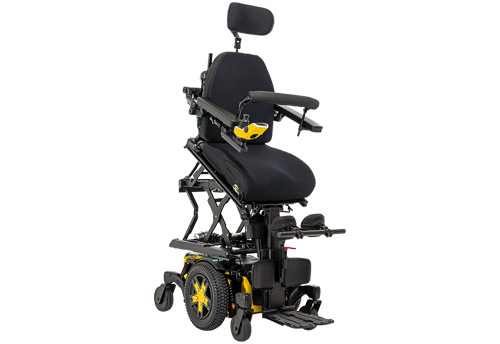
Power wheelchair (PWC) users have scored a major victory, as the Centers for Medicare & Medicaid Services (CMS) announced that power seat elevation equipment on Medicare-covered PWCs falls within the benefit category of durable medical equipment (DME). Essentially, this decision means that more PWC users will now be eligible to receive coverage through Medicare for power elevation systems.

It is a monumental decision destined to positively impact thousands of lives and goes well beyond February’s initial decision from the CMS, in which the agency proposed coverage for seat elevation and deemed it necessary for those individuals who require elevation in Group 3 Complex Rehabilitative Technology (CRT) power wheelchairs to perform weight-bearing transfers.

However, following several months and multiple rounds of public comments and consideration, Tuesday’s announcement of CMS’s National Coverage Decision (NCD) expands well beyond the initial decision, which will cover seat elevation for the purposes of performing all transfers and mobility-related activities of daily living (MRADLs).

The decision summary states, in part, that individuals are eligible for coverage when the following conditions are met:

1. The individual has been evaluated by a medical professional to confirm they can safely use seat elevation; and

2. At least one of the following applies to the individual:

a. The individual performs weight-bearing transfers, with or without assistance;

b. The individual requires non-weight bearing transfers while in the home; or

c. The individual performs mobility-related activities of daily living (MRADLs) such as toileting, feeding, dressing, grooming, and bathing, with or without assistance

Pride Mobility Products® Corporation and Quantum Rehab®, whose revolutionary iLevel technology has transformed tens of thousands of lives, are thrilled to share in the joy of power wheelchair users around the country who helped make Tuesday’s historic decision possible.

“For years, we’ve been advocating for Medicare to cover seat elevation,” said Stephanie Woodward, brand ambassador advisor for Quantum Rehab®.

“Wheelchair users across the country know firsthand how life-changing this technology can be, but for far too long, many people who needed seat elevation could not access it because Medicare wouldn’t cover it. With this new decision, we know that people who need this technology can finally have access to it. This is a huge win for our community!”

Overwhelming support for coverage beyond the preliminary decision was reflected in the two public comment periods. According to the Decision Memo, CMS received 3,523 “in-scope” comments during the initial comment period from August 15, 2022 to September 14, 2022. Of these, more than 98% supported “reasonable and necessary coverage of seat elevation equipment for Group 3 PWCs.” During the second comment period following the preliminary decision, CMS received 2,133 comments.

Hearing directly from wheelchair users, caretakers, friends, families, clinicians, and other medical professionals made a noticeable difference in CMS’s final decision.

“We are very pleased that CMS’s final decision incorporates many of the changes recommended by consumers and other stakeholders to include coverage for reach and all types of transfers into and out of a power wheelchair,” said Seth Johnson, senior vice president of Government Affairs for Pride Mobility. “This has been a seven-plus year effort with CMS, and it is great to see those efforts come to fruition. This is a historic victory for the disability community who led this effort, and one that should be celebrated.”

“I was truly overjoyed to see this announcement come through [Tuesday], said Quantum Rehab® clinical sales manager Alex Chesney, OTR, ATP/SMS. “It shows that our voices can be heard and especially those are utilizing and prescribing these features. Going from mainly only considering if seat elevation would help someone independently transfer on their own to considering it for a multitude of transfer styles, with or without a caregiver assisting, depending lift transfers, and function reach is a huge clinical win. This sets the stage that advocacy can work and is a step forward in promoting a life of quality and independence, not telling people that it’s a luxury if they utilize a power wheelchair.”

CMS also announced it expanded the scope of the initial benefit category decision “to include power seat elevation as DME on all Medicare-covered power

wheelchairs”, which include Group 2 with power options and Group 5 (pediatric) in addition to Group 3.

The full Decision Memo can be viewed here.
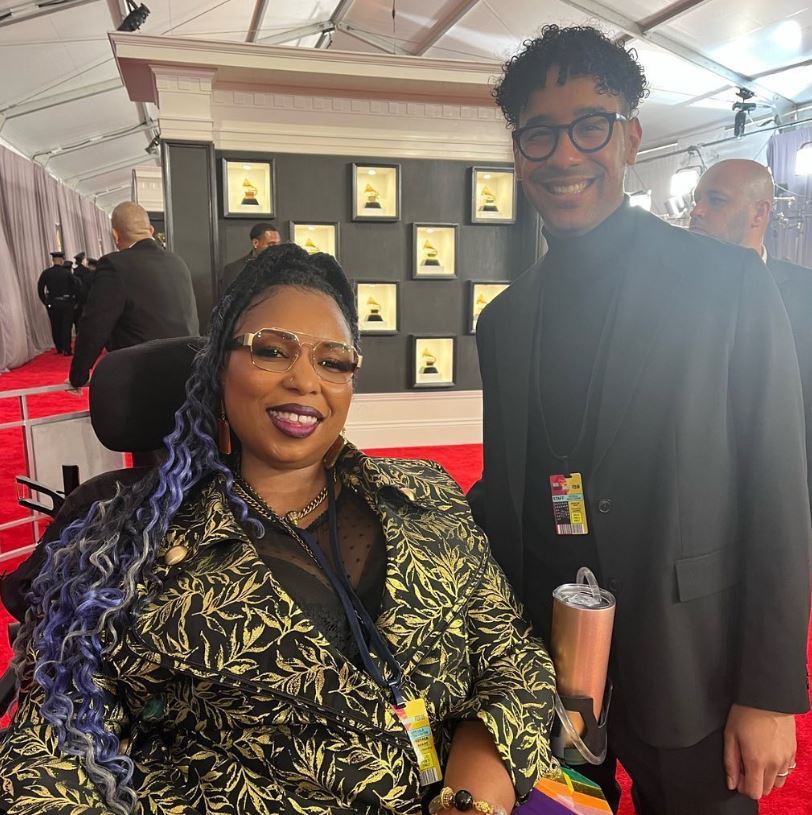
How my #4front2 saved my Grammys experience

My work as a disability accessibility and inclusion consultant takes me to some exciting places. From partnering with tech companies like Google to participating in events with leading entertainment and streaming works like Netflix, I’m grateful to daily get to witness how various industries are making strides toward being more inclusive of disabled people in their company cultures, marketing, external events and so much more. Recently, my firm had the opportunity to help bring greater accessibility to the most prestigious music industry celebration in the nation (and arguably the world), the Grammy Awards. This included supporting delivery of American Sign Language (ASL) services on the red carpet and the press room, providing guidance on language/communication to the disability community, and advising on physical accessibility of various spaces, including ramps on the red carpet.

This year the Grammys were hosted in Los Angeles, CA at the Crypto.com arena. As a wheelchair user, large venues like these can be a huge challenge to navigate, especially when the crowds are massive. Traditionally in crowds, I have a hard time maneuvering because I’m so low in my chair that people don’t see me and, thus, aren’t considerate of my needs to get through. I also don’t often have view of directional signage or other signals to help me find my way. Finally, in the past, I’ve been unable to clearly communicate with people because I’m so low that I can’t hear them and they can’t hear me amidst the noise.

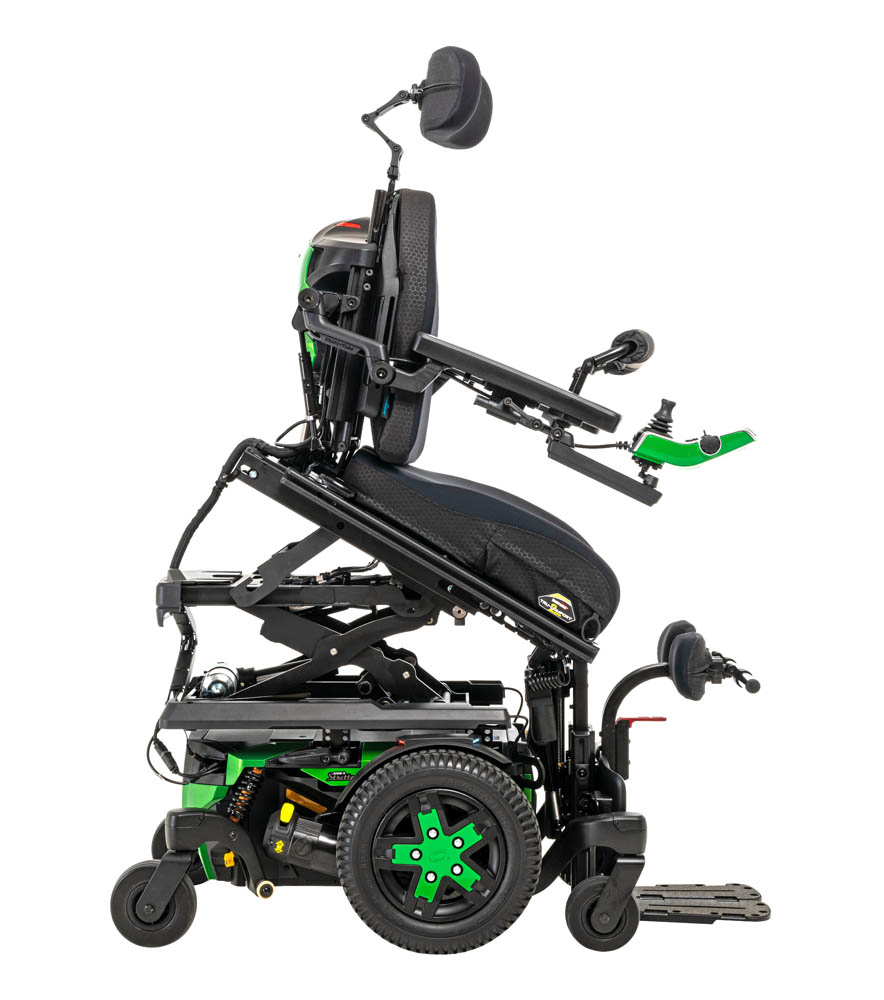
Thanks to the elevation on my Quantum #4Front2, I had the best experience I’ve ever had in a crowd. Being able to elevate to approximately 5 feet helped alleviate my usual crowd navigation concerns. Not only was I able to maneuver through both the red carpet and the arena, itself, but I was more effectively able to do my job because I could communicate eye-to-eye with the team I was supporting…and, of course, getting to see and connect with some of my favorite music artists was the icing on the cake! Once again, wheelchair elevation saves the day!

What is Anterior Tilt?

A modern power wheelchair serves a purpose beyond simple transportation. Unlike conventional wheelchairs, which were primarily focused on moving a person from one place to another, modern power wheelchairs put greater emphasis on facilitating activities of daily living (ADL) and increasing accessibility.

For instance, anterior tilt is a game-changing functionality available on the Stretto, 4Front® 2 and Edge® 3 Power Chairs that can improve the well-being of a wheelchair user and make daily activities much easier to participate in.

But what is anterior tilt? And why does this feature matter?

Let’s review the specs.

Anterior Tilt 101

Anterior tilt is a feature on cutting-edge power seats that alters the seat’s angle, raising the rear end above the front end. Hence, the seat slopes downwards, resulting in an anterior pelvic position shift where the knees are below the pelvis, placing the person in a partial weight-bearing stance.

Depending on the model, the power chair may be scripted with varying degrees of anterior tilt (10, 20 and 30 degrees). It may seem like a small thing, but even a 10-degree change in anterior tilt could significantly augment a person’s quality of life.

Without adequate anterior tilt, an individual with limited trunk control may experience discomfort or pain while sitting or lack the necessary range and flexibility to perform normal ADLs, such as:

  • Accessing cooktop surfaces
  • Accessing desks or tables
  • Accessing sinks
  • Bathing
  • Dressing
  • Doing laundry
  • Grooming
  • Preparing meals
  • Reading
  • Reaching items in cupboards
  • Toileting
  • Transferring to and from the wheelchair

Benefits of Anterior Tilt on a Power Chair 

Anterior tilt can provide physiological, psychological and practical benefits, including:

  • Improved reach – A person’s ability to reach forward is significantly inhibited when their pelvis is level or posteriorly tilted (which is the standard sitting position for a wheelchair user). Adding anterior tilt increases reach, which makes it easier to complete normal tasks.
  • Greater confidence – A neutral to anterior pelvic tilt position ensures that the spine is aligned and the head can sit naturally, making it less draining to socialize and maintain eye contact.
  • Increased independence – Improved accessibility and functionality enhance wheelchair users’ independence, making them less reliant on others to perform ADLs, which can have downstream effects on moods, confidence and well-being. 
  • Better health – The proper tilt promotes better posture, enhances respiratory function, improves circulation and reduces discomfort associated with prolonged sitting.

Anterior Tilt and the TB4

Anterior Tilt is a small but critical change to the modern wheelchair design that’s capable of enhancing the health and well-being of wheelchair users. 

At Quantum Rehab, the Tru-Balance 4 Power System represents the pinnacle of anterior tilt technology.

This cutting-edge chair design provides the user with maximum comfort and functionality. It allows them to adjust their seating position with a 10, 20 or 30 degree power anterior tilt, and comes equipped with an articulating foot platform that lowers to assist with transfers, as well as eight customizable memory settings for added convenience.

Searching for a versatile, user-friendly power chair for a person in need of advanced mobility support?

Tru-Balance 4 is available on the Edge 3 Stretto®, Edge® 3 and 4Front® 2 power chairs. Contact Quantum to learn more about each and experience the difference in ADLs firsthand.

Get to Know the TB4

Quantum has done it again. Our Tru-Balance 4 Power Positioning System is the next step in the evolution of the power chair, providing enhanced functionality and comfort to meet a user’s medical, clinical and quality of life needs.

From anterior tilt to WC19 compliance, here’s what you need to know about the features of the TB4.

What Is the TB4

The Tru-Balance 4 Power Positioning System is Quantum Rehab’s revolutionary new seating technology that comes available on the Edge 3 Stretto®, Edge® 3 and 4Front® 2 power chairs. This state-of-the-art seating system is designed to provide users with maximum comfort, functionality and accessibility.

What exactly can users expect from the TB4?

Notable features include:

  • Anterior tilt – Users can adjust the TB4’s seat angles so that the seat slopes downward at a 10, 20, or 30-degree angle. This creates an anterior pelvic position, placing the user in a partial weight-bearing stance, which can have both physiological, psychological and functional benefits, such as:
    • Greater accessibility to activities of daily living
    • Improved confidence
    • Enhanced independence
    • Better health and recovery
    • Easier sit-to-stand or sit-squat-pivot transfers
  • Customizable memory seating positions – The TB4 empowers users to program and save up to 8 customizable positions, including 4 forward commands and 4 reverse commands. After the user selects a desired position, the seat will automatically adjust to return to the preset. This feature provides users with easy and convenient access to their preferred seating positions, eliminating the need to make constant adjustments, thus ensuring optimal comfort. 
  • Articulating foot platform (AFP) – An essential component of the TB4, the AFP was added to assist with transfers in and out of the power wheelchair. By lowering the AFP, a user can position their lower extremities in a stable and secure position. This can increase user independence and reduce the risk of falls or accidents that may occur during a transfer. 

Which Bases is the TB4 Available On?

Currently, the TB4 is an available add-on to the following bases:

  • The Edge 3 – The most advanced power chair on the market, the Edge 3 with iLevel is jam-packed with useful features and functionalities, including a 12” power adjustable seat height.
  • The Edge 3 Stretto – The narrowest, most maneuverable power base in the country, with a total width of 20.47” and 12.5” drive wheels, the Edge 3 was designed to accommodate children, teenagers and small adults.
  • The 4Front 2 – The next generation of the 4Front Power Chair, the 2 provides additional enhancements like a 4-pole motor, redesigned caster arms and TB4 optionality.

Quantum and the TB4

Quantum Rehab’s Tru-Balance 4 Power System has reimagined what a power chair is capable of. This system provides several features designed to enhance user comfort and functionality, including anterior tilt, customizable memory seating positions and an articulating foot platform.

This novel reimagining of the power chair provides the user with a more natural and ergonomic sitting position, which can improve their independence, as well as their physical and mental well-being.

But where can you find the TB4?

Simply visit a Quantum dealer to get rolling today. 

Counseling Awareness Month

As we celebrate Counseling Awareness Month, I can’t help but feel proud of being a part of the wonderful community of helpers that is devoted to the service of others. As a counselor, this profession plays an immense and integral role in my life and my identity. To echo my sentiments, I’m sure I’m not the only one in this field who will agree that therapy should be viewed and treated as a routine healthcare activity – just like physical health.

When it comes to mental health care, our body and mind are undeniably connected and this calls for the de-stigmatization of the concept of taking holistic care of ourselves. Contrary to popular belief, therapy isn’t only meant for individuals suffering from mental health issues; even if the challenges are of a short-term and solution-focused nature. For instance, if you’re in an argument with your mother, or suffering from stress-induced insomnia, a session with a therapist can be of great help to get over the hurdle and be on your way.

When we think of therapy, it’s easy to conjure images of sitting with a psychiatrist while they probe us with questions; but this couldn’t be further from the truth. Visiting a therapist is actually like seeing an objective personal cheerleader and best friend. Someone who offers their undivided attention, encouragement, and counsel without any judgments. It’s a place to talk and work through our emotions, feel secure, and cry if needed, and a great platform to give us the strength to find the solutions we need to tackle life’s challenges.

All this being said, I hope my reflections on the subject have been of help and encourage anyone who may be reading this to consider giving therapy a try. Even if you’re just trying to open your mind to the concept, that is just as good. There is no shame in seeking assistance and assistance is exactly what mental health care is all about.

By: Marianne Middlebrook

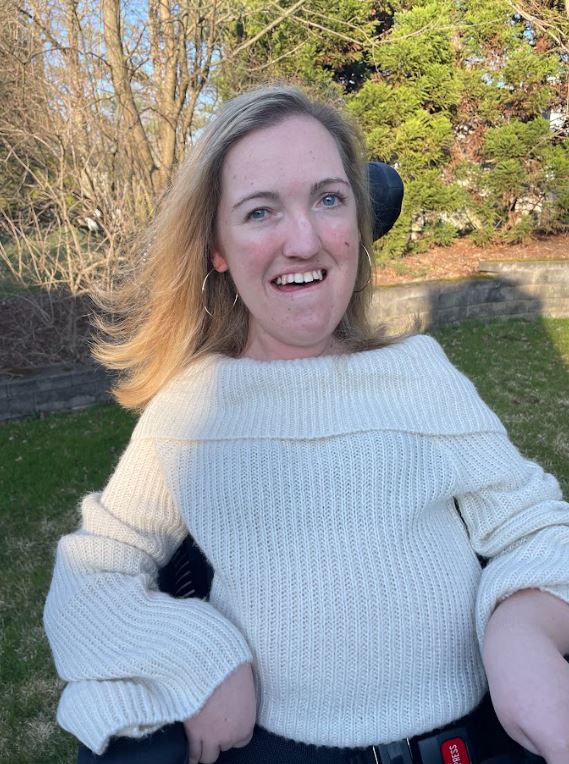
Image of Marianne the author wearing a white sweater outside smiling

Planning an Accessible Garden

Happy first day of spring everyone! If you know me then you know about my love for gardening, what you may not know is that I am also an herbalist who loves plants. Every year I find myself acquiring more pots and planters for my ever-growing collection. The only issue with the planters and pots I’ve accumulated is that they are placed on my porch and sometimes are out of reach. Unfortunately, as a result they often remain unused and tend to break.

I usually focus my attention toward the plants growing on the windowsills within my porch, and tending to my kiddie-pool garden beds because they are more accessible. If you’ve never heard of these types of garden beds – they make for a great gardening hack that really works (if you’re able to bend over and crouch down).

I came up with a solution last year by getting four raised planters on wheels, they were around 3 feet by 1.5 feet (a bit small in my opinion). Despite the smaller size of the raised planters, I was able to grow some awesome herbs in them. Because of these issues, I spent about a year researching different kinds of raised planters and garden beds that would better suit my needs.

My next garden planter had to meet specific criteria I was looking for:

  • Reach – I needed to be able to reach the garden bed while sitting in (or out of) my Quantum Rehab power chair. (I wanted to avoid my neighbors watching me potentially struggle to get back up into my chair.)
  • Access – the second thing I need from a raised planter is the ability to access all sides of it, including the middle.

After I performed quite a bit of research I stumbled upon  Oldcastle Planter Wall Blocks, these seemed to be the perfect fit for what I was looking for! The Oldcastle planter wall blocks are concrete bricks that have 4 slots in them. These bricks can stack, and the slots allow you to insert wooden planks to lock them into place, giving you the freedom to create your own custom-sized planter box.

As an herbalist with over 8 years of experience, having a garden filled with fresh fruits, veggies, and herbs is essential to me. While dried herbs are convenient, nothing compares when they are freshly picked from the garden!

Now as a disabled individual practicing herbalism, having a garden I can reach and tend to properly is a necessity. In my opinion, these bricks are genius, and I think the person who invented them deserves an award. While I will need quite a bit of help assembling everything, being able to have a planter that is accessible is going to be awesome.

My Quantum Power Wheelchair and the MDA Shamrocks Campaign

As March continues, I reflect on my work with the Muscular Dystrophy Association (MDA) and its Shamrock campaign, which started in the 1980s. Thousands of participating retailers will sell MDA Shamrocks to customers for a donation, ranging from one to five dollars. I was the national goodwill ambassador for the MDA in 2012 and 2013 and the Shamrocks campaign was one of my favorites.

My Quantum Power Wheelchair Helps Me Share the Mission

One of the ways my family and I were involved was by going to stores such as Lowe’s Home Improvement and the regional fast food chain Bojangles. We worked with the staff and answered questions about the neuromuscular disease and the mission of the MDA. We met some amazing people while spreading awareness of the disease. I shared with many employees why the campaign for was important for raising funds. When out educating people on the MDA, my Quantum power wheelchair with iLevel® technology came in handy, allowing me to elevate so I could capture everyone’s attention.

During my tenure as ambassador, I did multiple pieces of artwork to commemorate the campaign. At the local Lowe’s, the drawing I did was placed near the store entrance for many years and was always something we had to find whenever we were in the store. Part of my role as an ambassador was to attend check presentations. We did this regularly at one of the highest-grossing Bojangles in the Charlotte area. Local news stations were present, allowing us to spread awareness of the Shamrock campaign and the mission of the MDA to many people.

Making New Friends and Fond Memories

One of my favorite memories was speaking with my friend and the former CEO of Bojangles, Randy Kibler, at a presentation. We worked together closely over the years and built a great friendship. The Shamrock campaign was a fun time for me, filled with memories. While I’ve been involved in other fundraising campaigns, the Shamrock campaign was definitely a favorite, as it allowed me to get out into the local community. The support I received during the campaign was something that I am forever thankful for, and it brought new friends into my life. Here is to the start of the spring and this year’s Shamrock campaign!

We Need Better Resources for Adults with Cerebral Palsy

By Isabella Bullock

March is Cerebral Palsy Awareness Month. Cerebral palsy (CP) is a group of disorders that affect a person’s ability to move and maintain balance and posture. According to the CDC, CP is the most common motor disability in childhood. Cerebral palsy is caused by abnormal brain development or damage to the developing brain. This usually happens before a child is born, but it can occur at birth or in early infancy. In many cases, the cause is not known. 

Resources for Children with Cerebral Palsy

Growing up as a child with cerebral palsy, there were tons of treatment options, resources and services for support of my physical, academic and social well-being.  There was even support groups for my family members for having a child/sibling with a disability. Fast forward to adulthood: these once readily available services do not exist. Even now, when you Google cerebral palsy, most of the images populated are images children with CP. The lack of services and representation for adults with CP gives the impression that children with CP do not grow up to be adults with CP. This could not be further from the truth.

Lack of Resources for Adults Living with Cerebral Palsy

From my experience, being an adult with CP has more complex challenges, such as post-secondary (life after K-12 schooling) transition, development of independent living skills, obtaining employment, locating accessible housing and personal care supports, all while maintaining peer and intimate relationships. These are all challenges that can be worked through but support may be needed along the way.

How We Can Help Adults with CP

How do we move forward in supporting adults with CP? To start, there needs to be more resources to support post-secondary transition and community-based living. There also needs to be more research done on adults with CP and an overhaul of the representation of cerebral palsy and who it impacts. While CP originally occurs during early childhood, those children grow up to be adults with CP and need just as much support.