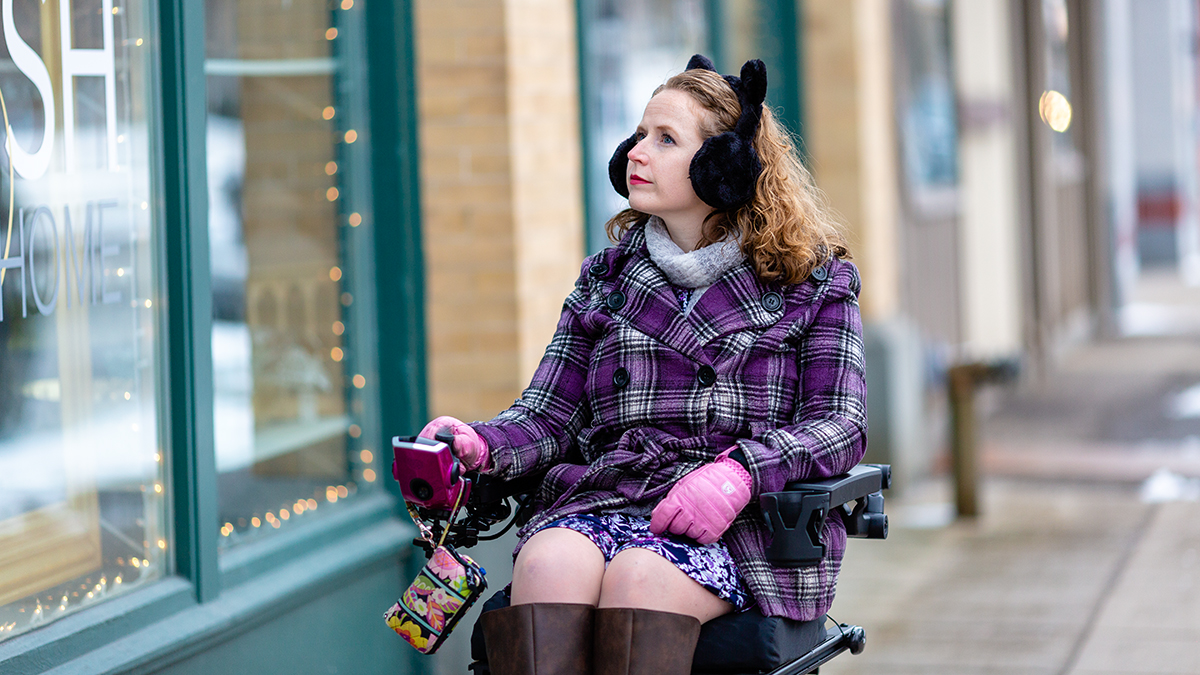
Stephanie Woodward: EmpowHERing Others

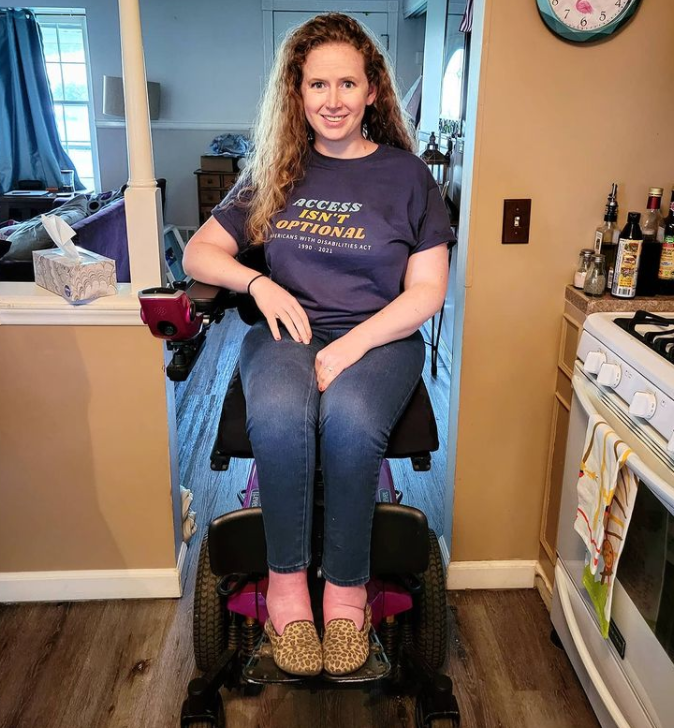
Stephanie Woodward is passionate about many things: coffee, cats and even pie! More importantly, Stephanie is passionate about disability rights and making the world accessible and inclusive for those with disabilities.

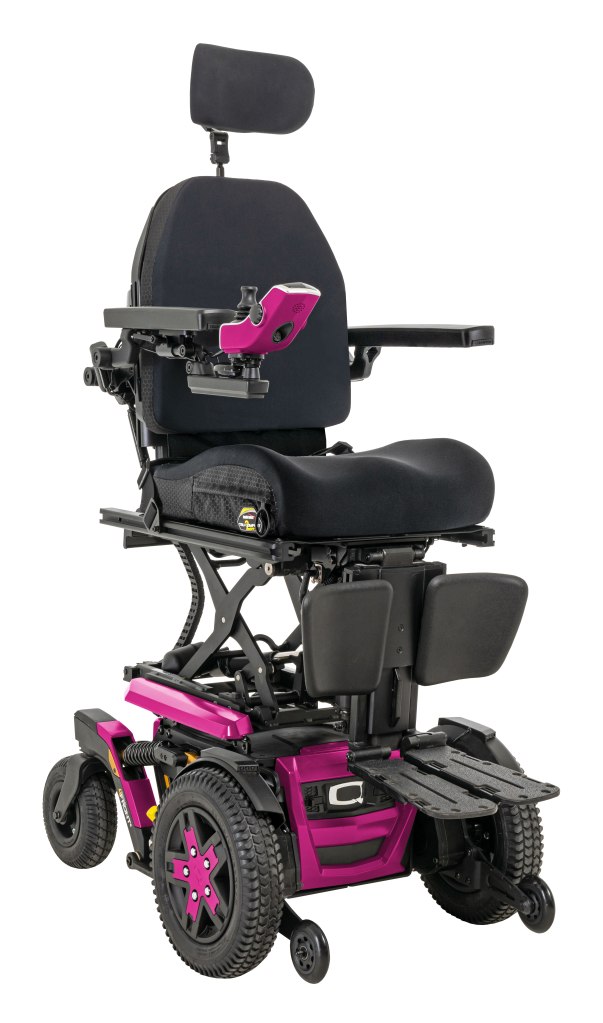
It’s been 31 years since the Americans with Disabilities Act was passed and there is still more work to do. While continuing the fight for a more accessible world, Stephanie has an important tool in her arsenal: her Stretto Power Wheelchair!

Although she has used power chairs since she was 12 years old, Stephanie felt that many of her previous power chairs were too big for her, until she experienced the Stretto!

“Even when the seat is perfectly fit to me, I just felt larger than I really am. From the first time I sat in a Stretto, I felt like me. I felt like the chair fit me in ways that no other chair has.”

– Stephanie Woodward

The Stretto Motorized Wheelchair and Accessibility

With a narrow width of just 20.47 inches, Stephanie can maneuver her Stretto Power Wheelchair easily in small spaces.

“I finally fit into spaces that I should, turn corners the way I should, and turn in circles without fear of hitting or breaking anything,” Stephanie said.
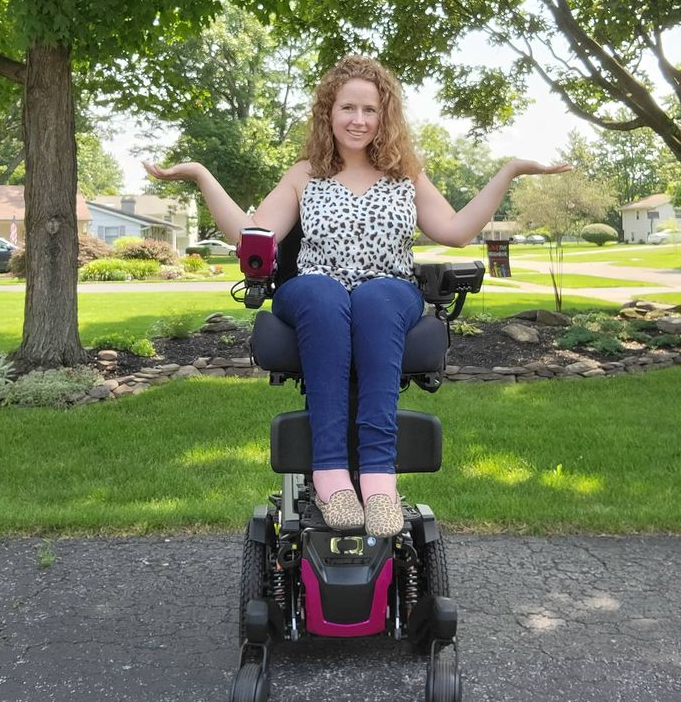
Best of all, Stephanie can now get into her bathroom and turn her power wheelchair while in it.

“I usually had to leave my motorized wheelchair in the hallway and transfer into the bathroom, but now I can fit in with my motorized wheelchair, which is amazing,” Stephanie said. “I can’t tell you how much this has improved my life.”

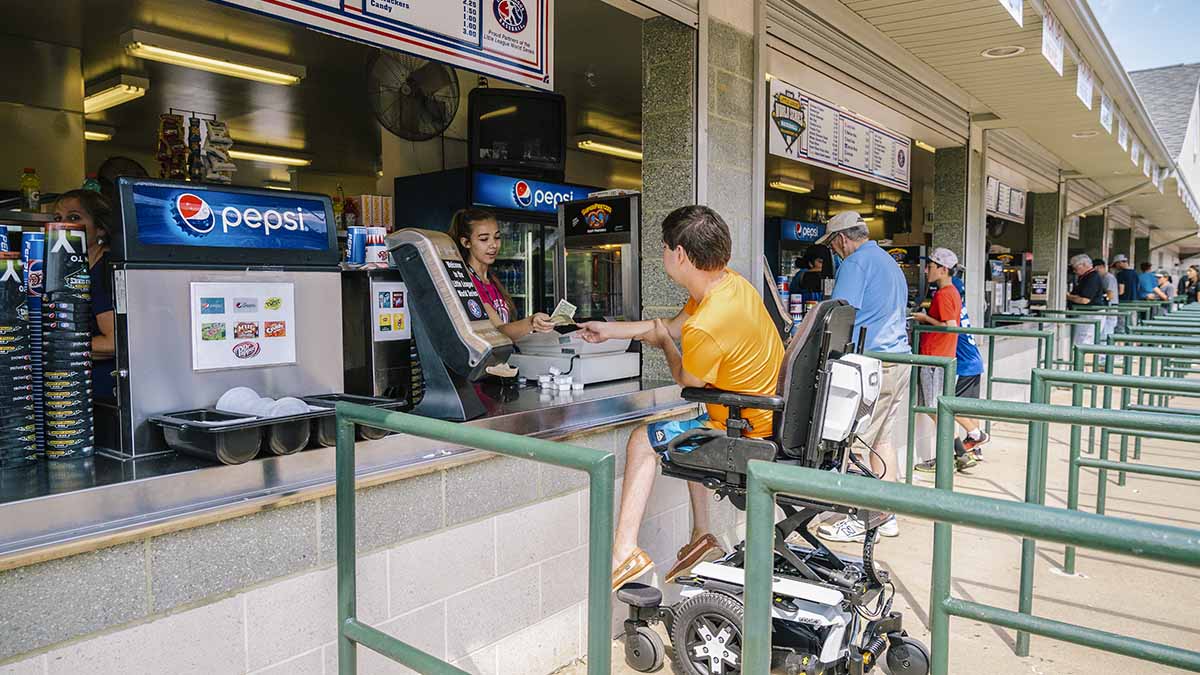
Plus, Stephanie can now shop in stores more easily. Although the ADA requires stores to have clear pathways with a minimum width of 36 inches, some stores don’t always follow this, Stephanie says. She must then search for an accessible route through the narrow aisles. Thanks to her Stretto motorized wheelchair, Stephanie can maneuver through tight aisles easily to reach the customer service desk.

“Once I get to the desk, I inform them that they’re violating the ADA and need to fix their aisles,” Stephanie said.  

The Power of iLevel® Technology

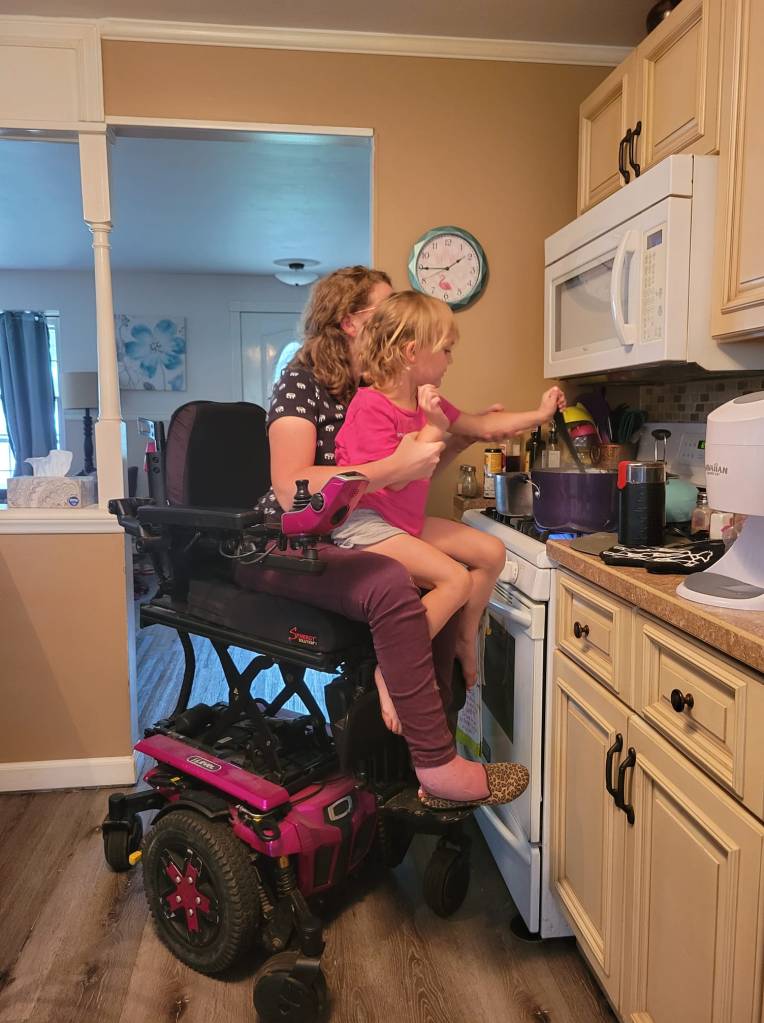
While Stephanie loves the narrow width of her Stretto motorized wheelchair, she also loves elevating at iLevel®. With 12 inches of elevation, Stephanie has greater access to things and can complete daily tasks like watering her hanging plants, cooking meals, transferring into her bed and petting her cats while they’re in the cat tree.

While pursuing her goals for a more inclusive world, Stephanie has turned her focus to empowering girls and women with disabilities. Stephanie founded the Disability EmpowHER Network, which is designed to empower and mentor girls and women with disabilities, helping them to grow and become leaders. Through programs such as Letter from a Role Model and EmpowHER Camp, young girls with disabilities are connecting with successful disabled women and developing their independent living and leadership skills.

In addition to her work with Disability EmpowHER Network, Stephanie serves as a Brand Ambassador Advisor for Quantum, as well as a board member of the New York State Independent Living Council. She works as an organizer with ADAPT and is a member of the National Council on Disability.

Even with such a busy schedule, Stephanie always has time for fun and adventures with her husband, Ryan, and their nieces and nephews. And let’s not forget Rocky and Bullwinkle, their two dogs! No matter where her day takes her, Stephanie knows that the Stretto can handle it all and she can genuinely feel like herself.

“Now that I have a chair that truly fits me, I never want to go back!” 

Return to Testimonials

Return to Power Wheelchairs and Spina Bifida

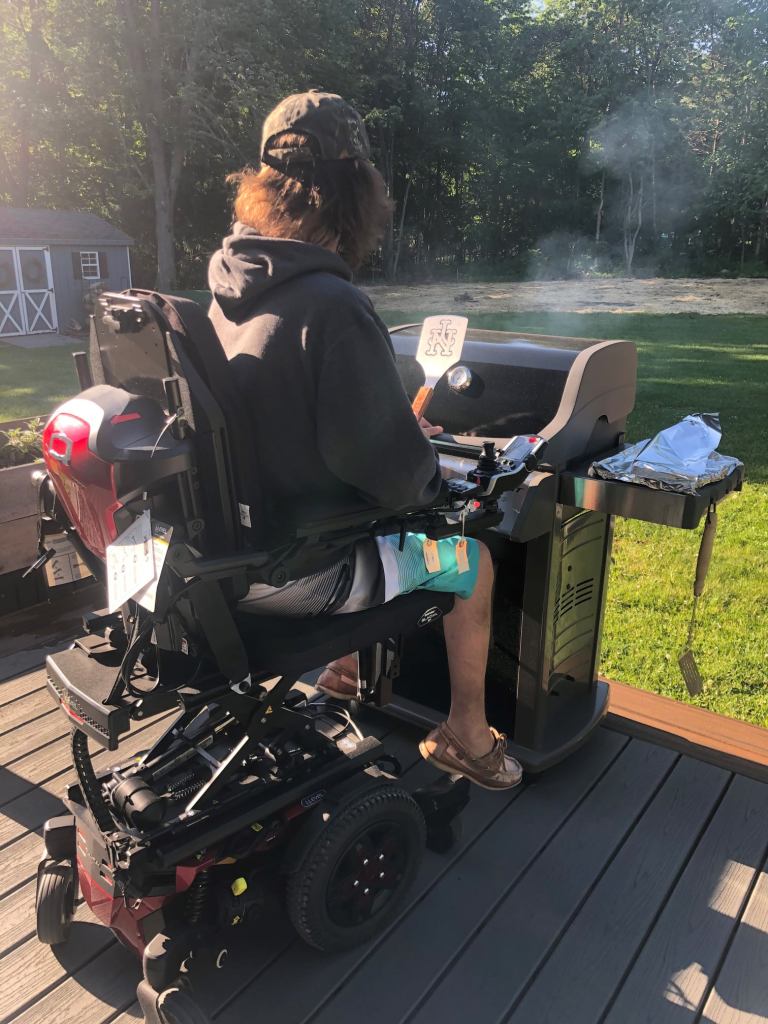
Grilling with My Power Wheelchair

Do you like to grill? Well, I sure do! One of my favorite things in the summertime is spending time with my friends and family outside with a campfire going and the smell of burgers and hotdogs on a grill. I recently found out that July is National Grilling Month! So, here’s how I safely enjoy grilling using my iLevel® Power Wheelchair.

Grilling with My iLevel Power Wheelchair

Before I had my Edge® 3 Power Wheelchair with iLevel® technology, the task of grilling was pretty much nonexistent in my life. I could not raise myself up or lift my arm high enough to reach the handle on the lid of the grill and move it safely to the back. This challenge ultimately hindered my ability to grill a lot when I was younger. Either my mom or dad or a friend had to go grill my food for me if I wanted anything on the barbecue. We all know how hot a grill can get. For me, the risk of burning my arm was just too high.

Now that I have iLevel on my motorized wheelchair, I can grill my own food safely because I can elevate my motorized wheelchair to where I need to be to safely operate the grill. This gives me the flexibility to entertain friends and family while cooking. Since I’ve been back in New York from Florida, I have been to three barbecues. I’ve also spent a lot of time in my parent’s backyard grilling up some burgers and hotdogs, even if it’s just a hotdog for myself.

The Challenges with Cooking

If you are not a master chef, I feel like grilling is one of those things that you cannot mess up. That’s probably why I gravitate towards it. I have been told I am a pretty decent cook. But I am one of those cooks that sticks to what they know. I believe in repetition when it comes to life and food. If it’s not broken, don’t fix it. if you really think about everything that is involved with grilling, it’s not rocket science to cook a hotdog or a burger on the grill. You can pretty much tell when the food is done by how charred it looks. When I try to cook a burger on a pan inside the house on the stove, I sometimes find it challenging to know if the burger is cooked all the way through. I feel like I’m always cutting into a burger to see if it is cooked all the way.

Celebrating National Grill Month

If you do not have a grill, you’re in luck! I did a bit of research and found out that a lot of restaurants and fast-food places are offering deals all month long. Two barbecue spots by me are offering a free grilled chicken sandwich with every order. I also know that Burger King and a Chic-Fil-A are offering special grilled items if you belong to their rewards or perk club. Now, I recommend checking online in your area, as these offers could be regional or a special offered by a franchise owner. I know that some of us don’t always feel like cooking and these are a few options that you have to get a meal either for free or at little cost during National Grilling Month.

With so many household products available at your local retailer, you could pick up an indoor electric grill. It may not be totally the same but this is a great alternative if you live in the city. You can just place the indoor grill on your island or countertop and you’re good to go.

So, make sure that you check out some of your favorite restaurants, especially if they do grilled food. You might make out with a sweet deal.

About Josh McDermott: Josh is a brand ambassador for Quantum Rehab®. He is a public speaker and has served as a goodwill ambassador for the Muscular Dystrophy Association. Josh lives in New York and loves to travel. Click here to learn more about Josh.

.ugb-9e1cf92 hr.ugb-divider__hr{margin-left:auto !important;margin-right:auto !important}

For more great blogs from our brand ambassadors and Q Roll Models, visit lifeatilevel.com today!

Return to the Life At iLevel page

In the Kitchen with iLevel® Technology

I finally like cooking again! And it’s even more enjoyable for me with iLevel® technology on my Edge® 3 Power Wheelchair. Here are some of the ways that iLevel helps me in the kitchen.

Saving Time

When it comes to cooking, iLevel® technology is fantastic because it saves me time. It only takes me 15 seconds to go all the way up to reach the top cabinets, then all the way down to reach what I need in the bottom cabinets. This means a lot less time wasted. I can reach my spices and pull out any pots and pans I need.

Reaching the Things I Need

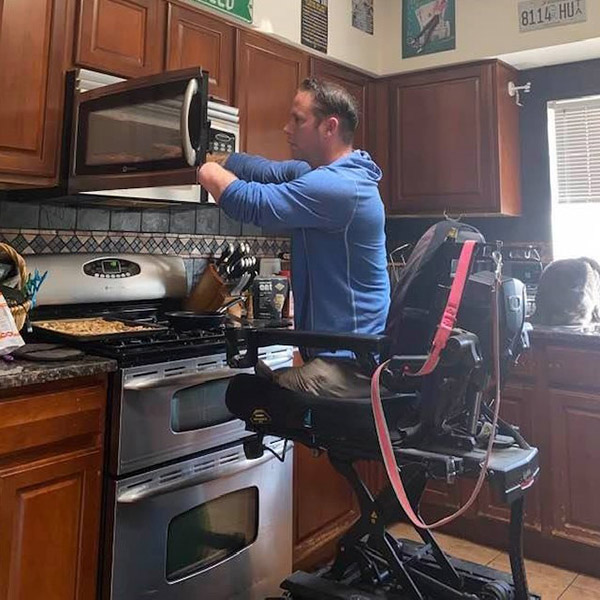
Like most kitchens, mine has multiple levels. The bar in my kitchen is pretty high, higher than the countertops and the stovetop. With iLevel, it’s easy for me to adjust my height. I can raise and lower my power wheelchair seat to go from cutting up vegetables or meat on the bar to cooking on the stove.

Bryan uses iLevel in the kitchen to cook safely.

Cooking Safely with iLevel

Before I had iLevel, I used to burn myself all the time. When cooking bacon, the popping grease would hit me in the face. Not anymore! My face thanks iLevel for that. I can raise my power wheelchair seat so that my face is well above the cooking surface and I can see what I am doing. iLevel gives me the extra height I need to cook confidently and safely.

Some of My Favorite Dishes

I have a few specialties when cooking. I make a pretty good meatloaf. I can cook a whole chicken in the oven, as well as green bean casserole. I really like cooking on the grill too.

I enjoy making new foods and trying out new dishes on my friends. I hope you all feel the same. So, go have a dinner party and see how it goes!

About Bryan Anderson: Bryan grew up and resides in Illinois. Injured by an IED in October 2005, Bryan is one of the few triple amputees to survive his injuries in Iraq. He is an ambassador for the Gary Sinise Foundation and a spokesperson for USA Cares, which is focused on assisting post 9-11 veterans. Click here to learn more about Bryan.

.ugb-25268c5 hr.ugb-divider__hr{margin-left:auto !important;margin-right:auto !important}

For more great blogs from our brand ambassadors and Q Roll Models, visit lifeatilevel.com today!

Return to the Life At iLevel page

Understanding Wheelchair Drive-Wheel Configurations

During the process of choosing a complex rehab wheelchair, your therapist works with an ATP (Assistive Technology Professional) to determine which power chair and components meet your needs. When selecting a power wheelchair base, drive wheel configuration is an important factor to consider. Front-wheel, mid-wheel and rear-wheel drive each have their own benefits. You should consider your medical needs, as well as how your power wheelchair will be used when selecting a base and drive wheel configuration.

Mid-Wheel Drive Electric Wheelchairs

With a mid-wheel configuration, the drive wheels on a base are in the middle of the complex rehab wheelchair. The user’s center of gravity is practically even with the center of the drive wheels, ensuring a tight turning radius. Mid-wheel drive electric wheelchairs can do a 360-degree turn. This is extremely beneficial when using a complex rehab wheelchair in the home. Navigating small spaces, tight corners and narrow doorways is much easier with a mid-wheel drive wheelchair.

Mid-Wheel Drive Wheelchair Stability

When it comes to stability, mid-wheel drive power wheelchairs are the most stable. These power wheelchairs have six wheels on the ground, with two large drive wheels and four smaller caster wheels. This provides greater stability. A mid-wheel drive power wheelchair is equipped with caster wheels on the front and back of the power chair base, to help prevent the wheelchair from tipping forward or backward.

Traction with Mid-Wheel Drive

A power wheelchair with mid-wheel drive has good traction on most inclines, surfaces and side slopes. Mid-wheel drive power wheelchairs can climb obstacles well, including curbs and small bumps. Mid-wheel drive offers a shorter learning curve, as it is extremely intuitive and a great choice for individuals who are new to power wheelchairs.

Mid-wheel drive complex rehab power wheelchairs are a great choice for individuals who need more stability or will mostly use the wheelchair in the home. If your ATP and therapist believe that a mid-wheel drive power wheelchair is a good fit for you, consider the Edge 3 Stretto Power Wheelchair.

Front-Wheel Drive Motorized Wheelchairs

One of the biggest advantages of front-wheel drive motorized wheelchairs is that is there is more force distributed to each of the four tires. Unlike other drive-wheel configurations, front-wheel drive has two fewer tires in contact with the ground. The greater force increases traction, allowing the front-wheel drive power wheelchair to perform well when driving over grass, uneven gravel or soft terrain. The large drive wheels are the first to encounter an obstacle, like a curb or a step. The large drive wheels “grab” the obstacle and go over it, pulling the rest of the front-wheel drive power wheelchair with them. A front-wheel drive design on a power chair is also beneficial indoors. It easily navigates tight corners in the home.

Positioning on Front-Wheel Drive Power Wheelchairs

Another benefit of front-wheel drive is that there are no front caster wheels, so a user’s feet can be positioned easily. A wheelchair user’s feet can be closer to his or her body for comfort. In addition, 90-degree footrests can be added.

Lower Seat-to-Floor Height on Front-Wheel Drive

Front-wheel drive motorized wheelchairs have a lower seat-to-floor height. This allows individuals to fit their power chair under standard sized tables and desk more easily. This enhances inclusion and social interaction.

With so many advantages, front-wheel drive wheelchairs can truly benefit you. If your therapist and ATP believe that front-wheel drive is a good fit for you, consider the 4Front® 2 Power Wheelchair.

The Benefits of Rear-Wheel Drive

Rear-wheel drive motorized wheelchairs offer many benefits. Rear-wheel drive wheelchairs have two large drive wheels on the back of the base and two casters on the front of the base. The drive wheel placement is the source of the wheelchair’s power, which is ideal for more aggressive outdoor terrain. Plus, when driving over softer terrain, rear-wheel drive has more power to propel the motorized wheelchair forward. A rear-wheel power wheelchair handles grade changes more easily for a smoother ride. Usually, rear-wheel drive motorized wheelchairs are equipped with independent suspension or shock absorbers to ensure a more comfortable ride experience.

Another advantage of a rear-wheel drive complex rehab wheelchair is that it provides excellent control. Motorized wheelchairs turn slower with a rear-wheel configuration, giving the user plenty of time to adjust their joystick to successfully complete the turn. When it comes to stability, the base on a rear-wheel drive wheelchair is larger. The weight of the chair is focused where the drive wheels are located, for greater stability.

My iLevel Power Wheelchair and NASCAR

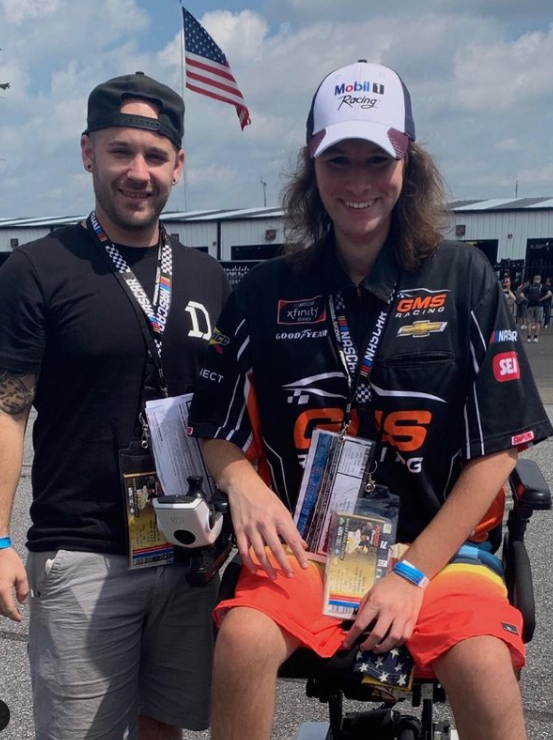
You know it’s officially summer when NASCAR comes to the Pocono Raceway in Northeastern Pennsylvania. Every year, my friends and I attend but unfortunately, we missed last year because of the pandemic. So, this year, we were extremely excited to spend a weekend at the track.

Accessibility at the Pocono Raceway

One of my favorite things about the Pocono Raceway is the accessibility. The amenities offered to power wheelchair users are vast. There is always adequate accessible parking close to the track. There is a ton of staff available to ask any questions. There’s medical personnel walking around all over the place in case anybody experiences a medical issue. There is even a power wheelchair shuttle service that takes you from one end of the track to the other. If you don’t want to drive your power wheelchair a huge  distance, the track has more than one shuttle operating, so you don’t wait very long for a ride. This is a huge plus in my book. If you’ve been to any kind of event or concert, usually they only have one type of wheelchair accessible transportation, if they even have accessible transportation at all!

Watching the Race

Josh in his Edge 3 Power Wheelchair with iLevel

This year, one of my friends from North Carolina who used to race in the amateur/semi pro league was called up to the ARCA series to drive for someone who was sick. I was excited to see him during the weekend. I was even more excited to see him race at the Pocono Raceway. We all had pit team passes, which allowed us to access the track, the pit crews and the garage.

Before the race, we hung out in the pits in the garage. The team had some breakfast set up, so we grabbed a bite to eat and the next thing you know the race started! I elevated my power wheelchair up to 12 inches to get a better view of things. Unfortunately, halfway through the race, my buddy was in fifth place and another driver got loose and clipped his quarter panel going into turn three coming down the straightaway. It spun him out. His car was damaged, and he was not able to continue the race. Thankfully he was okay and did not have any injuries after the medical staff took a look at him. So, it was really cool to spend a little bit of time together after the race.

It always fascinated me hanging out by the race cars and seeing all the technology and preparation that goes into a race. There were so many people from the pits that asked questions about my power wheelchair. No one had seen a wheelchair drive elevated at iLevel® before. Some of the crew members some great ideas and suggestions, which was funny because I had been looking around the garage and looking at the cars for ideas for our power wheelchairs. Overall, the NASCAR weekend was great. I’m looking forward to my next race.

About Josh McDermott: Josh is a brand ambassador for Quantum Rehab®. He is a public speaker and has served as a goodwill ambassador for the Muscular Dystrophy Association. Josh lives in New York and loves to travel. Click hereto learn more about Josh.

For more great blogs from our brand ambassadors and Q Roll Models, visit lifeatilevel.com today!

Return to the Life At iLevel page

Inclusivity in Hollywood: Part 1

I’ve been thinking about how people with disabilities are represented in television and film. Good representation or increased representation can help to form positive and inclusive opinions. Not enough or poor representation can lead to untrue and inaccurate depictions and basic ignorance.

Disability Representation in the Top 100 Grossing Films

As a disabled woman I began to count in my mind images of people with disabilities on TV shows and other media I have seen. Even with gains in the number of characters with disabilities appearing in popular films, a few new reports found that our population remains largely nonexistent on screen. Way back in 2019, there was an analysis of the top 100 grossing films. Here’s what researchers discovered:

  • The disabled community was missing from 48 of the films
  • Female speaking actresses with disabilities were missing from 77 of them
  • Only 2.3% of all speaking characters had disabilities (an increase of about 1.6% from the year before)
  • About 65% percent of those were physical disabilities, 29% cognitive disabilities and 28% with communication disabilities.
  • Most (about two-thirds) were male and most often white.
  • Most were over the age of 40
Merlisha uses an Edge 3 Power Wheelchair with iLevel

I had to take a step back from my findings. The number of underrepresented groups of people, including our community, was disheartening. A movie is a movie, and a show is a show, yet some of the stats I have been including in this blog are so close to one another as to almost be non-existent over a five-year period. People love to say, “change takes time.” At this rate we will have close to proper representation right around the time we populate Mars.

Moving Towards a New Standard for Inclusivity

Change could be a little sooner in manifesting itself. Earlier this month, the Academy of Motion Picture Arts and Sciences announced that starting in 2024, movies will have to meet certain inclusion standards. Disability representation will be a standard. Thinking about it, I am now wondering how many disabled individuals are behind the cameras. Considering that worldwide there are about 1.2 billion people with disabilities, a perspective of how we view the world and those that are different from us may bring a fresh, lucrative, and relatable picture of the world as we see it.

Some of My Favorite Actors Who Are Disabled

I thought about some of the shows and movies that my husband and I watch. Here is a list of a few actors who represent characters with disabilities.

  • Daryl “Chill” Mitchell an actor who after a motorcycle accident in 2001 was paralyzed from the waist down. My favorite show to see him in is NCIS New Orleans as Patton Plame, computer specialist for the NCIS squad.
  • Micah D. Fowler is an actor with cerebral palsy who did a hilariously awesome job in the television series “Speechless.” This was a show I watched pre-disability. I have since seen a few of the old episodes post-disability and the humor transfers well.
  • Marlee Matlin is an actress, author, and deaf activist. Known for such projects as Children of a Lesser God, Switched at Birth, The West Wing, The L Word, and Quantico to name a few. I remember seeing her in an episode of Law and Order: SVU dealing with assisted suicide and I have been a fan ever since.
  • Josh Blue is a comedian with cerebral palsy who was voted Last Comic Standing in its fourth season in 2006. His humor is very poignant in that it is somewhat self-deprecating but with the ability to focus the attention back at the audience without making either feel awkward
  • Christopher Burke is an actor, folk singer, and down syndrome advocate with down syndrome. Best known for his role as Charles “Corky” Thatcher on the television show, “Life Goes On.”

There are quite a few more actors and actresses that I could name, but in my opinion not enough. You don’t realize some things until they become a part of your everyday life and now I am starting to recognize how much of the media that I consume does not have people that look and live like I do.

Click here to read part two.

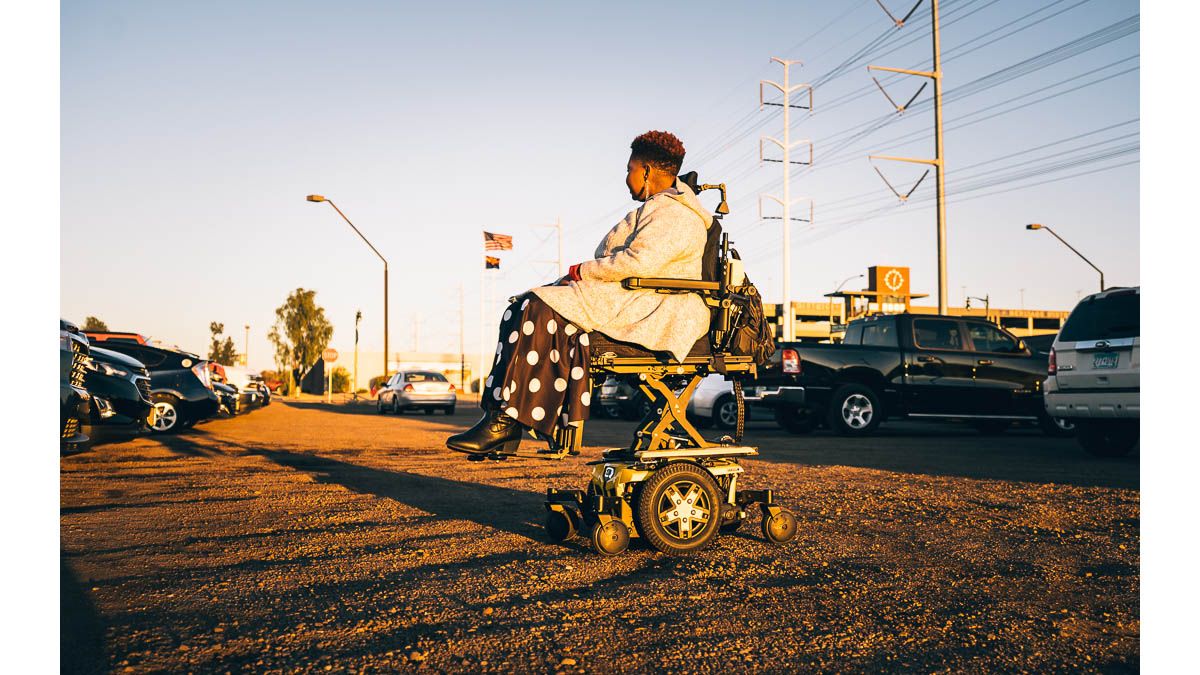
About Merlisha Henderson: Merlisha uses an Edge 3 Power Wheelchair for mobility and lives in Arizona with her family. As a wife, mother and disability advocate in her community, she stays active and independent, working toward bringing equality and access to all. Click here to learn more about Merlisha.

.ugb-075cf71 hr.ugb-divider__hr{margin-left:auto !important;margin-right:auto !important}

For more great blogs from our brand ambassadors and Q Roll Models, visit lifeatilevel.com today!

Return to the Life At iLevel page

Inclusivity in Hollywood: Part 2

In the first half of this blog, I talk about how disability representation in Hollywood, in both television and films. Unfortunately, we have a long way to go.

My husband is considering a few writing projects and has enlisted me as a sounding board. The topic of disability representation played a big part in some of the planning for the short stories he is working on. He pointed out many characters that have disabilities and some movies with great disabled actors/actresses. Some of my favorites are:

Characters with Disabilities

Dr. Charles Xavier- leader and founder of the Uncanny X-Men (my husband said I had to write it this way

Geordi La Forge– Played by Lavar Burton of Reading Rainbow fame. Geordi La Forge was the chief engineer of the Starship Enterprise on Star Trek: The Next Generation. Mr. La Forge was blind. My husband points to this character as being ahead of his time because, in his words, “Geordi’s visor made him superhuman.” Although he was completely blind, his visor allowed him to see things regular people could not, such as fields of energy, waves of electromagnetism. My husband thinks this is boss. He also explained that on the show, people with disabilities were treated much better than in our current society. They were equal to anyone without one, which made this character unique.

Films that Depict People with Disabilities

Silver Bullet– The 1985 Stephen King film starring Corey Haim as a paraplegic teen in a town where a werewolf is on the loose. His alcoholic uncle Red (played by Gary Busey) fabricates him a souped-up wheelchair/motorcycle dubbed “The Silver Bullet” to assist him with getting around in the dangerous town. It’s horror, it’s Sci-Fi and the good guy and main character is a person with disabilities!

Ray– The biographical movie of the life, struggles and times of the late, great Ray Charles. Jamie Foxx does a wonderful job of bringing this character to life in triumph and pain. It’s funny that most people, when they think of Ray Charles, his blindness is secondary to his legendary musical abilities. I just love this movie and watching it again since I have become disabled brought a whole new perspective.

A Quiet Place– although this movie has one deaf supporting character, a daughter named Regan, the movie has several themes involving disabilities. The aliens are blind but are hypersensitive to sound. The family has learned ASL to communicate and include Regan in the family dynamic. This helps them to survive and thrive. Plus, the hypersensitivity of the aliens causes a kind of self-imposed disability to humans because making noise(talking) could mean certain death. It’s a great scare but watching through the lens of a disabled person changes some of the themes.

Overall, the disabled community has a presence in digital media, movies, films, and literature. As time moves forward, hopefully our influence will as well. We are as much a part of the fabric of this world as any other group. Many people know it. Now it’s time for everyone else to find out.

About Merlisha Henderson: Merlisha uses an Edge 3 Power Wheelchair for mobility and lives in Arizona with her family. As a wife, mother and disability advocate in her community, she stays active and independent, working toward bringing equality and access to all. Click here to learn more about Merlisha.

.ugb-2399377 hr.ugb-divider__hr{margin-left:auto !important;margin-right:auto !important}

For more great blogs from our brand ambassadors and Q Roll Models, visit lifeatilevel.com today!

Return to the Life At iLevel page

How to Jazz Up Your Wheelchair

If you’re anything like me, you see your wheelchair as an extension of your body. It’s a part of you, and you want it to reflect who you are, just as your clothes reflect who you are. Thankfully, when we order our wheelchairs, we can put a little bit of our personalities into them, such as when we select our wheelchair color. But I’ve found that there are many other ways to personalize our wheelchairs. Here are a few of my favorite ways to jazz up my power wheelchair.

Change the Wheelchair Cushion Cover

Stephanie in her Edge 3 Power Wheelchair

Most wheelchair cushions come with a black cushion cover. It’s convenient and practical, but it doesn’t exactly scream, “I’m outgoing and fun!” One way that I like to switch things up is by changing the cover of my wheelchair cushion. Now, I am no seamstress. In fact, I am terrible at sewing. I have found that extra large pillow cases often fit over my seat cushion and are easy to switch out. I started doing this on days that I wanted to wash my cushion cover. I’d take off the standard black cushion cover and throw a pillow case on my cushion for the day. The more I’ve done this, the more I’ve enjoyed switching things up! Sometimes I’ll color coordinate my seat cushion with my outfit!

Stickers or Duct Tape

While I have grown out of my sticker phase, when I was younger I couldn’t get enough of them! I loved putting stickers on my wheelchair in the same way that I loved putting stickers on the bumper of my car! As a cat lover, I know that I had a cat mom sticker on the back of one of my power wheelchairs a few years ago. It was a great conversation starter! Similarly, a friend of mine absolutely loves zebra print, so she bought a roll of zebra print duct tape and decorated her chair with it! 

Lights for Power Wheelchairs

My Edge® 3 Motorized Wheelchair with iLevel® technology came with fender lights which I absolutely love. Sometimes, I am in the mood for even more lighting! I actually bought some battery operated lights and affixed them to my motorized wheelchair last Halloween. It was so much fun! I know other people who have battery operated lights on their wheelchairs all year round. They just keep the switch near their hands so that they can turn the lights on and off whenever they want to make a bright statement! 

These are just a few ways I like to personalize my chair. How do you personalize your wheelchair?

About Stephanie Woodward: Stephanie is a brand ambassador advisor for Quantum Rehab® and works as a disability rights activist. She has received many awards for helping communities become more accessible, as well as for her actions in fighting for the rights of disabled individuals as it relates to Medicaid and other support services. Click here to learn more about Stephanie.

.ugb-1b28695 hr.ugb-divider__hr{margin-left:auto !important;margin-right:auto !important}

Return to Wheel Talk

Visit lifeatilevel.com

Babysitting at iLevel®

Stephanie uses iLevel technology on her motorized wheelchair to help her make dinner

Now that we are vaccinated and able to spend time with our families, my husband and I had our nieces and nephews at our house for a sleepover last weekend! We usually have a big sleepover with all five of them at least three times a year, but the pandemic kept them away from us for far too long!

When the kids arrived, I was so thankful to be sitting in my iLevel Power Wheelchair. I am positive that they all grew at least a foot in the past year! With one press of a button, I matched their heights and began to play. We started with taking the dogs for a walk around the neighborhood. With five kids and two dogs, things can either move really fast or really slow, so I appreciate that my power wheelchair can keep up with everyone no matter what speed we’re going.

Making Dinner

After walking the dogs, we came back home to make dinner. Cassidy, my niece who is three, is very interested in helping these days. She loves to sit on my lap to reach the counter to help me measure the ingredients and she especially loves helping me stir the food on the stovetop. She is so proud of herself when she helps cook our meals. I enjoy every moment of teaching her. She even helped us to serve all the other kids by putting everyone’s bowls on the table.

iLevel on the Playground

When we finished with dinner, we went to the playground where all of my nieces and nephews had a blast. In my motorized wheelchair with iLevel, I elevated to push some of the kids on the swings while my husband watched the others on the slide. When it started to get dark, I turned on my fender lights and led us all back home.

Movie and Snacks with iLevel

Once we got back to our house, we all snuggled up in the living room to watch a movie before bed. Of course it was snack time, so I elevated my motorized wheelchair to reach the popcorn in the cupboard. I put it in the microwave, which is above our stove, while my husband grabbed a bunch of napkins to pass around. We watched a movie and everyone passed out before the closing credits! 

It was such a great sleepover and we loved every moment of it. We’re so happy to be able to have sleepovers again and spend quality time together!

About Stephanie Woodward: Stephanie is a brand ambassador advisor for Quantum Rehab® and works as a disability rights activist. She has received many awards for helping communities become more accessible, as well as for her actions in fighting for the rights of disabled individuals as it relates to Medicaid and other support services. Click here to learn more about Stephanie.

.ugb-c16cf8b hr.ugb-divider__hr{margin-left:auto !important;margin-right:auto !important}

Return to Wheel Talk

Visit lifeatilevel.com

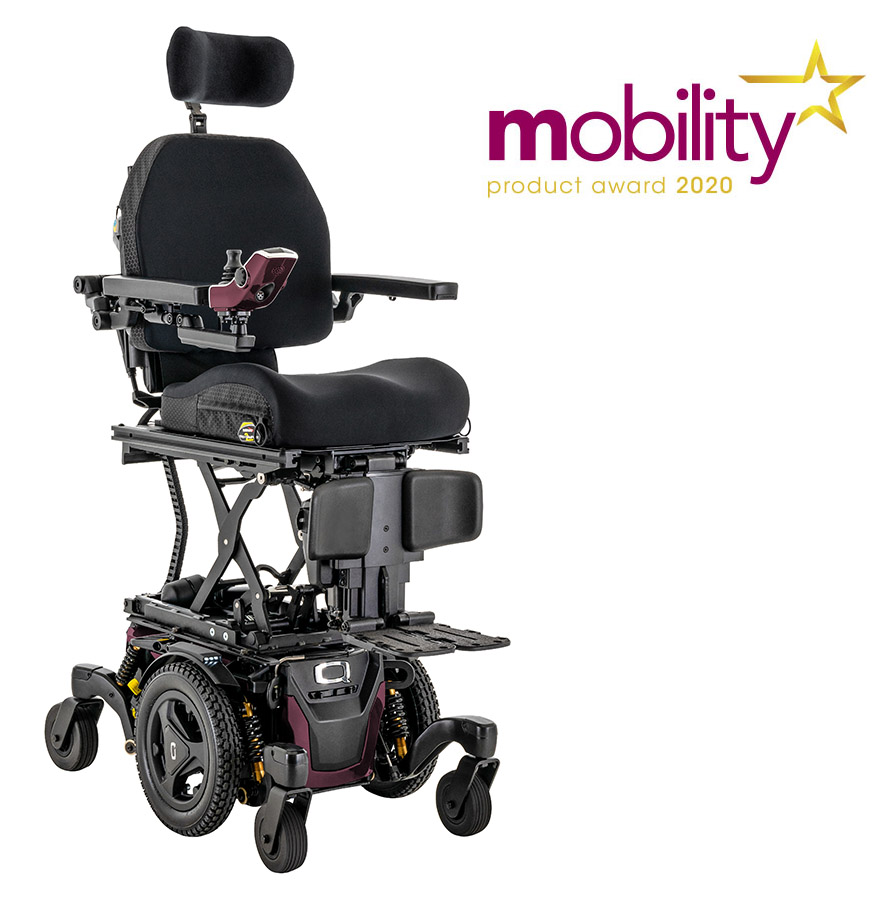
Quantum® Wins 4 Mobility Product Awards

Mobility Management magazine has named four Quantum® products winners of its Mobility Product Award 2021 contest.

The Quantum award winners are:

  • Edge 3 Stretto® Power Chair with captain’s seating/iLevel® – Wheelchairs, Power: Group 3, Standard
  • 4Front® 2 Power Chair (tie) – Wheelchairs, Power: Group 3, Multiple Power
  • iLevel® power adjustable seat height – Seating Systems
  • Q-Logic 3e controller, Electronics, Power Wheelchair

The Mobility Product Award program was launched in 2019 to honor outstanding product and technology development by Complex Rehab Technology (CRT) and mobility/accessibility providers.

“People with mobility-related disabilities face complex challenges every day, and once again, the judges and the Mobility Management team were impressed by these innovative interventions from manufacturers,” Mobility Management Executive Editor Laurie Watanabe said. “This year’s winning entries benefit not just the end user, but also their families and caregivers. Congratulations to everyone working to support greater independence for people with disabilities.”

Winners will be highlighted in the July/August 2021 issue of Mobility Management magazine and featured on the brand’s website, www.mobilitymgmt.com.