Why I Love iLevel®

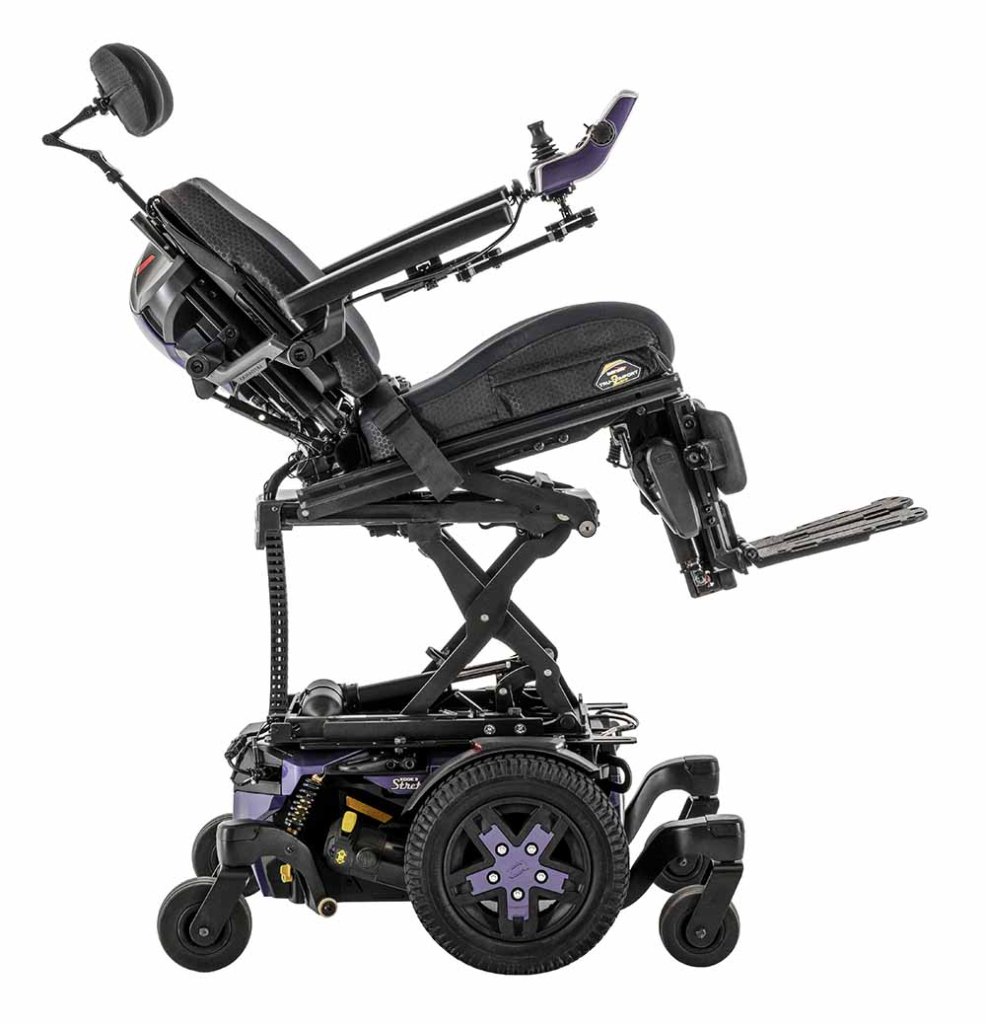
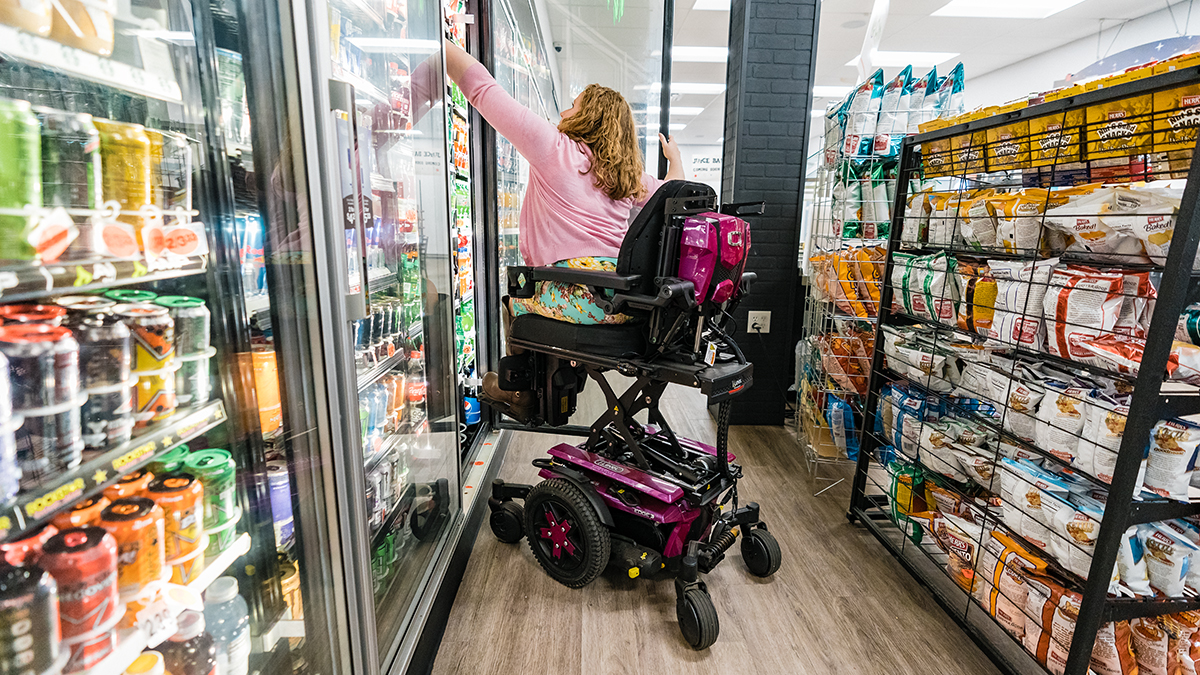
Why do I love iLevel® so much? Well, it’s a game changer. When I am elevated 12 inches in my Edge® 3 Power Wheelchair, I am more independent, which makes living life a lot more fun. Here are some of the things that iLevel does for me.

Holding My Niece at iLevel

My niece is awesome. It’s so fun interacting with her and watching her grow. When she was really small, iLevel came in handy. Because I only have one hand, I hold her tightly and lean her against my body. If somebody else wants to hold her, being elevated makes passing her to someone easier and safer. They don’t have to bend down to grab her and I don’t have to lift her up.

Completing Chores with iLevel

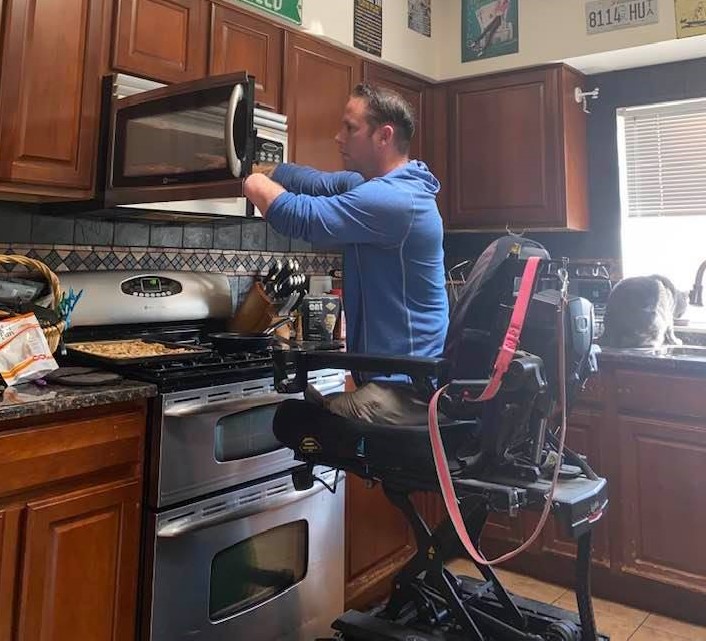
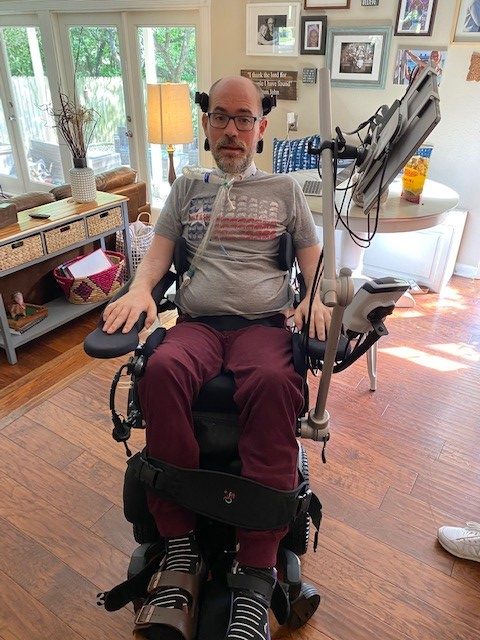
Bryan uses iLevel to ensure safety while cooking

The great thing about iLevel is that you can adjust it to whatever height you need. When I do the dishes, I elevate my power wheelchair just enough so I can reach the sink easily. If a light bulb goes out and I need to change it, I elevate my power wheelchair to a full 12 inches.

When I am cooking a meal, iLevel technology makes cooking safer and more enjoyable. Not only can I reach the stove, I can see into the pan or pot to check on the food. I can even reach the back burners! Before iLevel, I’d often burn myself, which is pretty dangerous if you’re dealing with hot grease.

iLevel in Social Settings

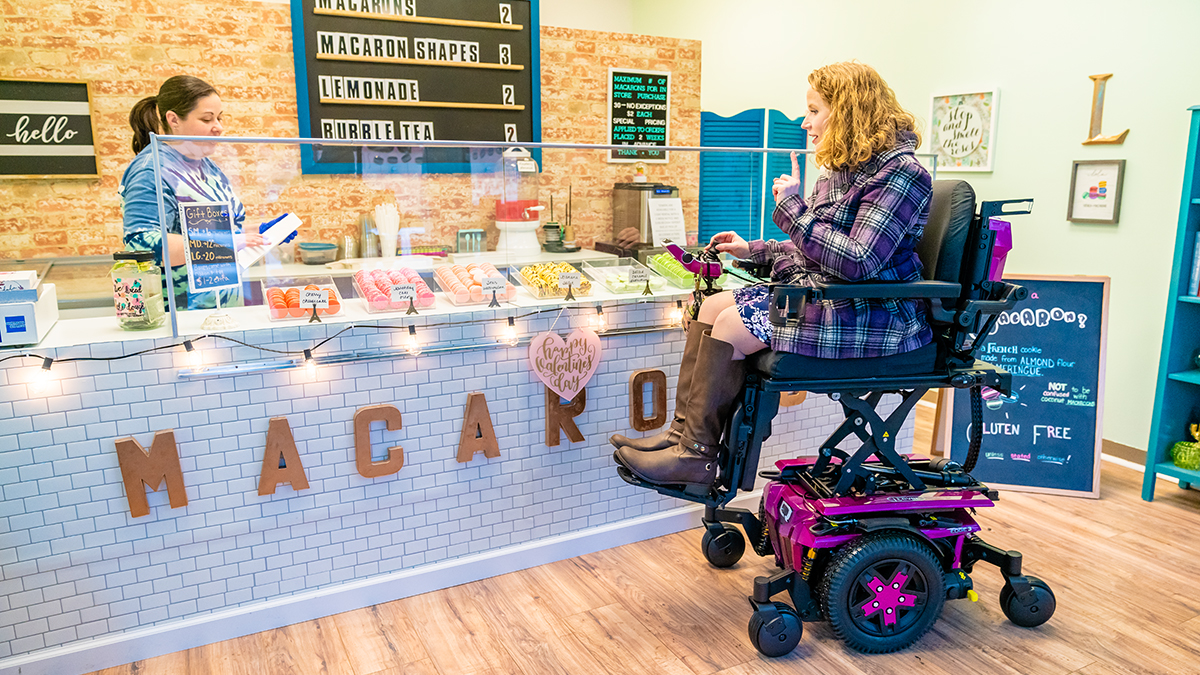
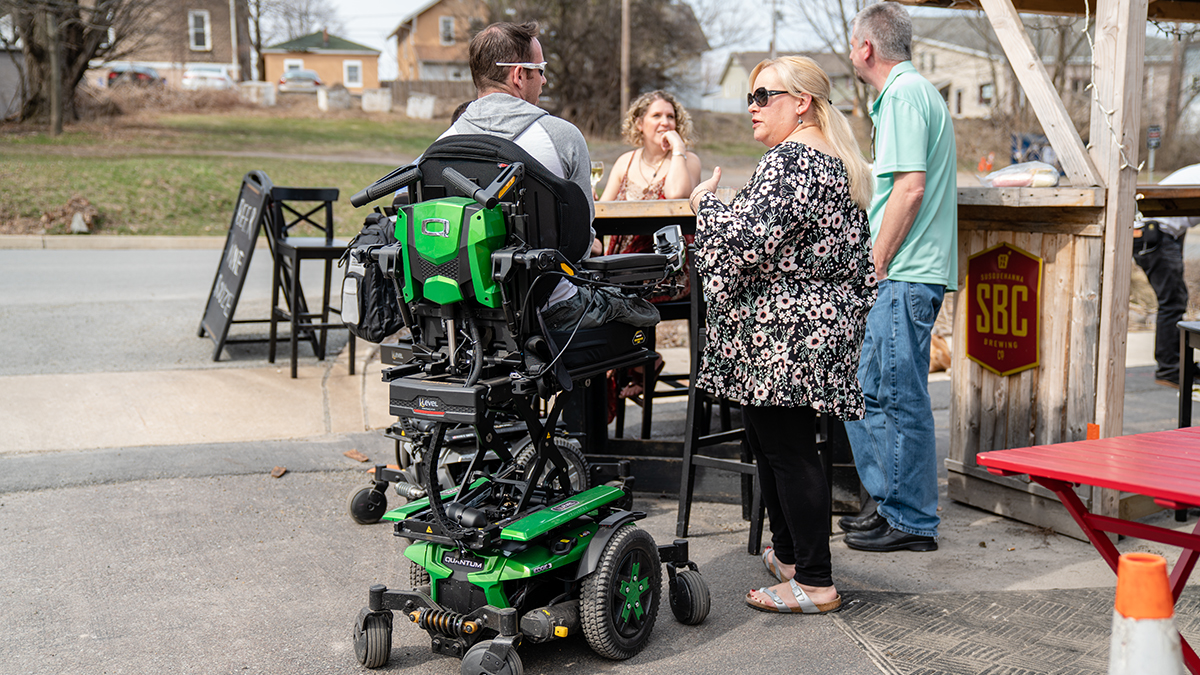
A lot of wheelchair users who are at seated height sometimes feel like they’re being talked down to by others. It’s hard for people with disabilities who are at a lower seat height to hear what their friends and family are saying. Plus, their necks probably hurt from looking up all the time. With iLevel technology, it’s a whole new ball game. Mostly, my friends are never confused on whether to come to my level or not because I’m usually at their level already!

From what I’ve experienced in social situations, being at iLevel makes strangers feel more comfortable interacting with me. It’s weird. It almost seems like elevating my power wheelchair 12 inches so we’re at eye level makes them more willing to talk to me. I think that’s pretty cool. iLevel is breaking barriers!

About Bryan Anderson: Bryan grew up and resides in Illinois. Injured by an IED in October 2005, Bryan is one of the few triple amputees to survive his injuries in Iraq. He is an ambassador for the Gary Sinise Foundation and a spokesperson for USA Cares, which is focused on assisting post 9-11 veterans. Click here to learn more about Bryan.


For more great blogs from our brand ambassadors and Q Roll Models, visit lifeatilevel.com today!

Expanding Access to Role Models for Girls with Disabilities

Back in November, I told you about the new nonprofit organization I co-founded, Disability EmpowHer Network. Disability EmpowHer Network is dedicated to connecting, motivating, and guiding disabled girls and women to grow, learn, and develop their highest potential and gain the confidence to lead.

When I first shared the news about Disability EmpowHer Network, we only had one program: EmpowHer Camp. This multi-stage skill-building, empowerment, and mentoring program brings a diverse group of girls with disabilities (ages 13 -17) to camp with successful disabled women mentors. Held in the Adirondacks for one week, the girls learn about disaster preparedness and basic survival skills, while also developing independent living and leadership skills.

Our New Program

Since November, however, we have grown our organization and now offer another program. We help girls with disabilities connect with successful disabled role models! Our new program is called Letter from a Role Model. It is a mentoring initiative that matches girls and young women with disabilities with a successful disabled woman to write them a letter of encouragement! 

Letter from a Role Model creates a unique experience for girls with disabilities to feel connected and understood by a real-life role model. Our role models are matched with the girls based on their backgrounds, interests, disabilities, and personalities. Role models write letters to the girls, making a real connection. They talk about tough times they went through when they were younger and how they prevailed! Each letter is full of encouragement. By receiving an actual letter, the girls with disabilities experience the excitement of receiving mail; a delight during this pandemic. The letter is also a tangible object that the girls can look back to whenever they need a confidence boost. 

When we started Letter from a Role Model in December, we thought it would be a short term event. We put a call out on our social media saying that we wanted to help five girls with disabilities start the new year off with a letter from a disabled woman role model. We planned to connect five girls with a role model to write them a letter and be done. Instead, we got lots of nominations for lots of girls to receive a Letter from a Role Model! All over the nation, parents, teachers and friends were nominating girls with disabilities to receive a Letter from a Role Model. We quickly realized that this “short event” needed to be a permanent program for Disability EmpowHer Network. 

Making a Difference for Girls with Disabilities

Since December, we matched over 30 girls with successful disabled women role models! Each time we make a match, I celebrate because I know that a disabled girl is getting a role model that she truly needs. These letters are making a difference.  Connecting girls with disabilities to successful disabled women role models they can identify with is impacting girls with disabilities and their families in incredible ways. Girls who received letters tell us that they feel like they can really relate to their role models.

Parents are overjoyed, too. One parent told us, “we have had many talks about how she feels about being treated different or feeling left out. This is really a new discussion with COVID being a factor because class size is super small and not being able to interact with others in class has brought it to her attention even more. With that being said, I truly have no idea how that feels but knowing that she can now reach out to her Role Model, someone who completely understands, makes my heart happy. That her Role Model can truly relate and give advice or just listen to her hurt is a blessing.”

But it’s not just the girls with disabilities and their families that are benefitting from this program. The Role Models are benefitting from it too! One Role Model said: “Being a role model brings things full circle for me. I’ve been in a wheelchair since I was 8 years old so I’ve had many role models, and I can truly say I wouldn’t be who I am today! It’s because of role models that I had the drive to learn to be independent, love my body, find love, become a mommy, and even jump out of a plane. There’s just a special connection when you see someone ‘like you’ doing what you dream of doing. I hope to be able to give even a portion of the confidence, support, and example of strength that I’ve been so fortunate to receive!”

I am thrilled for all of the girls and Role Models that we’ve matched and I look forward to matching many more girls for years to come!

About Stephanie Woodward: Stephanie is a brand ambassador advisor for Quantum Rehab® and works as a disability rights activist. She has received many awards for helping communities become more accessible, as well as for her actions in fighting for the rights of disabled individuals as it relates to Medicaid and other support services. Click here to learn more about Stephanie.

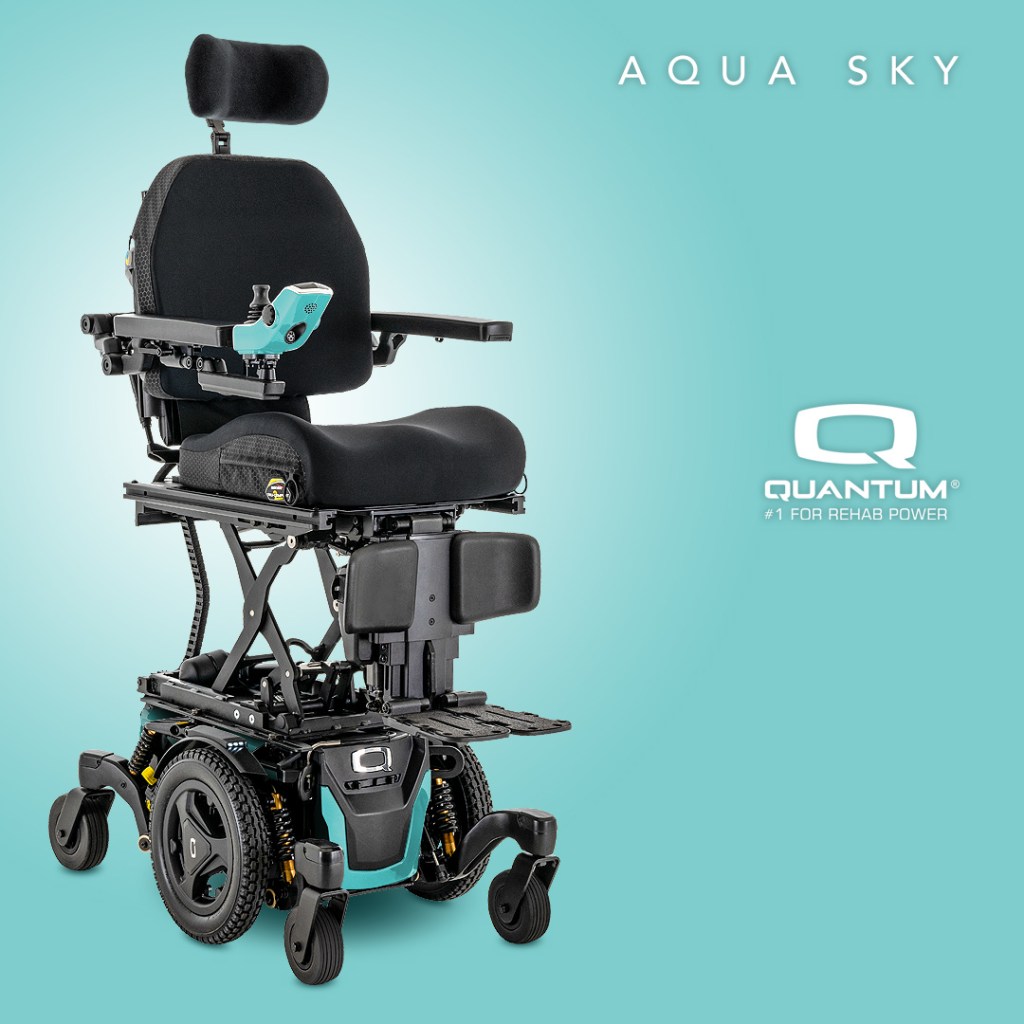
Contest: Win a Stretto Aqua Sky Shroud from Quantum!

Whoa! We’re holding another contest. One lucky person will win a one-of-a-kind Aqua Sky shroud. Here’s how you can win.

If you own a Quantum Stretto Power Wheelchair, simply retweet (Twitter) or share (Facebook or Instagram) our social media post announcing the contest. Tag us and three of your friends in the tweet or post. Do this by Friday, April 16, 2021, to be automatically included in a random drawing on Monday, April 19, 2021. The lucky winner gets an Aqua Sky shroud installed by a Quantum rep. No purchase necessary. See the complete rules for each social media platform below.

NOTE: You only need to retweet or share the contest post once and on one social platform.

Twitter

  1. Retweet the contest post
  2. Tag us @QuantumRehab and tag three of your friends by April 16
  3. You are automatically included in a random drawing, held on April 19
  4. A winner will be randomly selected
  5. A Quantum representative near the winner’s location will install the Aqua Sky shroud onto their power chair
  6. All participants must own a Quantum Edge 3 Stretto Power Chair (if the randomly selected winner does not own a Stretto, we will draw another name)

Facebook

  1. Share the contest post
  2. Tag us @QuantumRehab and tag three of your friends by April 16
  3. You are automatically included in a random drawing, held on April 19
  4. A winner will be randomly selected
  5. A Quantum representative near the winner’s location will install the Aqua Sky shroud onto their power chair
  6. All participants must own a Quantum Edge 3 Stretto Power Chair (if the randomly selected winner does not own a Stretto, we will draw another name)

Instagram

  1. Share the contest post
  2. Tag us @quantum_rehab and tag three of your friends by April 16
  3. You are automatically included in a random drawing, held on April 19
  4. A winner will be randomly selected
  5. A Quantum representative near the winner’s location will install the Aqua Sky shroud onto their power chair
  6. All participants must own a Quantum Edge 3 Stretto Power Chair (if the randomly selected winner does not own a Stretto, we will draw another name)

Girls with SCI Need Women Mentors with SCI

Anyone can benefit from mentoring, but I cannot stress enough that girls and young women with SCI need women mentors with SCI. Women mentors with SCI can help girls with SCI with their development, academic achievement and self-esteem to improve high school graduation rates and employment rates as adults.

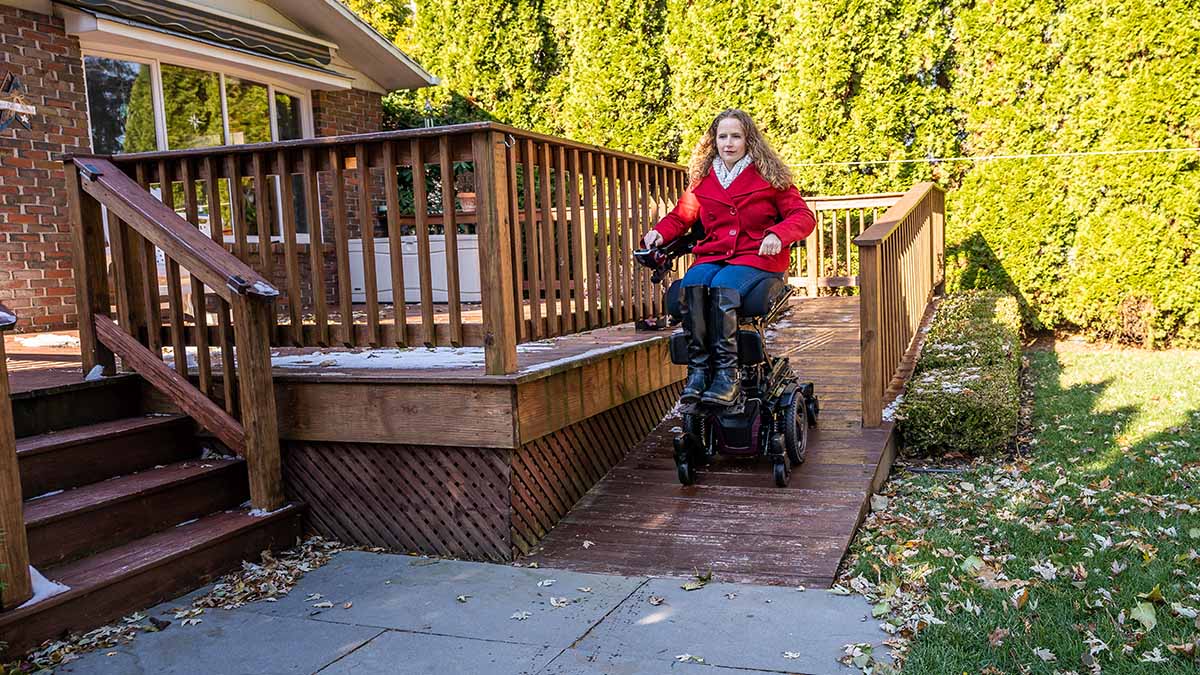
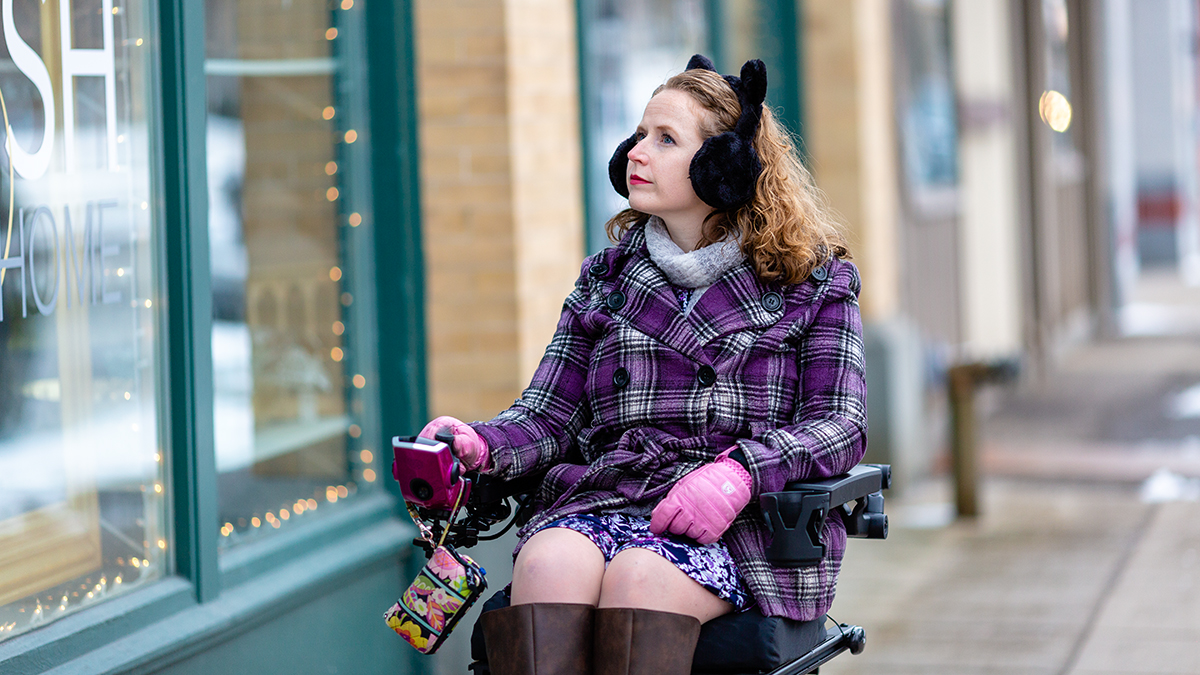
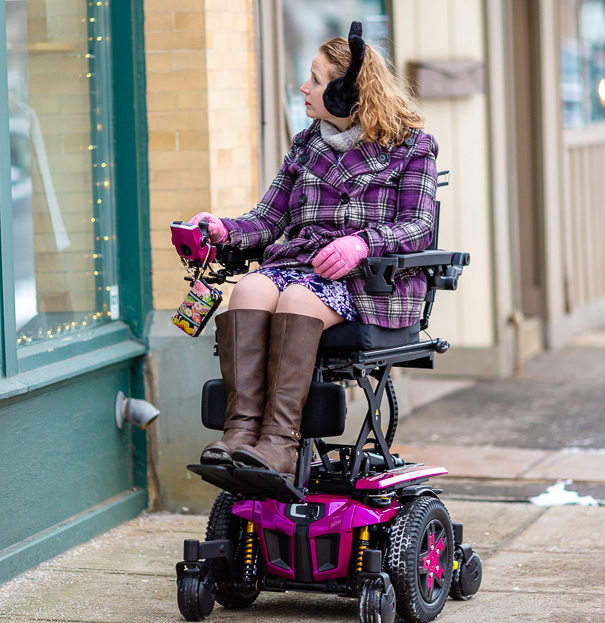
Stephanie in her Edge 3 Power Wheelchair

Studies show us that girls with disabilities have lower self-cognition and lower self esteem. Studies also stress that girls with disabilities have a higher need for positive adult role models with disabilities. There is less visibility of successful disabled women in our culture and there are more limited “socially sanctioned roles” for women with disabilities in our communities. Positive role models have powerful effects on young people. Role models help young people with personal growth, development and improve outcomes for social and economic opportunities.

The Benefits of Mentoring 

Mentoring supports positive outcomes, including social development, academic achievement and improved self-confidence among higher-risk young people.[1] “Higher-risk” or “at-risk” young people include young people who face significant personal and/or environmental challenges who are less likely to transition successfully into adulthood and achieve economic self-sufficiency.[2] Youth with SCI are “higher-risk” because they endure a traumatic experience and experience both significant personal challenges and environmental challenges.

What the Data Shows

Evidence demonstrates that the challenges that youth with SCI experience can impact their likelihood to transition into adulthood and achieve economic self-sufficiency. For example, data from the National Spinal Cord Injury Statistical Center reports on individuals who had a 9th – 11th grade education one year post injury. Approximately 38 percent of those individuals had not graduated high school five years post injury and approximately 20 percent had not graduated high school ten years post injury.[3] An important determinant of employability in persons with SCI is educational achievement, particularly after injury. Among adults with SCI, both employment and participation in school are associated with a higher quality of life.[4] 

Notably, approximately 20 percent of spinal cord injuries (SCI) occur in children and adolescents[5] and only 19 percent of people with spinal cord injuries are female.[6] Because individuals with SCI are predominantly male, it is more difficult for girls with SCI to find women mentors with SCI. While peer-mentoring groups exist, many girls with SCI still feel isolated and alone.

What the Parents See


In my role at Disability EmpowHer Network, I work to connect girls with disabilities with successful disabled women mentors. Parents of girls with SCI in our programs reporte that their daughters feel isolated, alone, depressed, and insecure, especially since COVID began. One parent told us that her daughter is “the only girl or woman in a wheelchair that she knows. She’s never met someone like herself.”

Another parent shared that one year after her daughter’s injury “her grades are suffering severely…  She rarely gets to see friends due to COVID and I believe sometimes she is a bit depressed.  It’s a lot for her at 11 to handle.” Still more, a different mother shared “My daughter is 14 and suffered a spinal cord injury and paralysis following a car accident approximately 1.5 years ago… Being a teenager, in general, is hard and I see her struggling with self-esteem and motivation.”

Letter from a Role Model Program

After being paired with a Role Model with SCI, both the girls and the parents gave positive feedback. Parents report that their daughters feel more confident and more willing to try new things. One girl told us, “I feel like I could relate to somebody.” A mother told us “Thank you so much for all you do. It is SO needed for these girls and the families.” Another parent shared “[She] was so surprised to get her letter!!!! What a sweet thing to do for a child who is dealing with such a circumstance.  I am grateful♥️ This may be a penpal for life!!”

These are just a few examples of how receiving just one letter from a Role Model with SCI has impacted girls with SCI so significantly. Imagine how impactful it would be for the girls to have a long-term Pen Pal relationship with their role model or if they met their role model in person. It could be life changing!

As a woman who was born with my disability, I’ll never know what it’s like to experience an SCI and have my whole world change. I can talk about what it’s like to live as a wheelchair user, but I cannot completely relate to girls with SCI. That’s why I am so thankful for the women with SCI in our program who serve as mentors and change these girls’ lives! 


[1] David DuBois, Jean Grossman and Carla Herrera. The Role of Risk: Mentoring Experiences and Outcomes for Youth with Varying Risk Profiles. Public/Private Ventures distributed by MDRC, 2013.
[2] Koball, Heather, et al. (2011). Synthesis of Research and Resources to Support At- Risk Youth, OPRE Report # OPRE 2011–22, Washington, DC: Office of Planning, Research and Evaluation, Administration for Children and Families, U.S. Department of Health and Human Services.
[3] Id. at 104.
[4] Teresa L. Massagli MD, Brian J. Dudgeon MS, OTR, Brian W. Ross, ME. Educational performance and vocational participation after spinal cord injury in childhood. 1996.
[5] American Spinal Cord Injury Association. Facts on Pediatric Spinal Cord Injury. Available at https://asia-spinalinjury.org/committees/pediatric/pediatric-committee-news-and-resources/pediatric-spinal-cord-injury-facts/
[6] National Spinal Cord Injury Statistical Center, University of Alabama at Birmingham, 2020 Annual Statistical Report – Complete Public Version. Available at https://www.nscisc.uab.edu/Public/2020%20Annual%20Report%20-%20Complete%20Public%20Version.pdf

About Stephanie Woodward: Stephanie is a brand ambassador advisor for Quantum Rehab® and works as a disability rights activist. She has received many awards for helping communities become more accessible, as well as for her actions in fighting for the rights of disabled individuals as it relates to Medicaid and other support services. Click here to learn more about Stephanie.

Qualifying Diagnoses and Narrow Motorized Wheelchairs

If you were recently diagnosed with a medical condition that affects your mobility, you may qualify for complex rehab equipment. More serious medical conditions, such as ALS, muscular dystrophy and other diagnoses, may require specialized equipment designed to meet functional and medical needs. A narrow motorized wheelchair, such as the Edge 3 Stretto®, can accept a wide range of complex rehab components to support your posture and positioning, provide comfort and support and help you complete daily living activities. Speak to your physician, therapist or other clinician regarding your options, as they have a greater understanding of your medical needs and can determine what components suit you best.

Narrow Wheelchairs for Multiple Sclerosis

The Edge 3 Stretto with iLevel

Depending on the type of multiple sclerosis, you may require different levels of support from your narrow wheelchair. The components on your power wheelchair may also change over time depending on how your MS condition progresses. To assist with this progression, the Edge 3 Stretto® is available with Q-Logic 3 Advanced Drive Controls, which is highly customizable and expandable. If individuals have limited muscle control, they may benefit from iAccess programmable push button and toggle options. These enable the user to customize their seating independently.  

A Narrow Wheelchair for Quadriplegia

If you experience partial or total paralysis due to an illness or injury, power positioning is a great benefit for individuals living with quadriplegia. TRU-Balance® 3 Power Positioning Systems, an option available on the Stretto narrow motorized wheelchair, helps maintain proper comfort, skin integrity positioning and function. Power tilt, power recline, power articulating leg rests are just some of the components available. TRU-Balance® 3 offers an appealing look and feel while also maximizing independence for users.

ALS Wheelchairs for Narrow Doorways

Jay Smith uses an Edge 3 Stretto

The Edge 3 Stretto is the narrowest, most maneuverable power base. It offers an overall width of 20.47 inches, perfect for navigating tight corners or small areas in the home. Even when customized with complex rehab components to support individuals living with ALS, the Stretto maneuvers easily. Plus, it delivers a smooth ride with independent SRS (Smooth Ride Suspension), keeping individuals with ALS comfortable. When choosing between the best wheelchairs for narrow doorways, the Stretto is a great choice.

Narrow Wheelchairs for Traumatic Brain Injury

When living with a TBI or traumatic brain injury, iLevel® technology can help individuals live more independently. iLevel is available as an option on the Stretto narrow wheelchair, elevating the user up to 12 inches for greater access to areas in the home. Equipped with Extra Stability Technology®, iLevel improves quality of life and daily functions. Individuals with TBI can safely complete activities such as transferring, reaching, grooming and toileting.


Medicaid and Narrow Wheelchairs

Medicare and Narrow Wheelchairs

What Employers & Employees Should Know About Using FMLA for IEP Meetings

In my last blog, I discussed the 2019 United States Department of Labor opinion explaining that parents can use their FMLA time in order to attend IEP meetings for their children. I explained why this was important for parents to know and I explained who would be eligible for FMLA. This blog explains what employers should know about allowing employers to use FMLA for IEP meetings and what employees should know if they feel that their rights are violated. 

Employers and FMLA

What should employers know about allowing parents to use FMLA time to attend their children’s IEP meetings? First, employers should train managers and Human Resources staff about this opinion from the Department of Labor so that their staff does not inadvertently and wrongly deny these requests from their employees. Employers should treat requests to use FMLA to attend IEP meetings similarly to how they would treat any other requests for intermittent leave under FMLA. Employers can request documentation to demonstrate that an employee’s child does have an IEP to support the employee’s request to take FMLA time to attend IEP meetings. Employers do not, however, need to request specific documentation with language demonstrating that parents must attend these IEP meetings. The Individuals with Disabilities Education Act (IDEA) specifically lists parents as the first members of an IEP team.

For employees: if you feel that your rights have been violated, what should you do? If you feel that you have been wrongfully denied your ability to use FMLA time to attend your child’s IEP meetings, consider these two courses of action.

Filing a Complaint over FMLA Time

The first course of action: You can file a complaint with the Secretary of the United States Department of Labor. The second course of action: you can file a private lawsuit. If you choose to file a complaint with the Secretary of Labor, remember to do it in a timely manner. You can find out how to file that complaint by going on the United States Department of Labor website. Some good things to cover in your complaint: when you filed your request, who you talked to about your request, what the response was to your request (if any), and any other information that you feel is important. You might also consider including copies of any documentation you may have, such as the documentation you submitted with your request, the actual request you submitted, and any email correspondence that you may have. 

Filing a Private Lawsuit

If you want to file a private lawsuit, the first step is finding a lawyer that is right for you. When looking for an attorney to represent you, it may be helpful to bring the same information that you would include in a complaint to the Department of Labor. All that information may help you have a fruitful discussion with potential attorneys. For a private lawsuit, the statute of limitations is generally two years, unless the denial was willful, in which case, the statute of limitations could be three years.

Stephanie Woodward is a proud disabled person, an attorney, and the Brand Ambassador Advisor for Quantum Rehab. While Stephanie is an attorney, she is not your attorney and this blog should not be construed as providing legal advice. 

About Stephanie Woodward: Stephanie is a brand ambassador advisor for Quantum Rehab® and works as a disability rights activist. She has received many awards for helping communities become more accessible, as well as for her actions in fighting for the rights of disabled individuals as it relates to Medicaid and other support services. Click here to learn more about Stephanie.


For more great blogs from our brand ambassadors and Q Roll Models, visit lifeatilevel.com today!

Using FMLA for IEP Meetings

Yes, parents can use Family and Medical Leave Act (FMLA) time to attend individualized education program (IEP) meetings for their children. The United States Department of Labor published an opinion on August 8, 2019, explaining that parents can use their FMLA time in order to attend IEP meetings for their children. This was an important decision. 

Paid Time Off and Families

This opinion matters to a lot of parents. Many individuals get a limited amount of paid time off. A lot of people may worry about losing their jobs if they take more than their allotted paid time off during a single year. For parents, this worry can intensify because when you have kids, you’re using your paid time off, sick time and vacation for yourself and your kids. When your kids get sick, when they have doctor’s appointments, when they have school performances or parent-teacher conferences, your paid time off is not just yours anymore. It is also for your family. 

For parents who have children with disabilities, there are additional worries. Kids with disabilities can sometimes need even more doctor’s appointments, specialists or surgeries, all of which could require even more time off! For parents with disabilities who have kids with disabilities, there’s even more stress and worry. Parents with disabilities may have their own specialists to see. This means they need time off from work for those specialist visits. Plus, their kids may have specialists to see so this may result in using all your time off and more! Needing additional time off to go to IEP meetings could mean the difference between keeping your job and losing it unless you have protections. These protections allow you to keep your job and take time off. This is where the FMLA time comes in.

Using FMLA time to attend IEP meetings can give parents peace of mind. They can attend the meetings that are important to their children’s education and not lose their job. FMLA allows employees to take unpaid job protected leave for specified family and medical reasons, for up to 12 work weeks within a 12-month period.

What Qualifies Under FMLA

I want to be clear: while this is really great news for people who are covered under FMLA, this is not available for everyone. This is only available for individuals who are considered eligible employees for covered entities under the Family and Medical Leave Act. So, let’s start with what qualifies as a “covered employer.” A covered employer is one of the following:

  • A private sector employer with 50 or more employees for 20 or more consecutive weeks during the current or prior year.
  • A public agency including a local, state, or federal entity regardless of how many employees it has.
  • a public or private elementary or secondary school regardless of how many employees it has.

Now, what is an “eligible employee?” An eligible employee must meet the following criteria:

  • You must work for a covered entity.
  • You must have worked for your employer for at least twelve months.
  • You must have at least 1,250 hours of service with that employer within the immediate 12 months prior to requesting the leave.
  • you must work at a location that has at least 50 or more employees within 75 miles.

So, if you are an eligible employee that works for a covered entity and you want to take FMLA to attend your child’s IEP meeting, then you must submit that request in advance, just like you would any other time off request. The Department of Labor suggests at least 30 days’ notice where the leave is foreseeable. Where the leave is not foreseeable, however, then you should put in the request as soon as possible.

IEP Meetings and Children with Disabilities

I would be remiss if I ended this blog without saying that it is my firm belief that a child with a disability should always be included in their IEP meeting. While the law does not require a child to be included until a certain age, I believe that children with disabilities should be included in any meeting that discusses them.

In the Disability Community, our mantra is “nothing about us without us” and if you’re discussing our education plans, we can contribute to them. While I did not have an IEP growing up, I did have a 504 plan, which is similar to an IEP in some ways. I was as young as five or six years old and actively participated in those plans and contributed to those meetings. I expressed what I could and could not do and what I did and did not want.

So, while I may not have been the most eloquent at expressing myself at such a young age, I had the right to participate in a plan for myself. It helped me learn how to advocate for myself from a very young age. It’s not just parents and teachers who should have a say in what happens in a child’s education program. The child should have a say as well. After all, it’s their education.

Stephanie Woodward is a proud disabled person, an attorney, and the Brand Ambassador Advisor for Quantum Rehab. While Stephanie is an attorney, she is not your attorney and this blog should not be construed as providing legal advice. 

About Stephanie Woodward: Stephanie is a brand ambassador advisor for Quantum Rehab® and works as a disability rights activist. She has received many awards for helping communities become more accessible, as well as for her actions in fighting for the rights of disabled individuals as it relates to Medicaid and other support services. Click here to learn more about Stephanie.

Click to read part two of this series.


For more great blogs from our brand ambassadors and Q Roll Models, visit lifeatilevel.com today!
Backup Camera for Wheelchair Users

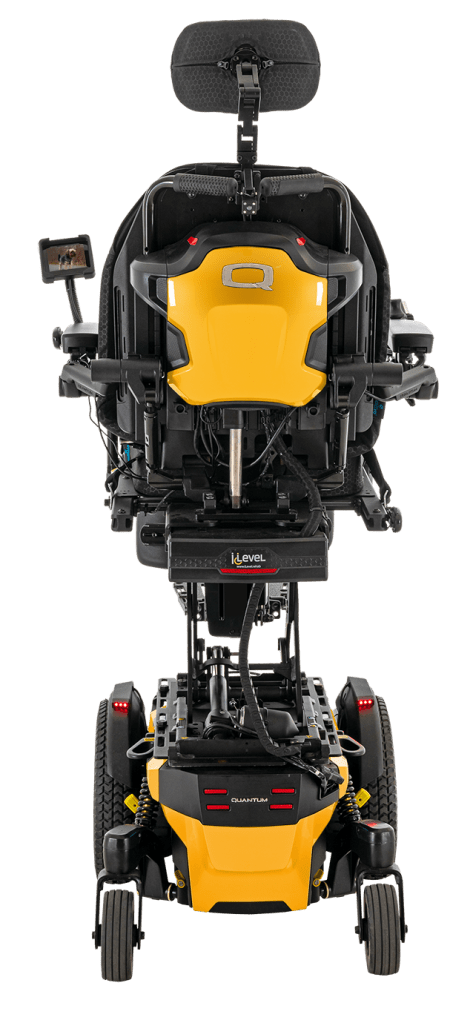
Accessibility and safety are just two of the most common challenges wheelchair users face. Individuals with mobility issues deserve to live full, busy and active lives. There are many tools and technologies out there that can help. From iLevel® Power Adjustable Seat Height to front and rear LED fender lights, Quantum wheelchair users enjoy greater visibility, access and safety. Yet, what about power chair users and their need to see what is going on behind them? Quantum has the solution! The Quantum backup camera for wheelchair users is the perfect addition to any Quantum Power Chair, allowing users to maintain total visibility of what’s happening behind them.

Backup Camera for Wheelchair User Visibility

Whether driving a power wheelchair forward, to the left or the right, individuals can typically see what’s ahead of them. Backing up is different. Some motorized wheelchair users have difficulty with or are unable to turn their heads to see what’s behind them when reversing. The Quantum backup camera is one camera with many uses. It is currently available on Q-Logic 3 electronics, although it will become available on NE and NE+ controllers in the future.

Indoor Visibility with the Electric Wheelchair Rear View Camera

Even the most wheelchair-accessible home can have obstacles. From narrow doorways, hallways, furniture, kids and pets, you can have peace of mind with the Quantum backup camera when reversing your power chair in your home. One of the coolest features is the infrared capabilities, which allows you to see what’s behind you even at night! This camera is available with many mounting options, so you can customize the mounting based on the setup of your motorized wheelchair. The 3.5-inch LCD display, which easily mounts to your power wheelchair’s armrest or side rails, is always visible to you while driving. The LCD display comes with a protective case to prevent damage.

Outdoor Visibility with the Quantum Wheelchair Backup Sensor

When going to appointments, the grocery store or visiting friends, wheelchair users must always be aware of their surroundings. The wheelchair backup sensor from Quantum promotes safety with a rear viewing angle of 170 degrees. Now you can see what’s behind you while operating your power chair, including cars, cyclists, pedestrians and other wheelchair users.

One of the great things about Quantum’s electric wheelchair rear view camera is that you can switch between modes. There are two modes available: the camera is on always or the camera turns on with a reverse command. If you are out and about running errands, you may want to leave the camera on constantly so that you can always check behind you while operating the power wheelchair. When you are finally home and settling down to watch some television or a movie, you might want to switch the camera to the reverse mode, so you aren’t distracted by the LCD display.

Not sure if the Quantum backup camera is right for you? Check out these testimonials from consumers like you to hear their thoughts on the benefits of Quantum’s electric wheelchair rear view camera.

There’s an App for That: PQ-365

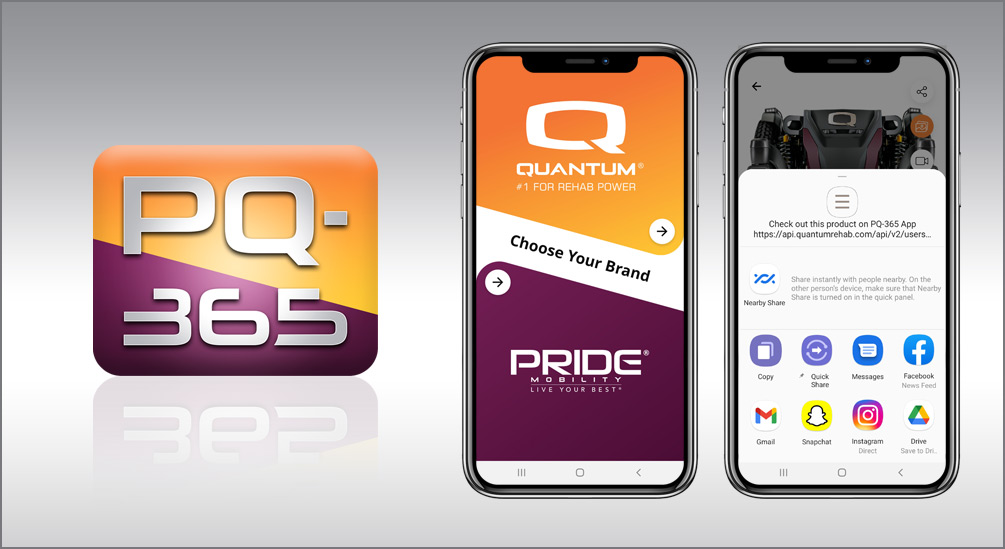
Pride Mobility and Quantum Rehab have launched PQ-365, a new one-stop app for wherever you go, whenever you need it. PQ-365 includes everything Pride and Quantum-related, designed for providers and clinicians. The free, easy-to-use app helps busy professionals stay up to date with the latest information from Pride and Quantum and access all our content in one quick and convenient place.

The app has a ton of cool features, with the newest ones as follows:

  • A serial number and order search
  • The serial number is shown in the order tracking information
  • Links are created to part numbers in the serial number lookup for a description of each part
  • A voice search
  • An image share option
  • The ability to zoom in on product images
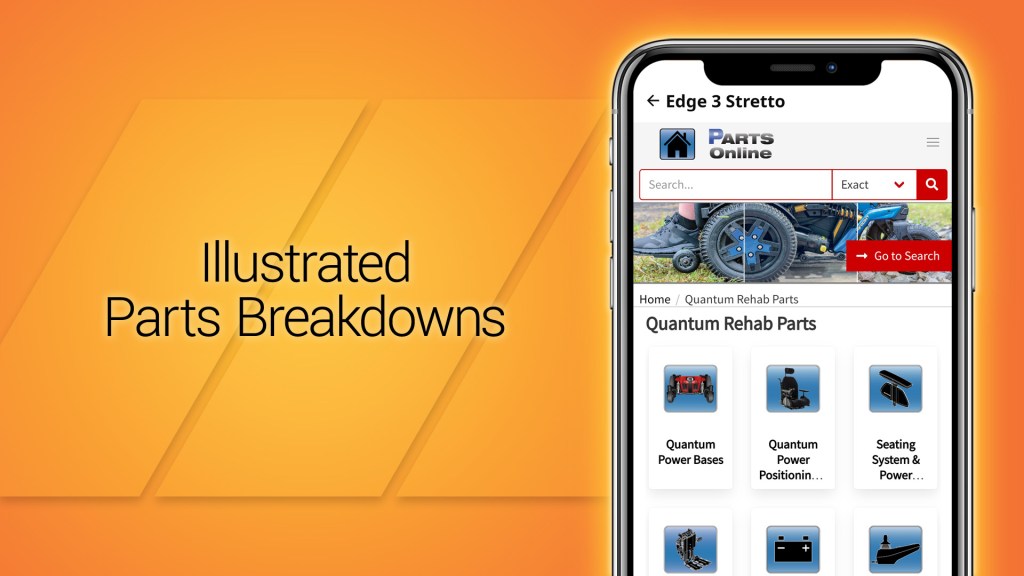
  • Illustrated Parts Breakdowns (password protected)
  • Coaching feature – Created for coaching app users on new functionality like sharing an image
It’s the one-stop app for all Pride and Quantum content

Other features include a quick-search option, 360-degree product views, fillable order forms, push notifications, consumer testimonials, news, events, specifications sheets, brochures, owner’s manuals, basic operating instructions and more. After an initial tutorial option upon opening the app for the first time, the user is required to select either the U.S. or Canada to view country-specific content. Additionally, password-protected installation instructions and technical videos are available (passwords can be obtained by emailing marketing@pridemobility.com). Providers and clinicians can also directly access the Pride Learning Management System via the app for online CEU courses.

“We are excited to add Pride content into our Quantum Clinician app to create the new PQ-365 app,” said Kate Pencek, Senior Director of IT & Enterprise Architecture. “We want PQ-365 to be a central repository for both Pride and Quantum, from order forms to technical service videos. While it is simple and user-friendly, the app meets today’s technological demands while providing a great user experience. Our goal is to continuously improve the app to meet the needs of our providers and clinicians.”

Rhonda Perko, Vice President of Marketing, says there was a clear need to have an app for Pride Mobility as well.

“The company received fantastic feedback on the Quantum Clinician app, so naturally we added Pride as a next step,” Perko said. “Having an app is yet another way for our providers and clinicians to undergo immersive brand experiences. From a sales representative wanting to show a consumer product color options, to a clinician who wants to fill out on order form on a cell phone, PQ-365 is a one-stop resource that can be used by anyone.”

PQ-365 is available for download via the Apple Store and Google Play. It replaces the Quantum Clinician app. Click here to check out a video of the new app. Those who already have the Quantum Clinician app installed will receive an app update to download the new version.

People with Disabilities and Vaccinations

It’s important to social distance and wear a mask

For some people with disabilities, it has been a bit difficult to get vaccinated. While living in Wyoming, it has been easy to stay safe and isolated in my small town. I am scheduled to get my vaccine on Wednesday. Here is some information to help you understand some of the tips or procedures that the CDC has listed when being vaccinated.

I know some people who have disabilities are unsure how to get their vaccine. Below is some information from the CDC website on understanding the system the CDC uses. While the CDC makes recommendations on who should get the vaccine, each state creates its own vaccination plan based on the needs of its communities. You can call your county or city health office to find out how to be vaccinated.

CDC Recommendations for COVID-19 Vaccinations

 The CDC recommends this order for COVID-19 vaccinations:

  • Phase 1a – Healthcare workers and people who live in long-term care homes.
  • Phase 1b – Adults who are 75 years and older and essential workers.
  • Phase 1c – Adults who are 65 years and older, essential workers who were not in Phase 1b, and people 16 years and older who have high-risk medical conditions.
  • Phase 2 – All people, 16 years and older, living in the United States

People with Disabilities and Vaccinations

People with disabilities can be included in any of these phases. Some states include people with disabilities in Phase 1a or Phase 1b.  So be sure to look at both phases. Also make sure you contact your physician office or your state health department for the most updated information on when vaccines are available and when you can be vaccinated. If you have questions, you can visit the CDC’s site and their guidance for people with disabilities.

I am happy that I am getting vaccinated and I hope all of you are staying safe during the pandemic.

About Madonna Long: Madonna works as a disability advocate to educate policymakers and congressional leaders on disability issues. She uses an Edge 3 Power Wheelchair for mobility. She is a mother to four children and lives life on her terms, despite a spinal cord injury. Click here to learn more about Madonna.


For more great blogs from our brand ambassadors and Q Roll Models, visit lifeatilevel.com today!