A Night at the Ballpark

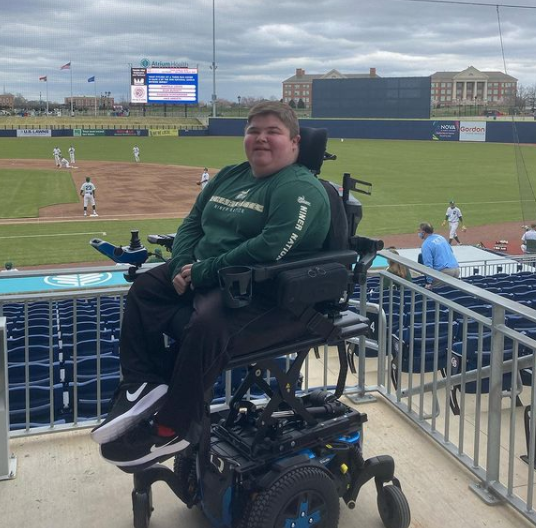
Recently, I attended a baseball game between the Charlotte 49ers and the Appalachian State Mountaineers. I go to school at the University of North Carolina in Charlotte and it was a lot of fun watching a live sporting event for the first time in months.

Entering the Stadium in my Narrow Wheelchair

The game took place at the brand-new Atrium Health Ballpark in Kannapolis, NC. It was a great experience made easier because of my Stretto narrow wheelchair with iLevel® technology.  Getting into the stadium was very easy thanks to iLevel. I elevated so I could scan my ticket. In the past, this has been a struggle. Now that I have elevation on my narrow wheelchair, I can reach easily. I entered the stadium and was pumped for some baseball.

Getting Food with iLevel

Before the game started, I wanted to get some food at the concession stands and have a good meal at the ballpark. iLevel on my Stretto narrow wheelchair allowed me to raise up and place my order. Once the food was ready, I put my drink in my cup holder and carry my food to my seat, which was an easy process. I ate a great meal as the game began.
Socializing at iLevel

Seeing friends at the game was something that I looked forward to the most. Being elevated at iLevel allowed us to have conversations without them bending down to talk to me. I talked to my friends at eye level and didn’t worry about being looked down on. We enjoyed the game together without any hassle.

Accessible Seating at the Park

My seats had a great view and were also power wheelchair accessible. Elevating my power wheelchair at 12 inches allowed me to see over people’s heads in the seats in front of me. My power wheelchair makes watching sporting events easier and takes away the strain of trying to see over taller people.

The game was a great one! The Charlotte 49ers come out on top, beating the Mountaineers with a score of 15 to 5. The bats were red hot for the niners and it was great cheering on my university to a fantastic win. After a long pandemic, watching a sporting event was one of the best things I had done in months.

The game was a lot of fun and my team came out on top! The biggest thing that I took away from this adventure is that I can do anything with iLevel. At the game, I was given a new sense of independence and did many things I couldn’t do in the past. I am forever grateful for the iLevel function on my Stretto power wheelchair because it has made my life so much easier. I am excited to see what other events I can go to in the coming months.

About Bryson Foster: Bryson is a Friend of Quantum and lives in North Carolina. He advocates and raises funds for the development of treatments for muscular dystrophy. He loves sports and cheers for his favorite basketball team, the North Carolina Tar Heels.


For more great blogs from our brand ambassadors and Q Roll Models, visit lifeatilevel.com today!
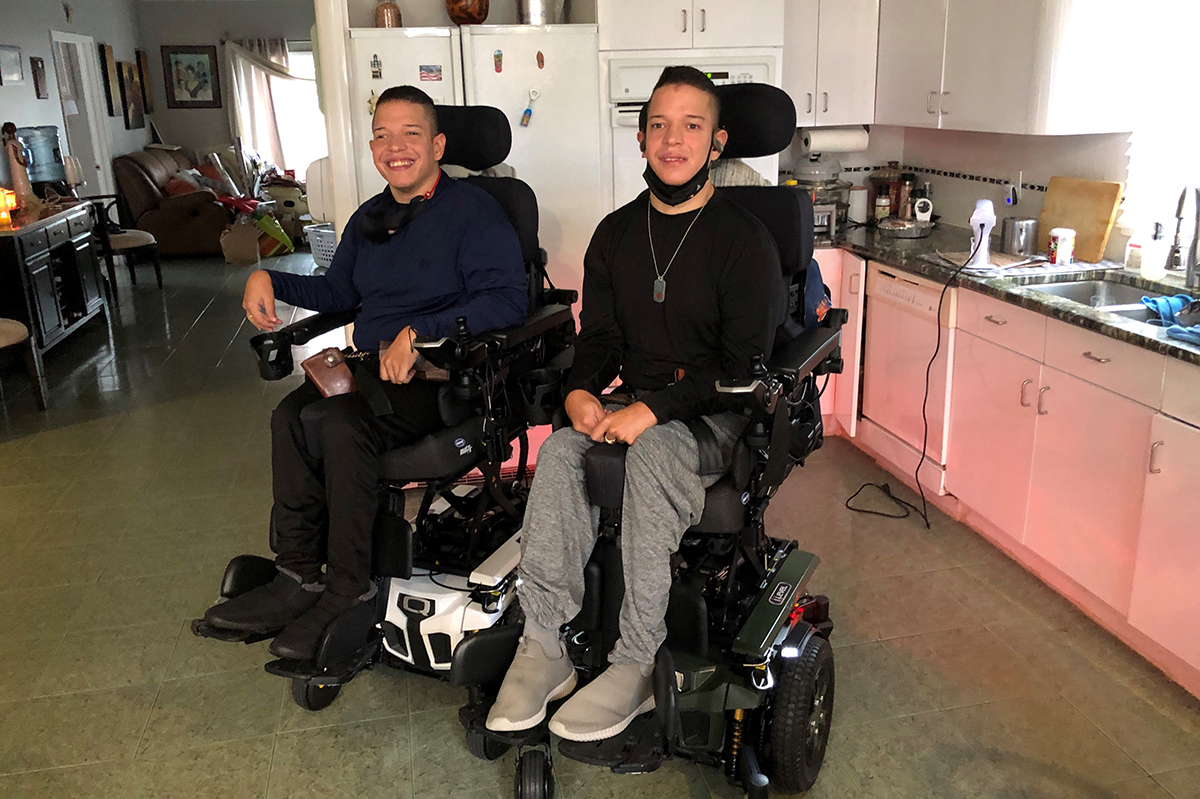
Double the Access, Double the Fun!

When it comes to living their lives, twin brothers Albert and Alberto Diaz are not big on restrictions. Growing up in a home with three other siblings, the twins never felt different because of their limitations.

“We are always researching and looking for ways to push further than what others may think are boundaries for us,” Albert and Alberto said.

Born with cerebral palsy, the 30-year-old brothers are unable to walk. Thanks to their Edge® 3 Power Wheelchairs, the twins maintain much of their independence and mobility. They enjoy the convenience of the USB charger port for charging their phones and love the power tilt and recline features for resting when traveling on long trips.

Although Albert and Alberto love and use many different aspects of their power wheelchairs, their favorite feature is iLevel® technology. The twins love elevating their motorized wheelchairs so they are at eye level with their peers.

“We are able to access so much more being elevated. It has been a huge boost to our confidence and self-esteem,” the brothers said.

The twins are happy to have access to practically anywhere they’re interested in going, including concerts, parks, restaurants, shopping and even traveling to other countries!

Enrolled in an independent support program, Albert and Alberto can live more inclusively with others, participate in social events and anything else that interests them.

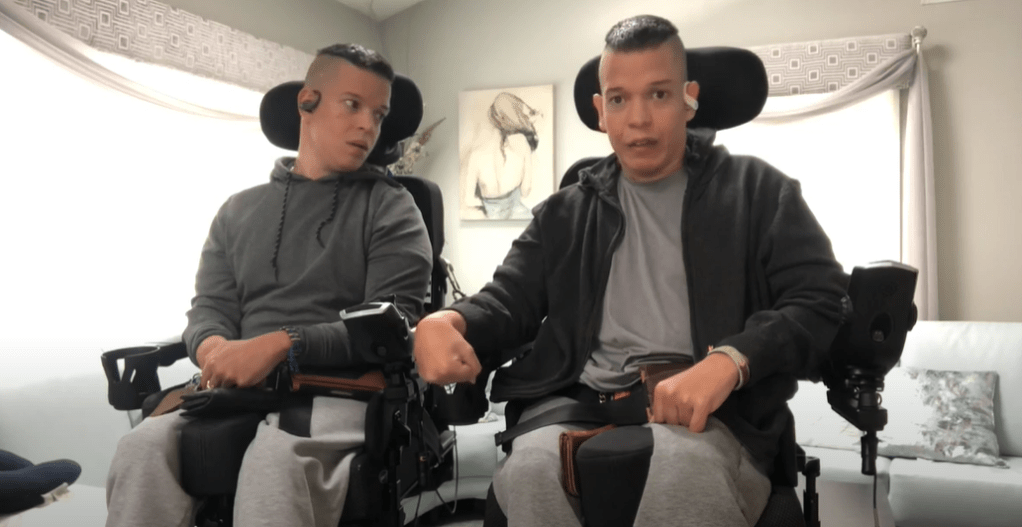
In between their activities, the brothers record videos for their own YouTube channel, Twins on Wheels. In their videos, the twins discuss their daily lives and how they stay optimistic in hopes of inspiring others like them.

The brothers on their YouTube channel, Twins on Wheels.

Alberto and Albert have individual passions as well. Albert loves to write and is currently working on an autobiography about himself. He also has DJ equipment and enjoys playing music for others. As for Alberto, he is very passionate about medical research. He seeks cutting-edge treatments and looks for ways to improve their lives. Alberto also loves video editing and has been working on a documentary about his life.

The brothers are thankful for technology that makes living more accessible for them. They never get discouraged when going for the things they want.

“We really want to thank Quantum for being so instrumental in normalizing our lives and making things more accessible with their technology,” Alberto and Albert said. “These Quantum power wheelchairs are literally our feet walking for us.”


Return to Testimonials

Josh McDermott: Working from Home

The other day, I received a notification on my iPhone that showed photos of me and one of my friends out to lunch at a restaurant in New York sitting at a high-top table. A huge smile came across my face. Thanks to my phone, I remember that was the last photo I took before the COVID-19 lockdowns began in New York. I can’t believe it has been a year already since the pandemic started. I also can’t believe I have worked from home for more than a year. This is the longest time I have ever been home.

Josh uses an Edge 3 Power Wheelchair for mobility

My whole career, I have spent an average of 200 plus days traveling on the road, visiting rehab hospitals and power wheelchair clinics. I also attend Abilities Expos and give public speeches at colleges. Work has and always will be my number one priority. I’m a firm believer that you get out of this life what you give. The harder you work and the more passion you show allows you to achieve success. During the pandemic, working from home has been an interesting challenge for me.

Before, every week meant traveling to a different city and experiencing an environment change. Now, my environment doesn’t change. It’s just me, my desk and the computer screen I stare at all day. I have learned to transition. Before my meetings were in person, now my meetings are via Microsoft Teams. I ate my lunches at restaurants with clients and consumers. Now, my kitchen is my restaurant and I eat by myself. I learned a few tips that helped while working from home and I want to share them with you.

Give Yourself Time in the Morning

First, give yourself time in the morning. Every morning, I wake up at 5am. This allows me to make my tea, get dressed and brush my teeth. I check my emails before work officially starts. Giving yourself time is a great way to allow your body to become alert before your workday starts. This also allows you to prioritize emails.

Make a Schedule

In the past when I traveled, I always had a travel schedule. So, I make a schedule and stick to it. Either Sunday night or early Monday morning, I create a color-coded schedule on an Excel spreadsheet. I use sticky notes for meeting reminders. I don’t have someone with me or a colleague in the office to help remind me if there is a meeting coming up. So, I use sticky notes. Every morning before work, I look at my schedule to see my meetings for the day. I write each meeting and the time on a sticky note and place them on the edge of my computer screen to serve as visual reminders.

Take Breaks

Make sure you take breaks. I am one of those people who starts a task and won’t stop until the task is complete. I receive between 300 to 500 emails a day. Eyestrain from looking at your computer monitor is a real thing. We are social creatures and can easily become burned out from communicating via emails and Microsoft Teams. Because I have a disability, sometimes my hands hurt from typing so much. So, I make sure I take short five-minute breaks in my schedule. Sometimes, I go get a water bottle from the kitchen or go get the mail. It’s also good to take deep breaths and stretch. I started taking three deep breaths every hour. This helps me reset. I also try to bend over and touch my toes and turn my torso from left to right if I have been at the computer for too long.

About Josh McDermott: Josh is a brand ambassador for Quantum Rehab® and uses an Edge® 3 Power Wheelchair for mobility. He is a public speaker and has served as a goodwill ambassador for the Muscular Dystrophy Association. Josh lives in New York and loves to travel. Click here to learn more about Josh.


For more great blogs from our brand ambassadors and Q Roll Models, visit lifeatilevel.com today!
Madonna Long: Back Up is the Way to Go

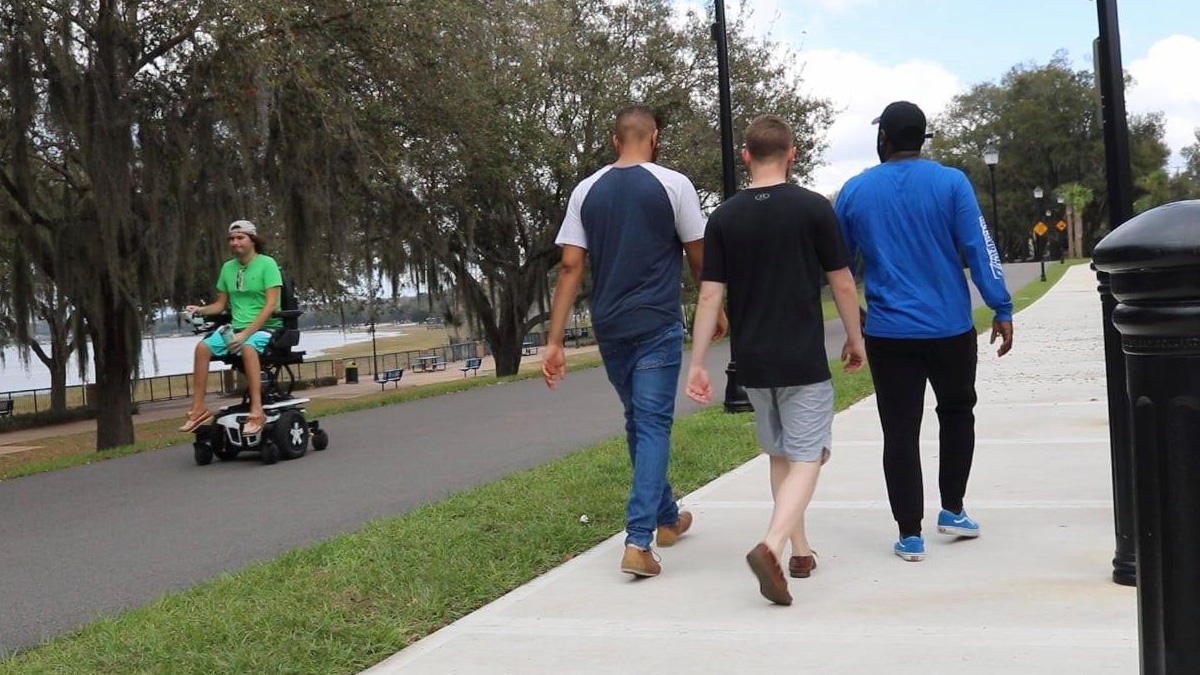
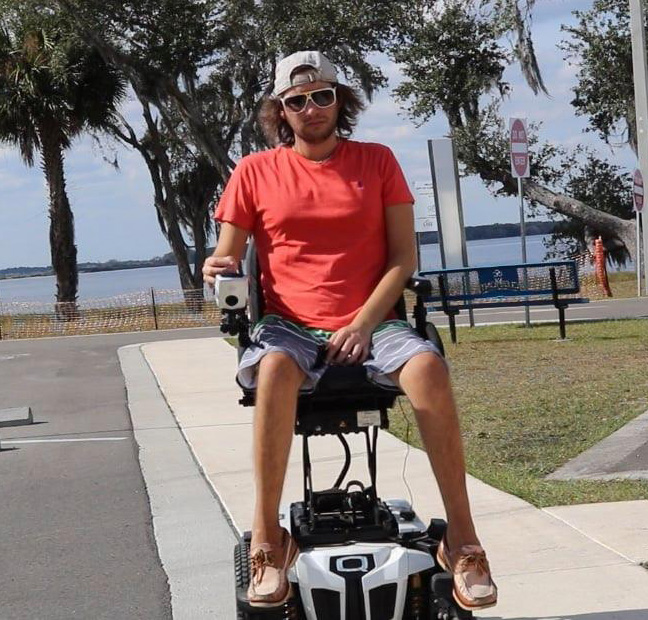
Living in Wyoming has been amazing, although the weather at times can be a bit treacherous. My Edge® 3 Power Wheelchair takes it all in stride and helps get me on my way safely. Last week, I went down to Salt Lake City to see my provider and they installed my new Quantum® backup camera.

I absolutely love this motorized backup camera. I think my cat does too. I’ve noticed that the clarity on the wheelchair backup camera is amazing. I really like the fact that when I’m in the grocery store and I turn on the backup camera, I can see anybody who is around me. I think this is an amazing safety feature that every power wheelchair user should have.  

Benefits of a Motorized Backup Camera

It seems like technology is advancing quickly when it comes to complex rehab. I really hope that other power wheelchair users are able to take advantage of these new technologies. This is especially important for people that are on the go in busy places. I think the motorized backup camera is an essential feature to have on a wheelchair.

When I get into my wheelchair-accessible van, I use my wheelchair backup camera to maneuver into the small space behind me, driving my power chair into the correct position to transfer to my driver’s seat. I don’t have to worry about backing into the back seat of my van and damaging it. For people who use public transit, the Quantum backup camera would help them maneuver into a safe position on buses or even back out of a taxicab.

One of the things I love about Quantum is that they’re always on the edge of new technology to improve the lives of people with disabilities. My new backup camera is an important addition to my power wheelchair.

About Madonna Long: Madonna works as a disability advocate to educate policymakers and congressional leaders on disability issues. She is a mother to four children and lives life on her terms, despite a spinal cord injury. Click here to learn more about Madonna.


For more great blogs from our brand ambassadors and Q Roll Models, visit lifeatilevel.com today!
Izzie Bullock: Independent Living

As most of you know, I work for the Center for Independent Living (CIL). CILs are non-profit organizations to support and advocate for people with disabilities BY people with disabilities. CILs work with people with disabilities to help them develop independent living skills. Many people think that the definition of independence is one size fits all. The way a person with a disability defines independence is up to the individual, based on their personal needs and goals. 

Philosophy of Independent Living

Centers for Independent Living follow the philosophy of independent living as dictated by the National Council on Independent Living.

“…people with disabilities are the best experts on their own needs, having crucial and valuable perspectives to contribute and deserving of equal opportunity to decide how to live, work, and take part in their communities, particularly in reference to services that powerfully affect their day-to-day lives and access to independence.”

Society often holds this belief that the more support a person needs in their activities of daily living, the less independence and freedom of choice they receive. This plays on the idea that independence is tied to physical and intellectual abilities. This is so far from the truth. A person may need full support for activities of daily living but are completely capable of making their own decisions.

Independence: Different Things for Different People

Independence is not a one-size-fits-all concept. For example, I am someone who still lives at home (for the meantime) and requires a lot of physical support. Yet, I work full-time and pay my share. How I choose to live my life is solely up to me. And believe it or not, but when the opportunity arises, I prefer to shop on my own because I enjoy spending my time where I choose (you’ll probably find me at the makeup counter).

Izzie in her Edge 3 Power Wheelchair with iLevel

Some individuals choose to live on their own or with friends/partners. They may also choose to live at home permanently. It does not matter how somebody chooses to live as long as the choice is yours.  If someone is in school, independence means picking out what to wear for the day or taking the school bus with their friends instead of their parents/caregivers driving them to school. For a teenager, independence can mean deciding who their friends are and what they want to do on a Friday night. For adults with disabilities, independence means choosing where they want to live and what kind of job they want to do.

Choosing the Life for You

Often, these choices are not given to people with disabilities out of the convenience for others. Far too often, people with disabilities are told what to do and how to live their lives.  On the other side of things, people with disabilities can be criticized for not being independent enough. They don’t meet the “status quo” of independence. In the end, all that matters is that you are accomplishing everything you wish to accomplish and that you are living life that you choose.

So, I ask: what does independence mean to you?  

About Isabella Bullock: Isabella, or Izzie for short, is an employment specialist for the Center of Independent Living. Izzie uses an Edge 3 Power Wheelchair for mobility. She is an iced coffee enthusiast who enjoys getting lost in a good book. Click here to learn more about Izzie.


For more great blogs from our brand ambassadors and Q Roll Models, visit lifeatilevel.com today!
Bryan Anderson: Random Acts of Kindness

In November, we celebrate World Kindness Day but I believe that we should perform acts of kindness every day, all year long. Random acts of kindness can change someone’s life or save someone’s life. People can connect through kindness and kindness can be taught.

Why We Should be Kind

Over the last 15 years, I’ve been traveling a lot and meeting thousands of people. One thing I’ve really learned is you never know about what they experienced the moment before they met you. Did they just break up with someone, lose a family member, get fired or receive a promotion? You never know what someone is going through. Sometimes a smile or compliment from you about their hair, their shoes or their clothes can really make their day.

Every so often, I’ll try to do something good for another person. I’ll shovel snow, cut grass, buy him or her something he or she has been working hard to purchase. In my opinion, that small act of kindness can make all the difference. Together, we make the world go around. It’s important to share knowledge and experiences we’ve learned from and help the next person. I believe that is why we’ve made it this far.

Make Kindness the Norm

So, always be on the lookout for your next opportunity to do something nice for another individual. It feels great to you, yet it feels even better for the other person.

About Bryan Anderson: Bryan grew up and resides in Illinois. Injured by an IED in October 2005, Bryan is one of the few triple amputees to survive his injuries in Iraq. He uses an Edge 3 Power Wheelchair for mobility and serves as an ambassador for the Gary Sinise Foundation. Bryan is a spokesperson for USA Cares, which is focused on assisting post 9-11 veterans. Click here to learn more about Bryan.


For more great blogs from our brand ambassadors and Q Roll Models, visit lifeatilevel.com today!
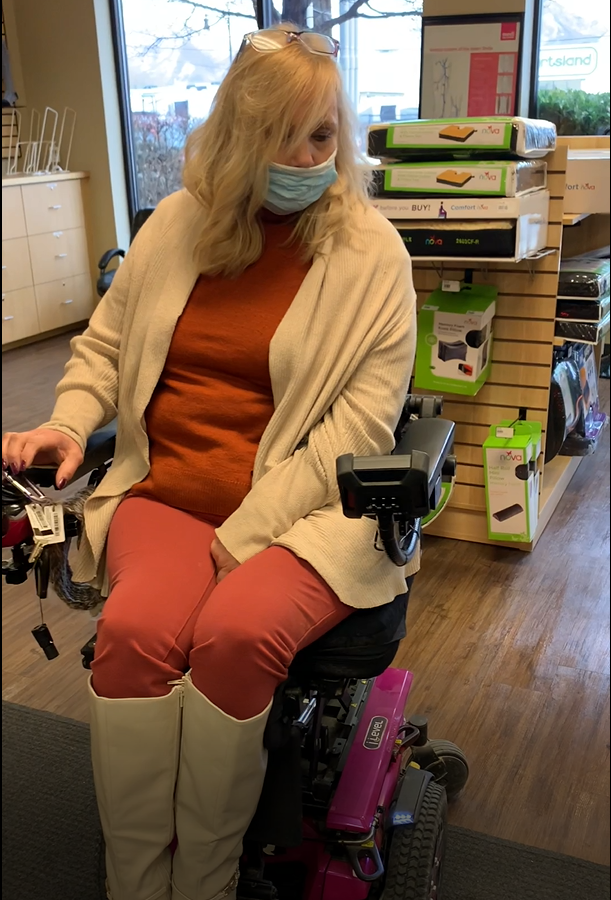
Jesse Cuellar: What’s in My Wheelchair Bag?

Any power wheelchair user can tell you about the importance of having a wheelchair bag. We need a bag of essentials to keep with us wherever we go. Here’s my list of top things to carry in your power wheelchair bag.

Keep a Set of Tools

You need to have special tools with you always. We all need tools for our power wheelchairs. That’s the number one rule. I suggest to always have a set of tools and or a backup set in your bag. You never know when you can get into a sticky situation and needs something done quick. The most unexpected things happen when you least expect them. Some of my favorite tools include zip ties and duct tape. These are great for temporary fixes until you can get things fixed properly either at home or at your Quantum electric wheelchair dealer.

Bring a Wheelchair Charger

Jesse in his Edge 3 Power Wheelchair

If you have an electric wheelchair or manual wheelchair with an assist motor, always bring a portable charger with you wherever you go. You never know when your wheelchair batteries might crap out on you. Your batteries could also start to run low. Sometimes, you are out and about and having so much fun you lose track of time and then realize that you’re out of power and your wheelchair batteries are dead. So, always pack your power wheelchair charger or a portable charger.

Pack Your Jacket

Another essential for me is a jacket. Because of my spinal cord injury, my body has a difficult time staying warm. That is why I always bring a jacket wherever I go. Another thing I bring is an extra t-shirt, just in case. You never know what could happen.

Catheter Supplies

For those who have supra or super catheters, always bring a urinal with you so you can empty out your catheter bag. I also recommend carrying a small portable umbrella with you. Those always come in handy. Weather can change quickly. If you are in an electric wheelchair like I am, it’s not good for your chair to get wet. If my power wheelchair gets wet or slightly damp I cannot control it and it may stop moving. Keeping an umbrella with you is a good idea. You might also keep some plastic bags handy just in case. You can cover your controller with them. When you do finally make it home, make sure you put your wheelchair in a warm, dry place so water can evaporate.

During the Colder Months

In the winter times, I have a little trick that helps me stay warm. I like to keep hand warmers and or neck wraps in my bag just in case I get too cold. It can take me a long time to get warmed up again, so hand warmers and the neck wraps can help regulate my body temperature quickly, as opposed to taking 45 minutes to an hour just to get back to normal temperature. For those of you who are like me and have a spinal cord injury, you understand the struggles of regulating body temperature. Having those items in my bag kind of helps out.

My final tip is to always bring bottles of water with you, especially in the summertime. It’s easy to get dehydrated when out in the sun all day.

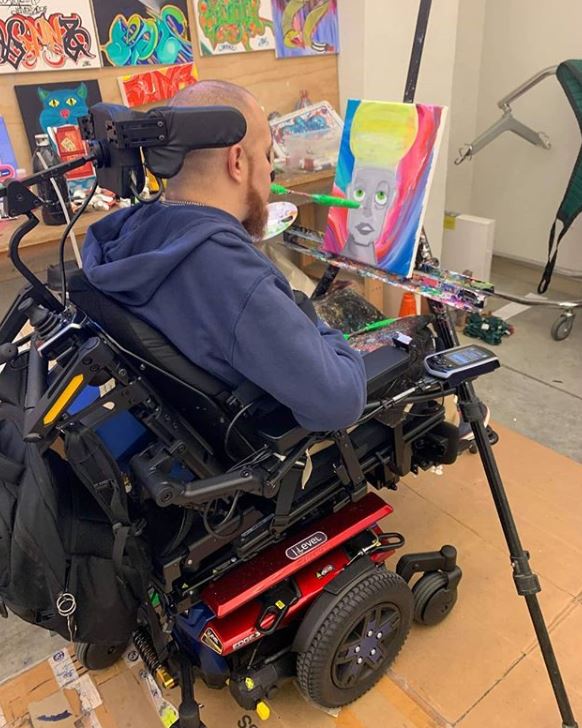
About Jesse Cuellar: Jesse is an artist and a brand ambassador for Quantum Rehab®. An accident left him paralyzed from the neck down, so he uses his mouth to paint and expresses himself through his art. Jesse uses an Edge 3 Power Wheelchair for mobility, lives in St. Louis, Missouri, and enjoys painting and hanging out with his friends. Click here to learn more about Jesse.

For more great blogs from our brand ambassadors and Q Roll Models, visit lifeatilevel.com today!
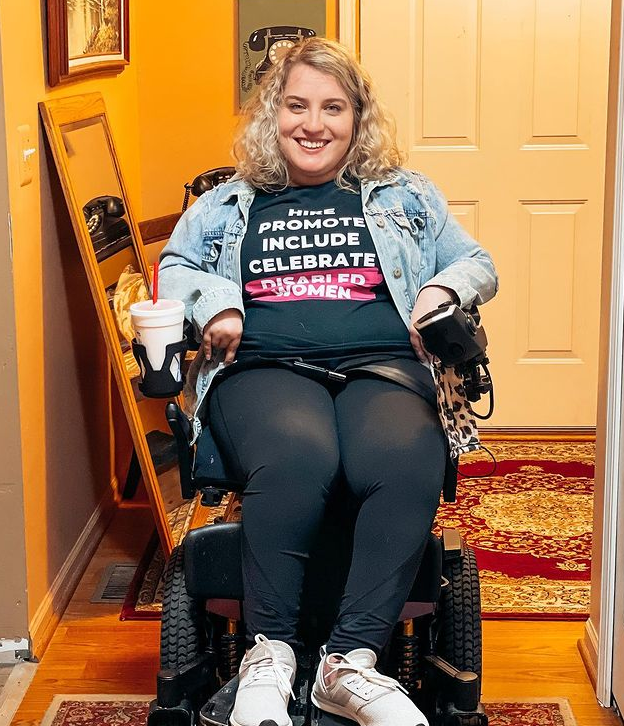
Alison Chancellor: Cerebral Palsy Awareness Month

The following italicized excerpt was written by Kay Chancellor, Alison’s mom.

Lordy, lordy Ali is 40!  She was born on a beautiful spring morning weighing 2 lbs., 7 oz. and 13 inches long. In the 1980s, babies born at 28 weeks gestation represented a significant challenge for doctors just to keep them alive. Ali survived two major surgeries within the first two weeks and after 10 weeks in the NICU at Cardinal Glennon Hospital, we brought her home to meet her big brother, Chris, who was just two years old. We like to say that Ali got a late start on life, enduring many hardships with determined zeal and smiling through it all. 


March is Cerebral Palsy Awareness Month. While my life hasn’t been easy, it’s definitely taught me to appreciate what I can do and enjoy the little things. Ultimately, those little things are the BIG things.

I’ve lived independently since 2006. My first place was located in an upscale urban neighborhood. Currently, I live in an artsy, eccentric neighborhood. I’ve had my current apartment for a decade.

With iLevel® technology on my Q6 Edge 2.0 Power Wheelchair, I can function independently in my community. There are grocery stores, drug stores, and restaurants nearby. Crossing the street is tough in a busy neighborhood like mine. Thanks to iLevel, I can elevate my power wheelchair seat up 12 inches so I am visible to traffic. Plus, my Quantum wheelchair backup camera makes it easy for me to see what’s going on behind me as I cross.

With iLevel, I can do all my chores independently, including doing laundry, washing dishes and organizing shelves. Since I was trapped inside for most of 2020, I had plenty of time to do all those things. Although I don’t cook often, I can cook with my oven because of iLevel.

In general, having a disability isn’t easy. It’s all in how you handle the curve balls thrown at you. I think I’ve done well…and with a smile.

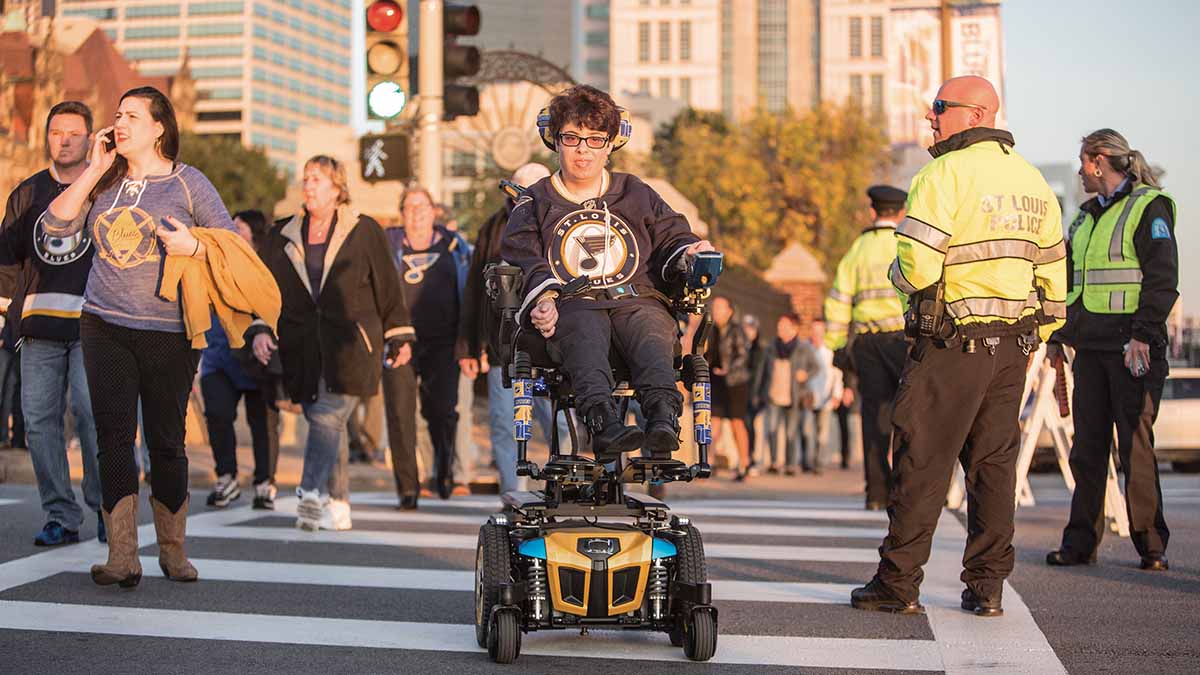
About Alison Chancellor: Alison is a friend of Quantum and uses a Q6 Edge 2.0 Power Wheelchair. She lives in St. Louis, Missouri, where she cheers on her beloved St. Louis Blues at hockey games. Click here to learn more about Alison. 


For more great blogs from our brand ambassadors and Q Roll Models, visit lifeatilevel.com today!

Celebrating Women’s History Month

Since 1987, Women’s History Month has been observed annually during the month of March. We celebrate and honor women’s contributions to history, science, culture and society. It’s important to mention that women should be celebrated every day of the year, not just during March. Read on for some great content that pays tribute to many different types of women with disabilities, from historical women to women in the present day.

The History Behind Women’s History Month

It took many years to bring Women’s History Month to fruition. It originally began as a single day. In 1908, thousands of women in New York City marched for labor laws, working conditions and the right to vote. In 1909, socialists and suffragists gathered in Manhattan for the first International Women’s Day, and this date was formally honored on March 8, 1911, at the International Conference of Women in Copenhagen. Over time, the movement spread across the world, yet it wasn’t acknowledged in the United States until 1975. President Jimmy Carter issued a presidential proclamation, declaring the week of March 8 as National Women’s History Week. Finally, in 1987, the National Women’s History Project successfully petitioned Congress to expand the week to the entire month of March.

The Life of Harriet Tubman

Zoe in her Q6 Edge 2.0 Power Wheelchair

Think you know Harriet Tubman? Think again! Quantum® brand ambassador Zoe Hernandez shares many interesting facts about the former slave turned abolitionist, risking her life to save others through the Underground Railroad. Zoe shares that Harriet Tubman became disabled after experiencing a traumatic brain injury as a teenager. It didn’t stop her from helping other slaves escape to freedom and helping newly freed slaves find work. Click here to read more about Harriet Tubman.

Celebrating Women in Wheelchairs

Stephanie in her Edge 3 Power Wheelchair

There were and still are many strong women in wheelchairs who worked hard to make society inclusive for all. Quantum® brand ambassador adviser Stephanie Woodward blogs about four disabled women and their contributions to the disability community. Meet civil rights leader Barbara Jordan, who was the first southern African American woman elected to the U.S. House of Representatives. Learn about Laura Hershey, an advocate for disability rights who wrote poetry demonstrating how disabled individuals can become proud of their disability identities. Click to learn more about these amazing women in wheelchairs.

Lifestyle Guide for Narrow Motorized Wheelchair Users

If you’ve recently purchased the Edge 3 Stretto® Power Wheelchair or are in the process of researching and obtaining a new narrow motorized wheelchair, you probably have lots of questions. Check out this helpful guide of lifestyle articles and important information on how the Stretto can help improve your independence at home.

Accessible Homes and Narrow Wheelchairs

If you are in the process of looking for a new place to live, this article is perfect for you! Get tips on how to search for your perfect apartment, condo or house. Plus, discover the benefits of owning the Stretto when your dream home isn’t exactly wheelchair accessible. Among all the wheelchairs for narrow doorways, the Stretto is the clear choice. Click to read about accessible homes and narrow wheelchairs.

Types of Ramps for a Narrow Wheelchair

If you need to make your home more wheelchair accessible, there are a wide range of ramps available. From suitcase ramps that are extremely portable to permanent ramps that can be built to lead into your home, there are plenty of options to suit your accessibility needs. There are many wheelchairs for narrow doorways on the market, and you’ll want to find the right wheelchair ramp that is compatible.

Vehicle Lifts for Narrow Power Wheelchairs

If you are beginning the process of purchasing a new power wheelchair, you should also consider purchasing a wheelchair lift for your vehicle. If you don’t own an accessible van and love to travel, a vehicle lift is a great choice. You can get more information on how to choose a compatible lift for your

narrow power wheelchair.

Narrow Wheelchair Drive Wheel Configurations

Choosing the right drive-wheel configuration is an important part of the power wheelchair selection process. The three most common types of drive-wheel configurations are rear-wheel, front-wheel and mid-wheel drive. Discover the differences between each one and learn more about the process of choosing the appropriate narrow wheelchair drive-wheel configuration.

How to Clean a Narrow Wheelchair

If you already own the Stretto, you understand the importance of routine maintenance to keep your power chair running smoothly. Get some great tips on how to keep your narrow power wheelchair clean, what cleaning products to use and NOT to use and how often you should examine your power chair for issues. Click to learn how to clean a narrow wheelchair.


Return to Stretto main page.