Accessibility in America’s Big Cities

Many of America’s big cities are popular travel destinations for people all over. While we like to think that cities are progressive, they aren’t always in terms of accessibility for wheelchair users. If you’re thinking of traveling to a big city one day, such as Los Angeles or Washington D.C., we have some resources for you. Several of our brand ambassadors either live in or travel frequently to some of the biggest cities in the country. Because of their time and experience in those places, they’re able to share what places they find accessible or non-accessible.

Is Los Angeles Wheelchair Accessible?

Bryan Anderson talks about his experience living in Los Angeles, starting with the uneven terrain. He states that it’s important for wheelchair users to be flexible when it comes to the daily obstacles that can present themselves. For instance, due to the faults, the ground is always moving, meaning that the terrain can be different from day to day, even if you are traveling the same path.

While a lot of restaurants in Los Angeles are wheelchair accessible, Bryan notes how he has to enter through the rear entrance or kitchen because it is typically the only entrance wide enough to accommodate a motorized wheelchair. Without giving too many details away, he also talks about famous attractions that are accessible for tourists and residents in wheelchairs. Although it can be tough to navigate at times, Bryan deems Los Angeles doable for wheelchair users and worth the visit.

Is New York Wheelchair Accessible?
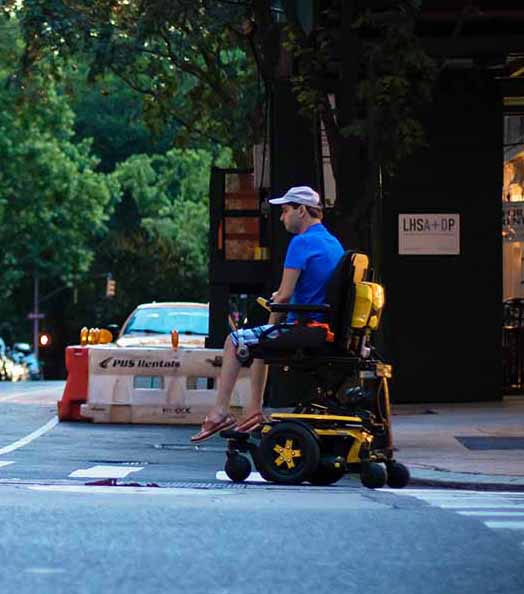
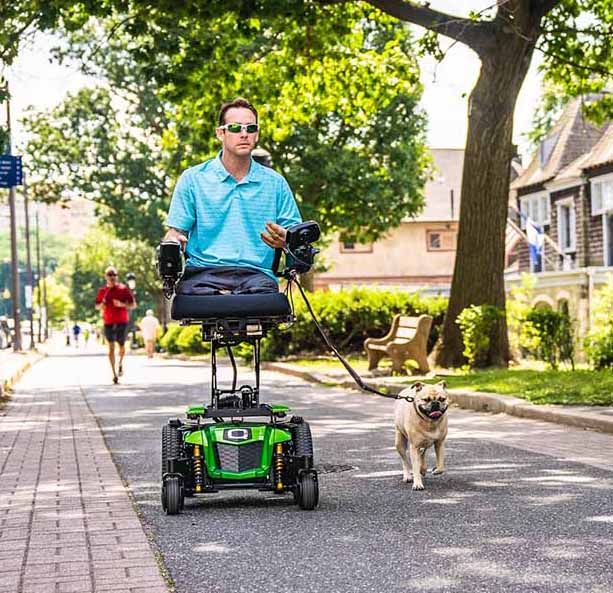
Josh McDermott now lives in Florida but is a native New Yorker, spending much time at his parents’ house upstate and his weekends in Manhattan. When it comes to New York City, Josh says that it’s very accessible. Unlike upstate New York, where he has to use his personal accessible vehicle to get around, he prefers navigating with his Edge® 3 motorized wheelchair in the city. In his experience, the buildings that present the most barriers are the older ones where the doorways aren’t wide enough. However, as someone who knows the city, he explains that whenever he runs into an accessibility issue at a restaurant, the solution is as simple as finding another restaurant that is accessible. Learn more about his life in New York and Florida.

Is Washington D.C. Wheelchair Accessible?
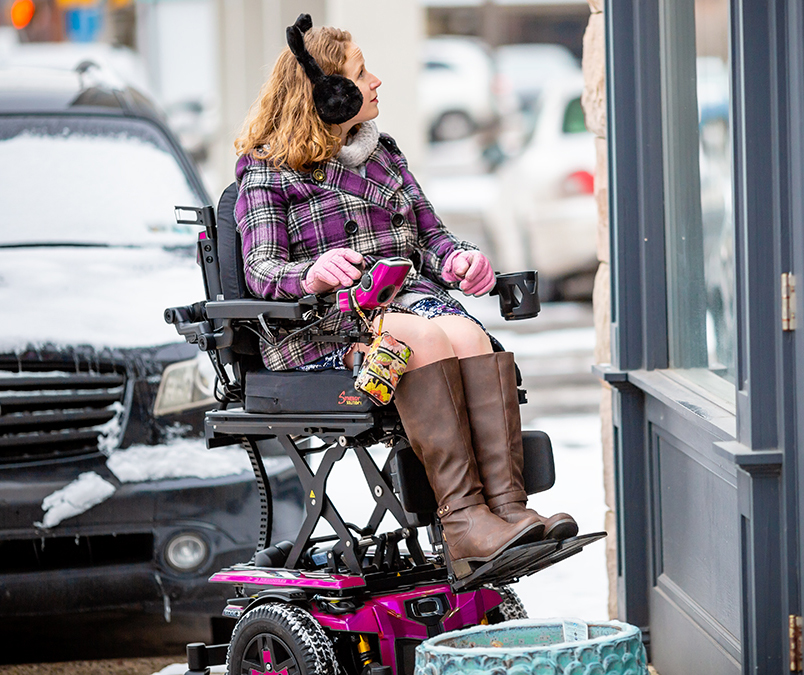
Although Stephanie Woodward doesn’t live in D.C., she travels to our nation’s capital for work. As a solo traveler in a wheelchair, she finds that Washington D.C. is much more accessible than other cities she has visited, even recommending it as a good city for wheelchair users who want to travel. In her article, Wheelchair Traveling in D.C., she breaks the city down by categories: transportation, food and things to do. Her explanations are detailed yet straight forward and full of useful information for wheelchair travelers.

Within the categories mentioned, Stephanie gives some recommendations for transportation, dishes on her favorite restaurants and suggests her favorite places to go for history lovers. If traveling to Washington D.C. is on your bucket list, Stephanie’s article is a great resource for planning your trip!

Is Chicago Wheelchair Accessible?
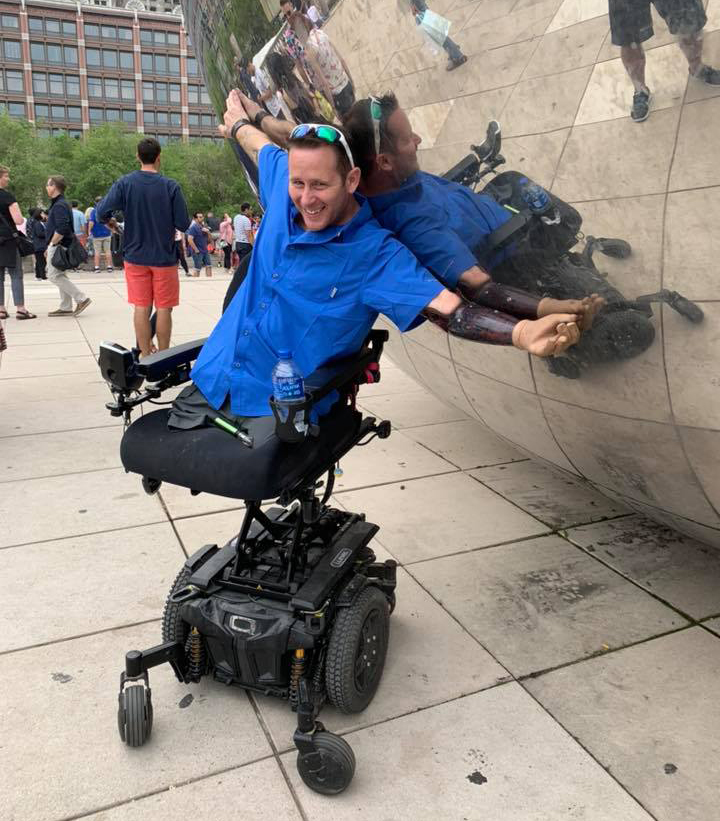
Want to get a local wheelchair user’s perspective of Chicago? Bryan Anderson shares with us all the details of wheelchair accessible Chicago in his article. If you like music and the outdoors, then Bryan has you covered! He tells readers about all the sights to see in Millennium Park, as well as some outdoor concerts and festivals that you can attend, all of them wheelchair accessible. If you do decide you want to visit Chicago, Bryan recommends visiting during the summer so that you can see all the great concerts in Millennium Park.
Let’s Celebrate and Advocate!

July 26 is the 30th anniversary of the Americans with Disabilities Act. The ADA is an exceptional piece of legislation. We’ve come so far in 30 years. Businesses are more accessible. Children have greater access in schools. Yet, there is still more work to be done. In honor of the ADA’s 30-year milestone, Quantum’s brand ambassadors and Q Roll Models share their thoughts of the significance of the ADA and how we can make an impact and strengthen the legacy of this immensely important law for future generations to come.

Emily Ladau on the ADA

Q Roll Model Emily Ladau shares how important the ADA is to her. While the country continues to deal with the COVID-19 pandemic, opportunities to promote the ADA’s message may seem limited. Don’t be discouraged! Emily has some tips for things you can do to make a difference. Lead a fundraiser to help raise money for a local business to install an accessible entrance or ramp into their store. You can also post about the ADA on social media. Share how this immensely important piece of legislation has impacted your life. Click here to read Emily’s blog.

Madonna Long and Her Reflections on the ADA

Madonna Long is a brand ambassador for Quantum and a dedicated advocate for the disability community. In her latest blog, Madonna reflects on her relationship with the late Cheryl Sensenbrenner, whose unyielding passion and determination made the country a more inclusive place for people living with disabilities. Cheryl’s incredible efforts in educating lawmakers on the importance of the Americans with Disabilities Act, as well as the ADA Amendments Act, helped pave the way in establishing a broad scope of protections for Americans living with disabilities.

Zoe Hernandez and her ADA Reflections

As a brand ambassador of Quantum and a person with a disability, Zoe Hernandez knows the importance of the ADA, specifically the five Titles that make up the Americans with Disabilities Act. In her latest blog, Zoe talks about Title I and Title II of the ADA and how they offer protections to individuals with disabilities. Click to read the full blog, the Titles of the ADA.

COVID-19 Resources for People with Disabilities

There isn’t a lot of information written about COVID-19 for people with disabilities. On top of that, solid and authentic information can be hard to find. For that reason, we’re sharing some of the articles that our Q Roll Models and brand ambassadors have written during the pandemic, talking about their experiences.

Social Distancing with a Disability

By now, you’re probably familiar with the term “social distancing.” Staying six feet apart from others sounds simple and reasonable, but for many, it’s more complicated than that. So how does one practice social distancing? Why is it important for everyone to practice social distancing? Read about Madonna Long’s experience with social distancing and how it has impacted her as a wheelchair user.

For some people with disabilities, staying far apart from others is more than an inconvenience as they work with caregivers daily. Jesse Cuellar is in contact with three caregivers regularly that help him with daily living activities. How do social distancing rules apply to and affect caregivers and the person they’re assisting? Check out Jesse’s article on caretakers and social distancing to learn more.

COVID-19 and Working from Home

Whether you worked or went to school before the pandemic, there are probably some adaptations you’ve had to make to your daily routine. When it comes to transitioning into working or schooling from home, there are challenges that come with these changes. Have no fear though! Our Q Roll Models and brand ambassadors have got you covered.

Tim Shin writes about working from home in two of his articles: Working Remotely and Master the WFH Mindset. Tim, who has been working from home for the past five years, shares tips and tricks for those who are new at the whole work from home gig. From useful and necessary technology to mindset, there’s something for everyone.

School During a Pandemic

The daily routines of students have been shaken up as well. Like many employees have had to transition into full-time remote work, students are transitioning into being full-time online students. Q Roll Model Sakina Shamsi was homeschooled until she started middle school. With the pandemic in full swing, she is homeschooling again and enjoying the change of pace. Read about Sakina’s experience in Homeschooling While Quarantined.

For college students like Zoe Hernandez, they also have to switch to online or e-learning. Zoe shares about what technology she’s using and her thoughts about e-learning. Read about her experience transitioning into online college courses.

These are just some of the articles written by our Q Roll Models and brand ambassadors. For more articles about COVID-19 and disabilities, such as handwashing tips, protecting against COVID-19 and personal experiences, visit lifeatilevel.com.

Q-Logic 3e Controller: Now Available

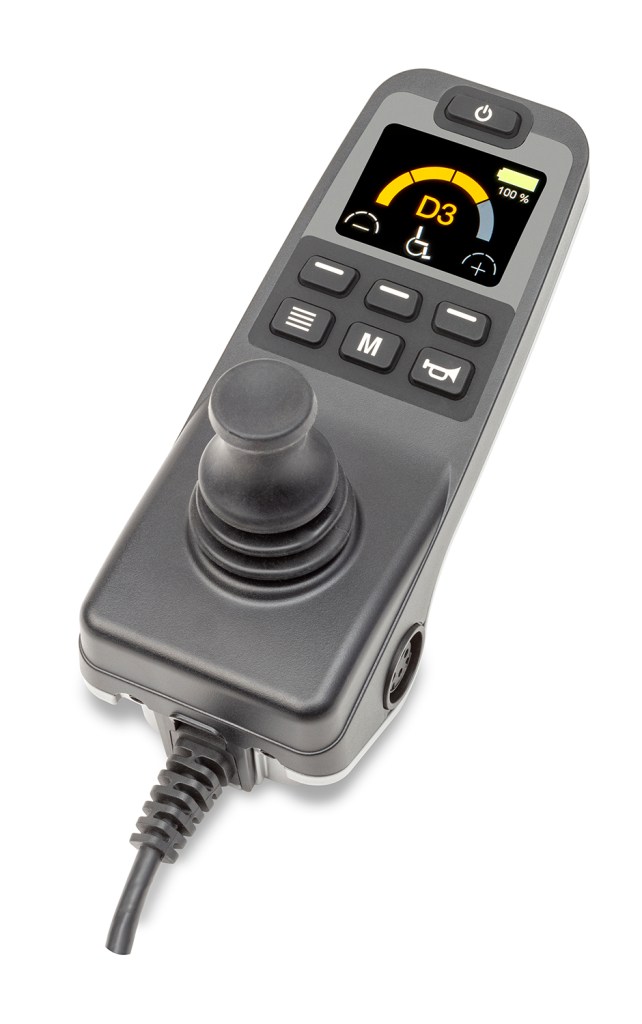
The new Q-Logic 3e controller is now available as an option on most Quantum® Power Chairs. It has many of the same features as Q-Logic 3, but in a simpler package.

  • A great option for those who require a simple user interface
  • Color LCD screen, programmable soft keys and built-in USB-C and XLR charger ports
  • Easier to access seating functions
  • Does not offer specialty controls and environmental features
  • Available on most Quantum® Power Chairs

Click here to learn more about Q-Logic 3e.

Adaptive Sports to Try This Summer

Looking for something new and exciting to do this summer? Now that the weather is warm and sunny, it’s the perfect time to get out and try an outdoor adaptive sport. There are plenty of sports that are adapted for wheelchair users and can even be done alongside able-bodied friends and family. Try some of these sports this summer! 

Adaptive Swimming

Anyone can learn how to swim for fun. If you are looking to swim competitively in the future, there are some qualifications you need to meet. If you are just looking to swim recreationally, getting started is as simple as taking lessons or getting a coach to learn the basics. Want to learn more about adaptive swimming and how you can get started? We’ve got just the resource for you! Read our article Swimming for Para-athletes.

Adaptive Surfing

Another enjoyable sport for those who love the water is adaptive surfing. Unlike swimming, which can be done in a pool or at the beach, surfing is a little more limited. There’s more to this adaptive sport than just having access to a beach. First of all, you want to be able to get to the water. Motorized wheelchairs aren’t built to go on sand because there is a potential for sand or water to get into the electronics and cause the chair to malfunction. Traversing the sand requires a special beach wheelchair.

Another thing you want to consider is the type of surfboard you use and weather conditions on the day that you plan to go surfing. If you are interested in learning more about adaptive surfing, how to get started, and competitions, check out our article! 

Adaptive Mountain Biking

Prefer the mountains to the ocean? Adaptive mountain biking may be the sport for you. There are two different types of mountain biking, as well as different styles of mountain bikes that go along with them. Cross-country mountain biking is suitable for riders who prefer taking in nature at a slower and less extreme pace. Explore trails as you have fun and get your workout in.

Another popular type of mountain biking is downhill mountain biking. True to its name, downhill mountain biking consists of the rider careening down a hill. This is more suitable for the adventurous who have a need for speed. Riders can go down a variety of trails, depending on their comfort level.

Adaptive Water Skiing

If you don’t live near a beach, but you live near another body of water that can accommodate a high-speed boat, adaptive water skiing may be an option to add to your list.  This sport is attractive because it allows independence and is easy to learn. After taking a few lessons and mastering the basics, water skiers can continue to participate along with their friends and family. There are various options for adaptable equipment that make the sport accessible to all, including sit-skis, shoulder slings and outriggers. To learn more about the sport, equipment and competitions, read our article about adaptive water skiing.

The Effects of COVID-19 on Various Activities

Is fill-in-the-blank activity safe during COVID-19? This is probably a question you’ve asked yourself, others and Google at some point during the current pandemic. While times are uncertain and the restrictions are changing from day to day, it’s hard to know which activities are considered safe and which ones are more likely to put you at risk for contracting the virus. We’ve looked into what experts are saying and compiled some resources for you.

Indoor Activities and COVID-19

Some states around the country are lifting restrictions on going out in public, allowing businesses to reopen at half capacity. For many people and business owners alike, this is exciting news. However, it’s important to continue to practice social distancing and wear a mask when you are around a group of people. Read our article about indoor group activities to learn more.

Outdoor Activities and COVID-19

Summer is no time to be cooped up inside. While being cautious is important, people are still allowed and even encouraged to spend time outside. There are many benefits, both physical and mental, to spending time outdoors. How do you know which outdoor activities are safe though? We wrote an article about outdoor activities you can do during COVID-19.

Adaptive Sports and COVID-19

COVID-19 is causing a lot of activities to be put on pause as we quarantine to stay safe. However, that doesn’t include exercising. Exercising at home and outside is still possible and it can be done safely. Although group fitness classes aren’t an option, there are plenty of virtual fitness classes, as well as individual adaptive sports that you can play to get your workout in. Check out our article about safe adaptive sports you can play during COVID-19. If you aren’t into adaptive sports and you prefer other ways of getting a workout, you can read our article about exercise and COVID-19.

The suggestions listed in these articles are not medical advice and should not be substituted for what your medical practitioner recommends. Talk to a health professional and use caution and good judgement before making a decision about what activities you choose to do.

Taking Her Career to the Next Level

“I can use iLevel to raise up and observe team members over the top of their cubicles. It gives me a clear view of the entire area.“

— Merlisha Henderson, Phoenix, Arizona

Merlisha Henderson knows the value of good customer service. She has worked in the automotive finance industry for 18 years! She loves engaging and mentoring team members in the finer points of customer service. Her strengths as a leader are even more enhanced with the help of iLevel® technology.

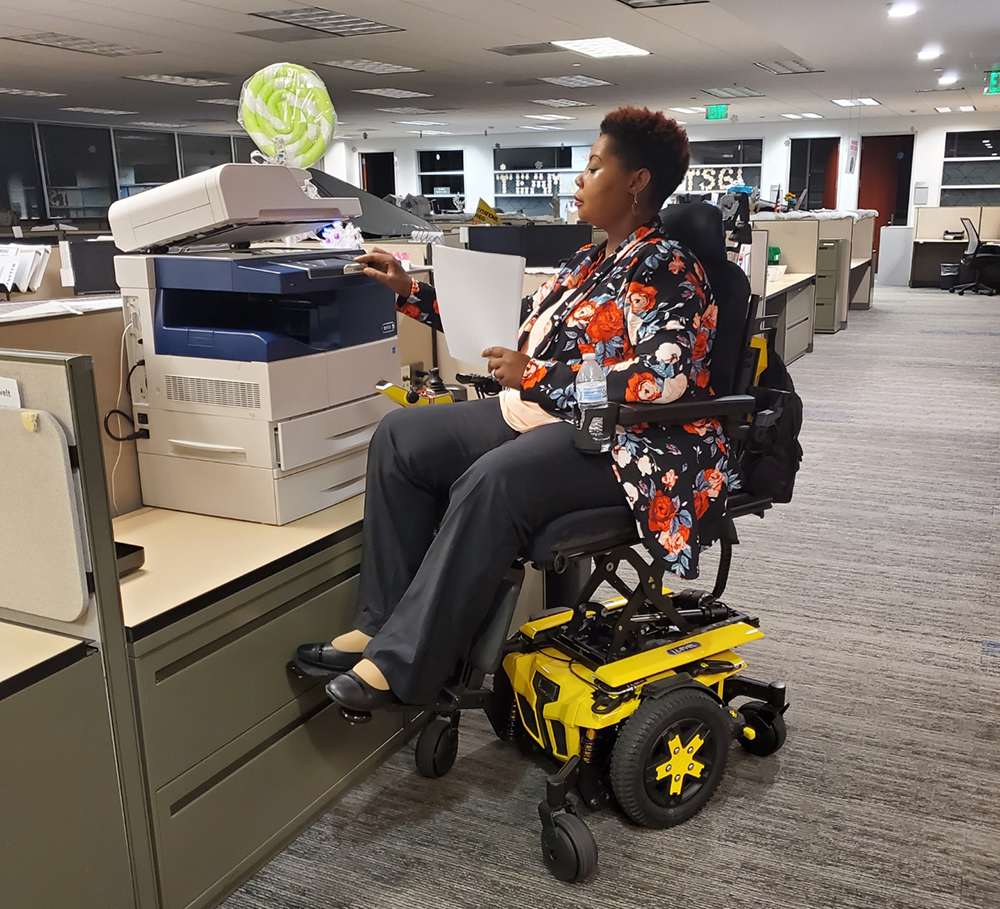
In January of 2018, Merlisha was diagnosed with a rare autoimmune disease that will result in the loss of her muscles over time. At first, her future in the workplace seemed unclear; then Merlisha received an Edge® 3 Power Chair with iLevel®. With 12 inches of power elevated seating, she gained a whole new perspective on her job.

“My power chair is super quiet, which is vital when working in a call center environment,” Merlisha said. “I can use iLevel to raise up and observe team members over the top of their cubicles. It gives me a clear view of the entire area.”

Merlisha can also elevate and drive at 4.5 mph in the office, allowing her to get from one meeting to the next with time to spare. When she needs to send faxes or make copies, iLevel gives her access to the machines, which are on tabletops.

“Without iLevel, I could not reach them, which would limit my effectiveness in the workplace,” Merlisha said.

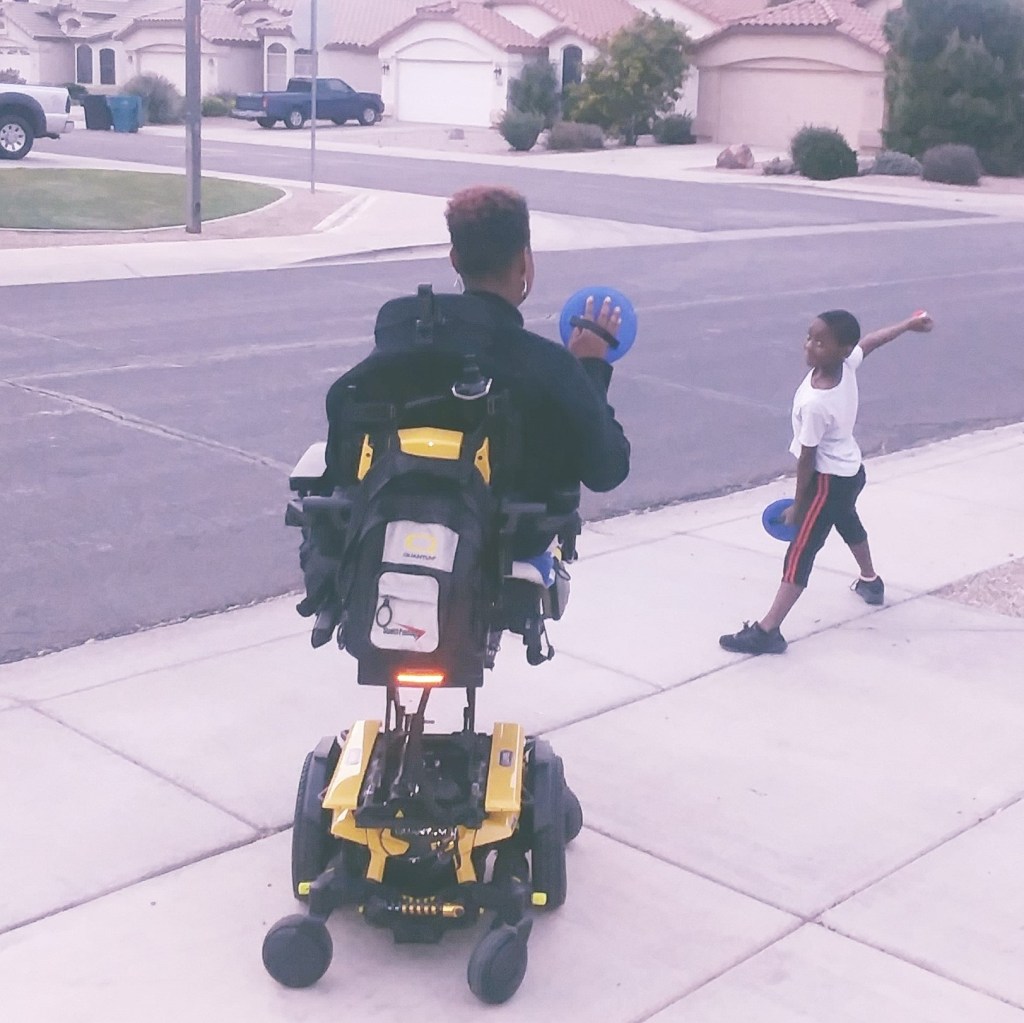
Outside of work, Merlisha enjoys spending time with her family at their home in Phoenix, Arizona. She loves being active with her two young children and her husband. Merlisha also likes playing catch or racing with her kids. She drives her power chair while the kids ride their bikes or scooters.

Currently a Q Roll Model for Quantum, iLevel has given Merlisha greater confidence as she interacts with people in her community and local businesses. Her partnerships with business owners resulted in several businesses installing family restrooms at their locations. These new facilities help ease the stress that caregivers and those with disabilities face every day.

“I have a responsibility to myself and others in the disabled community to advocate for equality and access for all,” Merlisha said.

Disability and Mindset During COVID-19

The COVID-19 pandemic is changing up our routines, forcing us to adapt and isolate for the safety of ourselves and others. We live with daily uncertainty. With so much negativity from increased screen time on the computer, watching the news or looking at social media, it can be hard to stop our head from spinning. How does one stay grounded with constant fear, anxiety and disheartening news surrounding us?

Our Q Roll Models and brand ambassadors share about their mindsets in daily life and during the pandemic, giving tips and insights from their lives.

Adapting to Change Through Art and Exercise

In his article, What Keeps Me Going, Jesse Cuellar talks about how the pandemic has affected him personally. Although he can no longer go to the gym, he finds ways to continue working out at home. Since the art room he goes to is also closed, he additionally has to come up with ways to create art within the walls of his home.

Do you struggle with working from home because you find it more distracting than switching up your environment? Similar to the challenges that come with working from home, the creative process can be hindered when staying in one space. Discover the hurdles Jesse has been overcoming as he adjusts to quarantine life.

Learning Mental Strength to Pay it Forward

When it comes to mindset, one of the best gifts you can give yourself is self care. When you strengthen your mind, not only are you helping yourself, but you are putting yourself in a position to help others who are also experiencing hardship.

Josh McDermott discusses this in his article Mental Mindset, where’s he’s becoming the go-to person for comfort and advice during the pandemic. He believes that mental strength is something that can be learned, rather than something people are born with. He talks about how his experience developing mental strength as someone with a disability and how it has helped him and others with disabilities stay grounded in the middle of so many life changes.

Adjusting Your Perspective Changes Your Life

There’s power in perspective. In her thought-provoking article, Think About Perspective, Merlisha Henderson talks about some common perspectives people have and the great impact that they can have on our lives.

Positive or negative, our actions stem from our thoughts and beliefs about life and our current situation. This is especially important during the COVID-19 pandemic, as we are constantly surrounded by unrest and discouragement. How does one still their mind and stay focused on gaining new insight with all the noise from others? Read some actionable steps for how to shift your mindset and other factors that affect your perspective in Merlisha’s article on the Life at iLevel website.

Leveling Up with iLevel® at School

You may be familiar with the benefits of using iLevel in your home, but much of the time, we aren’t even at home. If you’re a student, chances are that you spend most of your day in school, sometimes even at after-school activities. If you’re going to make an investment, it’s smart to research the product and make sure that it is indeed the right investment for you and your lifestyle. While we can tell you about the benefits of using iLevel all day, we’re letting our brand ambassadors, real iLevel users, do the talking.

Morgan Steward

Morgan Steward, better known as Officer Morgan, is honest when it comes to talking about his experience as a wheelchair user. In his article, What My Wheelchair Means to Me, he talks about how iLevel plays into his time with friends, navigating around school, and breaking down stereotypes about wheelchair users. His motorized wheelchair has even earned him a cool nickname. Learn more about Officer Morgan’s experience.

Zoe Hernandez

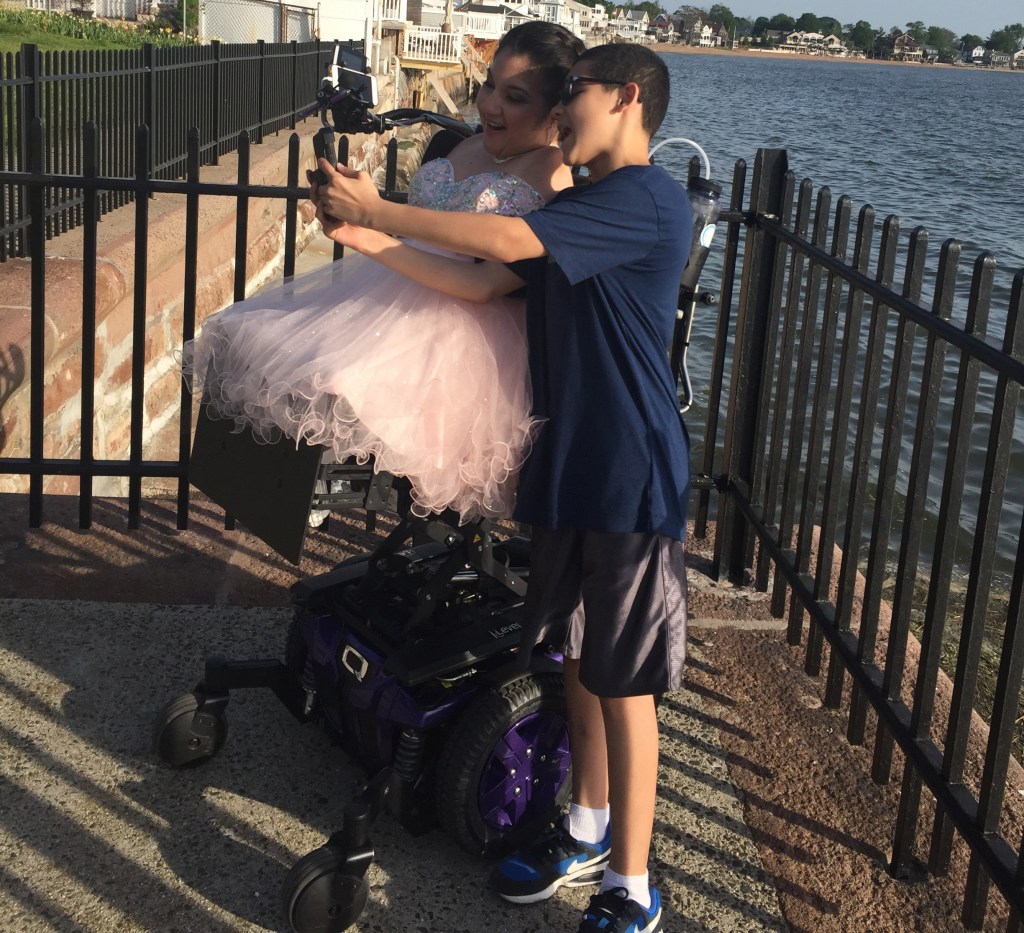
Although Zoe is now in college, she reflects on her unforgettable senior prom. In her article, Senior Prom at iLevel, she gives seven reasons why every senior should attend their prom and talks about her own experiences. From picking the dress to taking pictures, she has many fond memories. For Zoe, prom is about social relationships. She tells the story of how she made a new friend that night, bonding over music and Hispanic heritage. To end her magical night, she got to dance with her high school crush.

Bryson Foster

When it comes to school, Bryson is not only involved in the classroom but also spends a lot of time dedicated to after-school events and activities. In his article, Getting ‘Schooled’ in iLevel, he explains how iLevel helps him in Chemistry when working at the lab tables and independently reaching the smart board so that he can share his answers in class. iLevel not only helps him as a student, but also in his office assistant and sports announcer duties. In addition to doing sports announcing for his school, he also does announcing for Vex Robotics competitions.

Disability Rights Resources for You

Knowing your rights can make all the difference in spending time in a public space, whether it’s parking lots, businesses, work or college. Easier said than done, right? With so much information available on the internet, how do you know where to start? More importantly, how do you know what’s reliable? Brand ambassador Stephanie Woodward, Esq., studied law extensively and regularly shares her knowledge on disability rights on our blog. We’ve compiled a list of just some of her articles on various topics.

Wheelchair Users’ Rights

Have you ever struggled with navigating parking lots because of a lack of parking for wheelchair-accessible vans? How about when trying to reach soap and paper towel dispensers in the restroom? In Wheelchair Users’ Rights, Stephanie covers wheelchair users’ rights in the context of parking lots, businesses with one-step entrances, bathrooms and pathways. Under each category, Stephanie summarizes some key points to keep in mind when visiting these spaces.

Disability Rights & College

If you are a college student or rising freshman, knowing your rights can help, not just with accessibility, but in fighting against discrimination. Stephanie mentions two key laws that every student with disabilities should be familiar with: the Americans with Disabilities Act (ADA) and Section 504 of the Rehabilitation Act. Furthermore, she cites some examples of discrimination under these laws and gives readers actionable steps for getting an accommodation. Read her article Disability Rights & College.

Air Travel Law for Wheelchairs

Flying is a very real fear, especially for those who are traveling with a wheelchair. Maybe you’ve heard some of the horror stories of airlines breaking wheelchairs and arriving to a city, being unable to move. While driving or taking another form of transportation may be alternate options, they’re not always convenient. Stephanie discusses her thoughts on the Federal Aviation Administration (FAA) Reauthorization of 2018 which was signed into law in October of 2018, specifically the section on air travelers with disabilities. Learn more about how this law can affect you as an air traveler with disabilities.

Work & Disability Benefits

Can you work while receiving disability benefits? While the rules can vary from state to state, Stephanie covers how employees receiving Social Security Disability (SSD) and Supplemental Security Income (SSI) may be affected. The rules differ depending on which type of benefits you receive, so it’s important to know which one you specifically receive. For more information, check out Stephanie’s article Work & Disability Benefits.

Check out Stephanie’s other articles for more information on disability rights!