Kid Wheelchairs and Spinal Muscular Atrophy

Spinal muscular atrophy (SMA) is a genetic disorder characterized by the loss of motor neurons in the spinal cord and the part of the brain that connects to the spinal cord. The loss of these specialized nerve cells results in muscle weakness and wasting (also known as atrophy) and affects the control of muscle movement. There are many SMA types, many of them appearing during infancy and early childhood.

The progressive muscle weakness and wasting can cause individuals with spinal muscular atrophy to lose the ability to walk and position themselves, resulting in the need for an electric wheelchair. There are complex rehab kids power wheelchairs that can be customized to meet your child’s needs. Features include specialized seating, positioning and electronics. 

Kids Power Wheelchairs and Spinal Muscular Atrophy
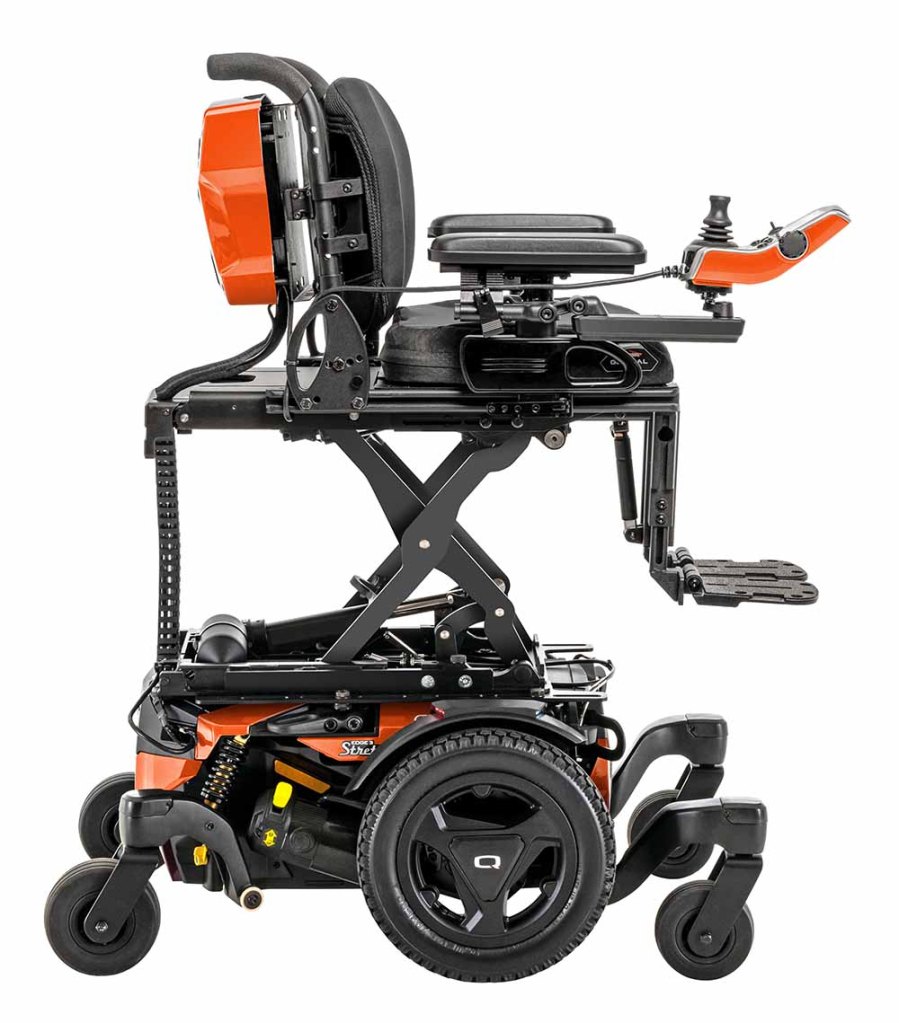
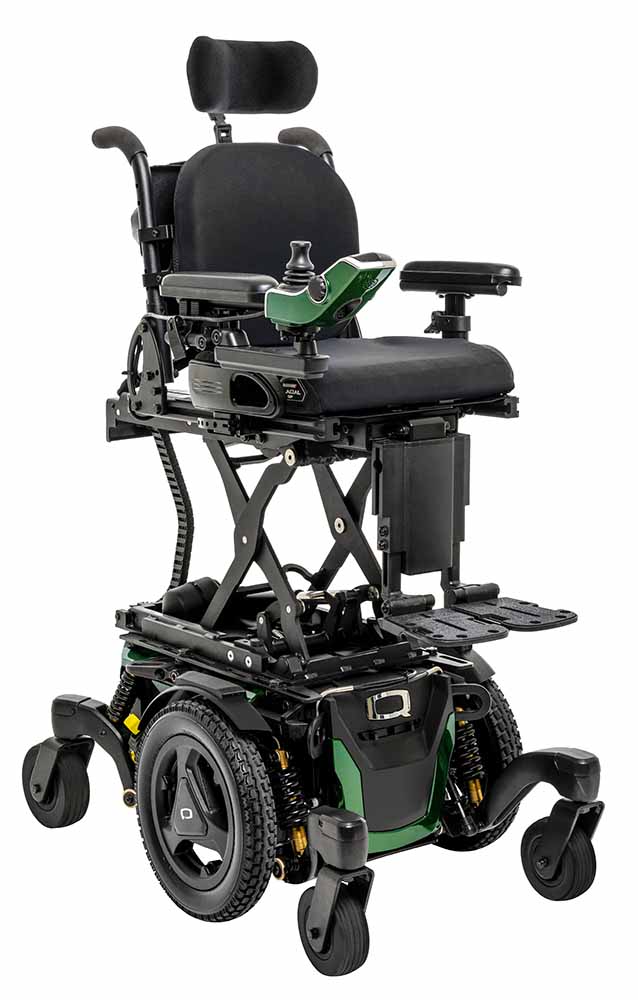
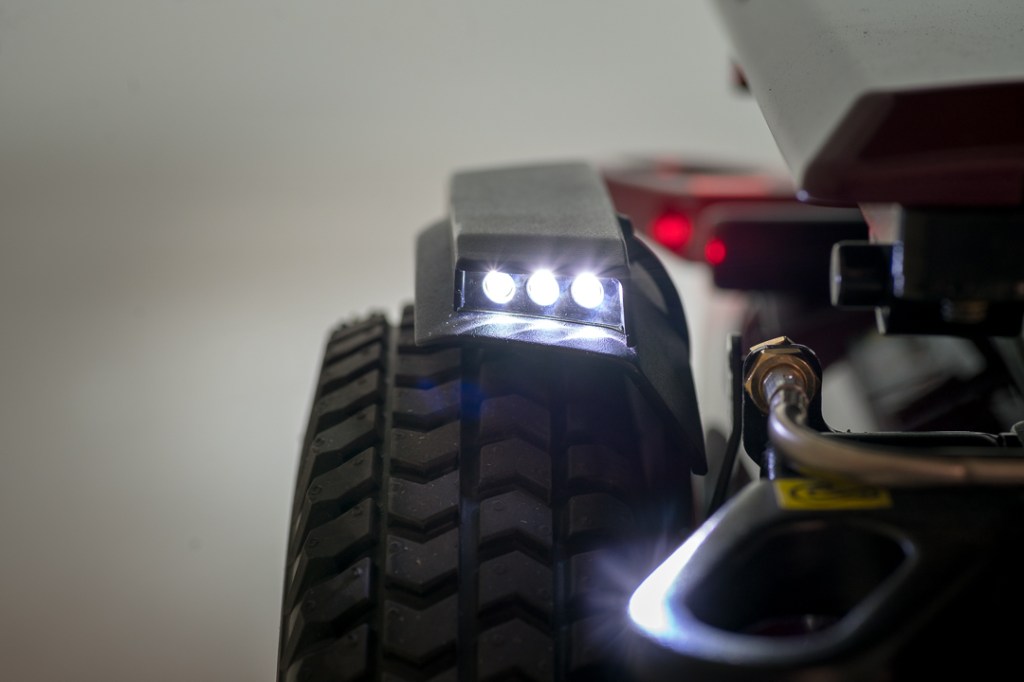
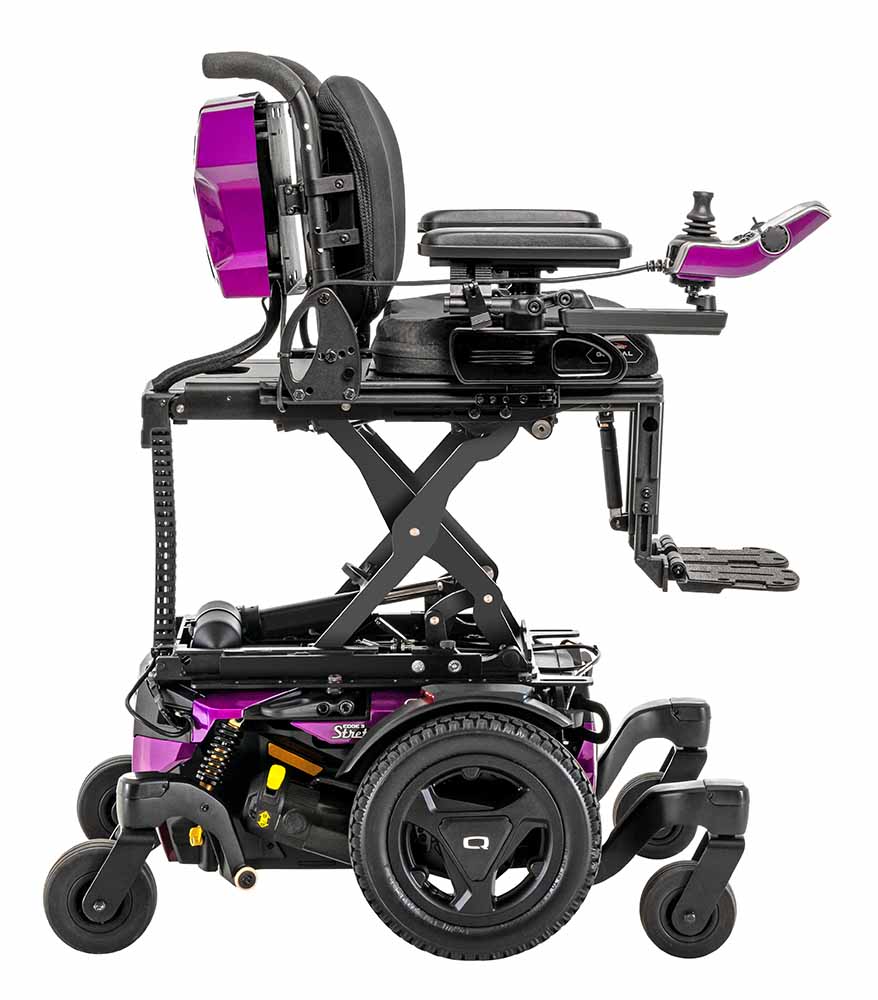
The customizable Edge 3 Stretto® kids wheelchair is available with optional iLevel® power adjustable seat height, allowing kids to elevate up to 12 inches while driving at 3.5 mph. iLevel’s Extra Stability Technology® enhances safety for completing Mobility Related Activities of Daily Living (MRADLs) such as transferring, toileting, grooming and cooking. In addition to its customizable features, the Edge 3 Stretto wheelchair for kids also comes with LED front and rear fender lights. This allows your son or daughter to see and be safely seen while crossing streets or parking lots.

Kids Power Wheelchair Drive Control Options
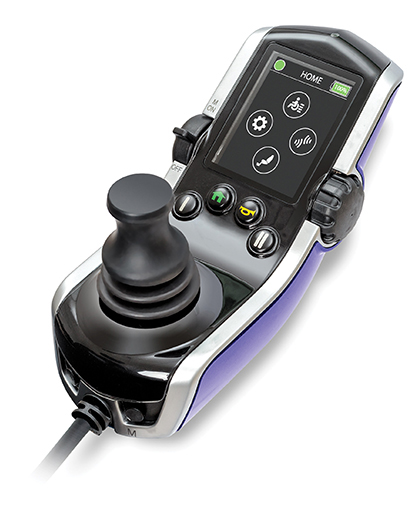
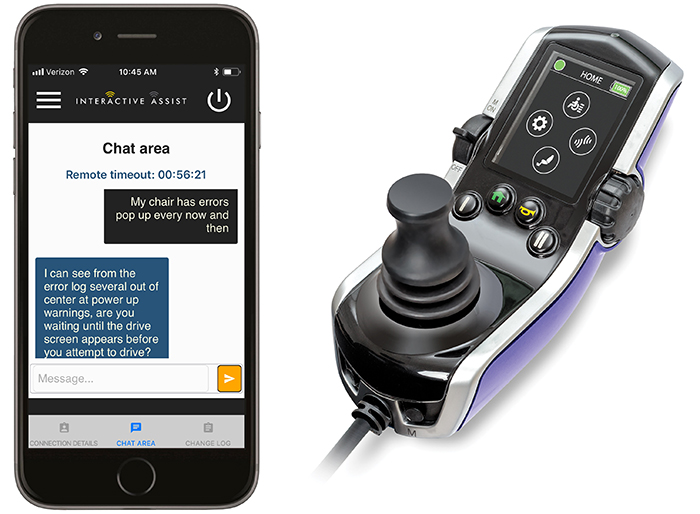
Your child may benefit from expandable electronics like the Q-Logic 3 Advanced Drive Controls. These controls are customizable and expandable. Q-Logic 3 gives your child the independence of driving their electric wheelchair with a joystick. Standard with Bluetooth®, Q-Logic 3 also allows your child to operate his or her smart phone or tablet using the Q-Logic 3 screen.

Wheelchair Positioning for a Kids Wheelchair

As their condition progresses, a child with spinal muscular atrophy may need power positioning on his or her electric wheelchair. This can assist with postural realignment, pressure relief and function. TRU-Balance® 3 Power Positioning Systems on electric child wheelchairs are highly adjustable and offer many medical benefits, including increased sitting tolerance, pressure relief, positioning for improved breathing and function and independent repositioning. Power tilt, power recline, iLevel, power articulating leg rests and power articulating foot platform are available options on TRU-Balance® 3.

Where to Buy a Kids Wheelchair

If you are looking to purchase a wheelchair for kids, you can visit an authorized Quantum provider. They can evaluate your child’s needs and determine if the Stretto is right for your child. Learn more on where to buy a wheelchair for kids.
Child Wheelchairs for Arthrogryposis

Arthrogryposis multiplex congenital (AMC) is the congenital joint contracture in two or more areas of the body. Children who are born with AMC experience muscle shortening due to abnormal fibrosis of the muscle tissue. This causes those with arthrogryposis to be unable to perform active extension and flexion in the affected joint or joints. AMC is divided into three groups: amyoplasia, distal arthrogryposis, and syndromic.

Quantum® child wheelchairs can help improve your child with arthrogryposis’ mobility and independence. Depending on the degree of your child’s condition, it is possible that he or she can be fitted for a complex rehab motorized wheelchair. The Edge 3 Stretto™ child wheelchair is compatible with a variety of power seating and positioning components, as well as drive controls, all of which are customized to meet his or her specific needs.

Another available feature of the Edge 3 Stretto child wheelchair is optional iLevel®. This power adjustable seat height allows your child to drive at 3.5 mph while elevated 12 inches so he or she can complete daily activities independently such as cooking, grooming, toileting, reaching and transferring. The Edge 3 Stretto child wheelchair base comes standard with LED front and rear fender lights, allowing children to see and be safely seen while crossing parking lots or streets.

Depending on the severity of your son or daughter’s condition, he or she may require power positioning on his or her motorized child wheelchair to help maintain proper positioning, skin integrity, comfort and function. TRU-Balance® 3 Power Positioning Systems on motorized child wheelchairs offer a wide range of options when it comes to positioning, including power tilt, power recline, power tilt and recline, power articulating leg rests, power articulating foot platform and iLevel. TRU-Balance 3 is more than its appealing look; it also provides comfort and maximizes functional independence.

Depending on the AMC type, your child may require expandable electronics on his or her child wheelchair. Q-Logic 3 Advanced Drive Controls allow your child to operate a motorized child wheelchair using a joystick. In addition to operating his or her motorized wheelchair, your child can also operate his or her smart phone or tablet using the Q-Logic 3 screen, which is standard with Bluetooth®. Q-Logic 3 can also be customized to include alternative drive controls such as a head array, chin control or switched driving.

If you are ready to purchase a motorized child wheelchair, check out our article on how to buy a wheelchair for children.

Child Wheelchairs and Muscular Dystrophy

Muscular dystrophy (MD) is a group of genetic diseases characterized by abnormal genes that interfere with the production of proteins that are needed to form healthy muscle. This interference causes progressive weakness and loss of muscle mass. Symptoms can include poor balance, difficulty walking, frequent falls and limited range of motion, but vary depending on the type and severity. The most common type of muscular dystrophy is Duchenne muscular dystrophy.

Depending on the severity of your child’s muscular dystrophy, it is possible that he or she can be fitted for a Quantum® complex rehab child wheelchair that is customized to meet his or her needs as his or her condition progresses. The Edge 3 Stretto™ child wheelchair is compatible with many options for power positioning, drive controls and power seating.

The Edge 3 Stretto child wheelchair has many beneficial features to enhance your child’s mobility and independence. One available feature is iLevel® power adjustable seat height, which allows the motorized wheelchair user to drive at 3.5 mph while elevated 12 inches so he or she can complete daily activities independently, such as transferring, grooming, toileting, cooking and reaching. The Edge 3 Stretto child wheelchair also comes standard with safety features, such as the LED front and rear fender lights. LED lights give your child increased visibility in low lighted areas and be safely seen while crossing streets or parking lots.

As your child’s condition and symptoms progress, he or she may require power positioning on his or her child wheelchair to help maintain proper comfort, skin integrity, positioning and function. TRU-Balance® 3 Power Positioning Systems on motorized child wheelchairs offer a wide range of options when it comes to adjusting the positioning of the seating, including power tilt, power recline, power tilt and recline, power articulating leg rests, power articulating foot platform and iLevel. TRU-Balance 3 provides an appealing look and feel and maximizes functional independence.

Depending on the muscular dystrophy type and severity, your child may require expandable electronics on his or her child wheelchair. Q-Logic 3 Advanced Drive Controls allow operation of a power wheelchair using a joystick and comes standard with Bluetooth®. Using Bluetooth in conjunction with the Q-Logic 3, your child can operate his or her smart phone or tablet right from the Q-Logic 3 controller. This controller can also be customized to include alternative drive controls such as a head array, switched driving or chin control.

Children diagnosed with MD may benefit from Stealth Products® wheelchair cushions. Each child wheelchair cushion offers a different function, such as skin protection and positioning and general use.

If you are looking to purchase a child wheelchair, check out how to buy a child wheelchair.

Interventions and Solutions for Managing Posterior Pelvic Tilt

Managing and providing proper interventions/solutions for destructive postural tendencies can be an intimidating task. There often are many different asymmetries occurring all at once. We must often step back and focus at the various body segments one at the time. In order to do this, we must start our evaluation and assessment at the pelvis. The pelvis is the “foundation” of our seated position. This is important as the position of the pelvis impacts the position of all other body segments

When we take a closer, more focused look at the pelvis itself, often times the pelvis is positioned in a posterior pelvic tilt (PPT). As we discussed in the previous segment of this series, PPT is the most commonly seen detrimental posture in the seated position. This position needs to be addressed as it can lead to higher risk for pressure/shear injuries on the seating surface and sliding forward in (and potentially out of) the wheelchair. It also contributes to increased thoracic kyphosis, flexed cervical spine with resulted hyperextension of the upper cervical spine, decreased visual field, difficulty swallowing, and compromise respiratory function, to name a few.

There are many causes of posterior pelvic tilt. This includes proximal/core weakness, insufficient proximal support at the pelvic/lower extremities, extension hypertonicity/spasticity, tight hamstrings, restricted hip flexion range of motion, and improper chair/seating system configuration.

So, what do we do to correct or prevent the person’s pelvis from tilting posteriorly? First, it’s important to narrow down the potential causes of the PPT. For example, if the individual has periods of fluctuating extensor tone or hypertonicity, then interventions should be provided to inhibit this tone or spasticity as much as possible. This can be done by using various therapeutic techniques, consulting with the physician about possible medical options, set up of the wheelchair to attain/maintain flexion at key joints (hips, knees and ankles), or providing an outlet for the tone with cautious and judicious use of power recline.

Let’s say that you have determined the individual’s PPT to be caused by insufficient support. If so, we need to look at the setup of the wheelchair seating system. First, is the length of the seat depth correct? Typically, the seat depth is one to two inches less than the measurement from the buttock to the back of the knee. If the seat depth is set too short, there is insufficient support on the seating surface, which could place the person at risk for pressure injury at the ischial tuberosities or cause them to slide into a PPT as they seek stability due to the lack of support down the posterior thighs. If the seat depth is too long, which is often the case, then it can prevent the person from getting their buttocks to the back of the chair, in good contact with the back support. As they sit, the posterior pelvis will naturally rotate rearward to find support from the backrest. This can happen if the measurement of the person is taken with the pelvis tilted posteriorly and not in neutral.

PPT could also be caused by tight hamstrings. The hamstrings are a two-joint muscle, meaning they cross the hip and knee joints in the back of the leg. Like a rubber band, if you stretch one end (the pelvis in the seated position), the other end tries to come back towards the stretched end. If you try to stretch the other end (the knee with feet on the footplates), the pelvis is pulled into a PPT.

Next, it is important to check that the legrests are adjusted to the appropriate length. If the legrests are too short, it causes increased flexion at the hips. This can cause a PPT if the hamstrings are tight or if hip flexion range of motion is limited. If the legrests are too long, then the person must slide forward in the chair in order to support their feet. This brings their pelvis and low back away from the supports and into a PPT.

FIGURE 1
Original image compliments of Bodypoint

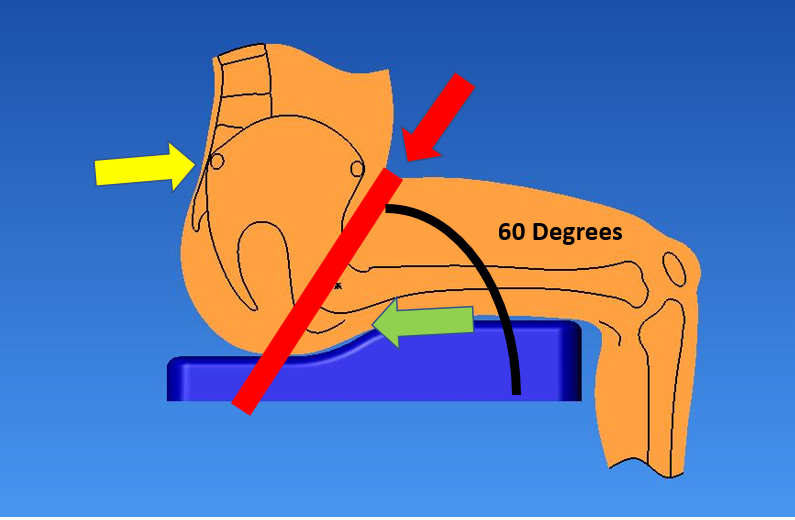
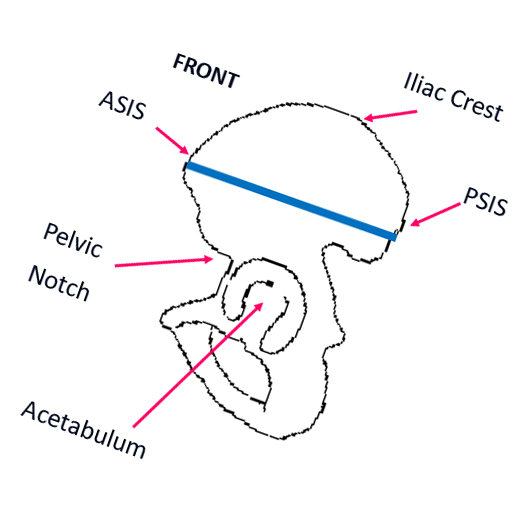
Once we have the appropriate set up of the seat depth and legrest length, it’s important to ensure proper support is provided at the posterior pelvis and low back. When providing support, whether we are accommodating a non-reducible asymmetry or correcting a reducible asymmetry, it is important to remember the rule of three. This means that we must ensure support at three points of contact in order to support and maintain that desired position. When discussing PPT, the three important points of control include posteriorly at the posterior superior iliac spines (PSIS) with a properly positioned backrest, a properly positioned (under the ASIS) pelvic belt at approximately a 60-degree angle, and anterior support at the ischial tuberosities with a cushion that has an anterior shelf (see figure 1).

In summary, PPT is a common postural position seen in many wheelchair clients. This position can seem difficult to resolve, but if the cause of the position can be determined, and the adjustment capabilities of the seating system are understood, the intervention can be a much more manageable task.

About Wade Lucas: Wade is a physical therapist and the clinical education manager for Quantum Rehab in the western U.S. In his spare time, Wade enjoys watching his kids compete in their activities, as well as playing golf and watching football.

Identification and Causes of Posterior Pelvic Tilt

FIGURE 1

Posterior Pelvic Tilt (PPT) is the most commonly seen detrimental posture not only in the users of mobility equipment, but people in general. When the human body is forced to hold itself up against gravity, it naturally seeks out the most stable, least fatiguing position. While sitting, the position of stability is often a posterior pelvic tilt because it allows the person to lower their center of gravity (COG), shift its posterior in relation to their base of support (BOS) and allow the trunk to either “hang” on the ligaments of the spine and/or rest against a back support.

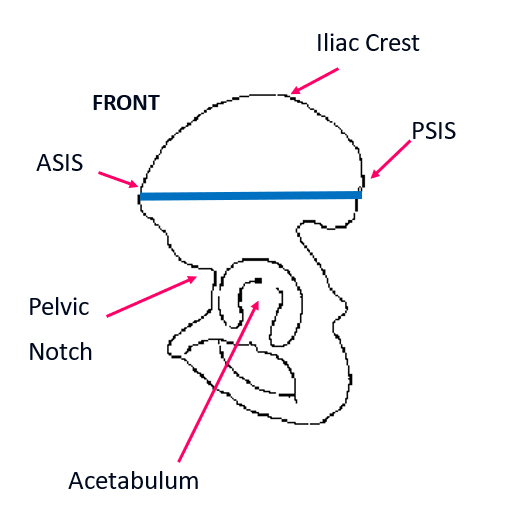
Ideally, the pelvis is positioned in a neutral to a slightly anterior tilted position to allow the remainder of the body to stay in the best biomechanical position. In this position, the anterior superior iliac spine (ASIS) and posterior superior iliac spine (PSIS), is level and parallel to the seating surface (see figure 1).

FIGURE 2

The ischial tuberosities will be oriented vertically and there should be little to no contact of the sacrum with the seating surface. PPT occurs when a person’s pelvis shifts from a neutral position where the anterior (ASIS) and posterior superior iliac spines (PSIS) are aligned parallel to the seating surface, to a position where the anterior spine is pointed up and the PSIS pointed in a more downward direction  (see figure 2).

If PPT is a more stable position, then why are we concerned when a wheelchair end user is seated that way? PPT is a concern as it can lead to serious problems for someone that utilizes a wheelchair for prolonged periods throughout the day and cannot move out of the position on their own. This position places an individual at higher risk for pressure/shear injuries on the seating surface and sliding forward in (and potentially out of) the wheelchair. It also contributes to increased thoracic kyphosis, flexed cervical spine with resultant hyperextension of the upper cervical spine, decreased visual field, difficulty swallowing, and compromise respiratory function, to name a few. In addition, over time this can lead to shortening of the hip flexor and abdominal muscles, changes in the shape of the bones in the spine, pelvis and lower extremities and result in non-reducible deformities.

In order to effectively correct and support the person’s pelvis and prevent PPT, it is important to identify the specific cause for the client. This may include proximal/core weakness, insufficient proximal support at the pelvic/lower extremities, extension hypertonicity/spasticity, tight hamstring muscles, restricted hip flexion range of motion, and improper mobility base/seating system configuration.When the person has impaired postural control or core muscular weakness, they are even more susceptible to PPT because the body is going to seek a position of stability.

Increased extensor tone or spasticity in the trunk and/or lower extremities often causes the posterior lower extremity muscular to pull the pelvis posteriorly as the legs push down into the seating surface.

The hamstring muscles originate on the ischial tuberosities, cross the hip and knee joints and insert on the tibia/fibular head. When the hamstrings are tight and stretched, it can pull the pelvis into a posterior position, especially if there is additional stretch caused by movement of the knee joint towards extension.

If the person has limited hip flexion range of motion, then they tend to move into a posterior pelvic tilt because it takes at least 90 degrees of hip flexion to sit with the pelvis in neutral. If the person has 90 degrees of flexion but is transferring to the chair themselves, then a minimum of 120 degrees of flexion is required as the trunk comes forward to counterbalance the body during the transfer.

Lastly, a posterior pelvic tilt can be caused by an inaccurate upper leg length measurement that is then translated into a wheelchair seat depth that is too long. As the person sits, they are unable to get their hips to the back of the chair. As a result, the pelvis will rotate posteriorly as it seeks the stability of the back support.

We will look deeper into the proper set up of the wheelchair and other interventions that can be made to address PPT in the next segment of this blog.

About Wade Lucas: Wade is a physical therapist and the clinical education manager for Quantum Rehab in the western U.S. In his spare time, Wade enjoys watching his kids compete in their activities, as well as playing golf and watching football.

Pediatric Wheelchairs and Arthrogryposis

Arthrogryposis multiplex congenital (AMC) is the congenital joint contracture in two or more areas of the body. The word “Arthrogryposis” originates from Greek and means “curving of joints.” Children who are born with joint contractures experience muscle shortening, due to abnormal fibrosis of the muscle tissue. Because of this, they are unable to perform active extension and flexion in the affected joint or joints. Arthrogryposis is divided into three groups: amyoplasia, distal arthrogryposis, and syndromic.

If your child has been diagnosed with arthrogryposis, Quantum® child wheelchairs can help improve his or her mobility and independence. Depending on the severity of your child’s condition, it is possible that he or she can be fitted for a complex rehab electric pediatric wheelchair that is customized to meet his or her specific needs. The Edge 3 Stretto™ pediatric wheelchair is compatible with a variety of power seating, positioning and drive controls.

The Edge 3 Stretto pediatric wheelchair is available with iLevel® power adjustable seat height, allowing your child to drive at 3.5 mph while elevated 12 inches so he or she can complete Mobility Related Activities of Daily Living (MRADLs), such as toileting, grooming, transferring, reaching and cooking. The Edge 3 Stretto pediatric wheelchair base is equipped with LED front and rear fender lights, allowing children to see and be safely seen while crossing parking lots or streets.

Depending on the severity of your son or daughter’s condition, he or she may require power positioning on his or her motorized child wheelchair to help maintain proper positioning, function, comfort and skin integrity. TRU-Balance® 3 Power Positioning Systems on electric pediatric wheelchairs offer a myriad of options when it comes to adjusting position, including power tilt, power recline, power tilt and recline, power articulating leg rests, power articulating foot platform and iLevel. TRU-Balance 3 looks good, feels good and maximizes functional independence.

Depending on the arthrogryposis type, your child may require expandable electronics on his or her pediatric wheelchair. Q-Logic 3 Advanced Drive Controls allow your child to operate an electric pediatric wheelchair using a joystick. Standard with Bluetooth®, Q-Logic 3 allows your child to operate his or her smart phone or tablet using the Q-Logic 3 screen. Q-Logic 3 can also be customized to include alternative drive controls such as a head array, chin control or switched driving.

Children with AMC may benefit from Stealth Products® wheelchair cushions. Each child wheelchair cushion offers a different function, such as general use and skin protection and positioning. Learn more about pediatric wheelchair cushions for your child.

If you are looking to purchase a pediatric wheelchair, check out our resources on how to buy a pediatric wheelchair and where to buy a pediatric wheelchair.

Selecting a Cushion for Your Client

Clinicians and ATPs often face the challenge of selecting the right product. When I first started out as a clinician, it was difficult knowing where to begin, with all the options that exist in the market today.

When we look at cushions, it seems like they are all essentially the same, made of foam and various other materials like air and gel, but how do we select the right one for our client? Typically, we select a cushion through trial and error, asking more senior clinicians for their opinion, maybe pressure mapping, or just using the patient report if they have sensation. When we look at selecting a cushion for an individual, it truly is a client centered approach. You must go back to basics. What is your goal? Sometimes the goal is just to provide comfort, whereas other times the goal is to prevent continuous skin breakdown, or even accommodate or correct a reducible or non-reducible positioning need. Sometimes, you may look for all three of those in one cushion.

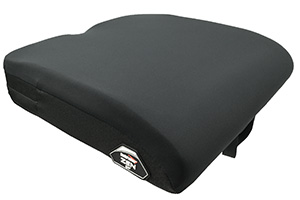
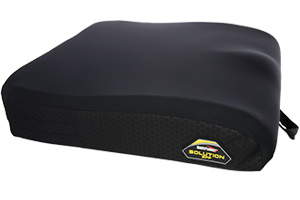
Zen SP Cushion

When picking a cushion, I first make sure we have addressed the positioning of a client in their chair. Have we set up a chair at the right angles to accommodate the user based on their clinical presentation?  Once we’ve addressed initial positioning setup of the chair, then we can look at what we need from our seating surface. First, we must remember that a cushion is a medium to help with our goals. A cushion is not going to eliminate a pressure injury in and of itself. This is a balance. A person must take responsibility for their skin health and that includes following the guidelines of when and how long to perform an effective weight shift from any seating surface. If a weight shift is not being performed, a cushion will not eliminate one’s pressure injury risk.

Solution SPP Cushion

Once someone understands a cushion will not solve the problem of a wound, but can help with its prevention, then the choice of what medium and support may work best for an individual can be addressed. Looking at different materials that are out there, you need to consider what is easiest for the client to manage and allows them to perform functional tasks. Maybe I want a medium in air for its skin protection properties, but when my client is sitting on it, they can’t reach as far without losing their balance. Or, maybe they aren’t willing to manage the air pressure weekly. In that case, the cushion won’t optimally meet the needs of the client.

In the case of aggressive positioning, sometimes you may select a cushion with a large sacral well that has good pelvic support, but now your client is unable to get out of the deep well to perform his or her transfer independently. These are some of the scenarios we need to assess and see if there is a way to work around them. Perhaps we need to look at a material that better meets the client’s functional requirements along with positioning and skin protection.

I encourage those working with their clients to be very aware of advocating for someone’s needs. If a client cannot carry out a sufficient weight shift and they are at a high risk of skin breakdown, then you need to advocate for the proper skin protection cushion. If you know they may develop or already have developed a postural asymmetry, look at the positioning or skin protection and positioning cushions that are available.

When it comes to the decision-making process, if a client needs something more customized, don’t be afraid to try it. Reach out to professionals in the industry and the representatives of these products and get advice and guidance. Ultimately, we want the best for our clients. For further guidance, check out this helpful wheelchair cushion guide from Quantum and Stealth Products on optimizing skin health and selecting a seating surface. You can also download the guide below.

When looking at custom, know there are options like molded systems that truly transform from a cushion to an orthotic type device, which keeps the client in an advantageous position, preventing further asymmetries down the line. If a mold is not what you are looking for, know there are options to build or create your own cushion using the various materials offered within a cushion line. Like our Stealth Products® Custom Cushion, you can use any of our cushion components to design something that meets your client’s exact needs.

About Alex Chesney: Alex is an occupational therapist and clinical sales manager for Quantum Outside Sales. She lives in Texas and enjoys fitness, working out, and taking her two rescue dogs, Brinkley and Riley, on walks!

How to Clean Your Narrow Wheelchair

If you own a Quantum® Narrow Wheelchair, such as the Edge 3 Stretto™, you understand that it requires routine maintenance. Regular service checks ensure that your electric wheelchair continues to deliver consistent and high-quality performance. There are certain things that power wheelchair users can do at home, while other checks need to be completed by your authorized Quantum provider. Read on for great information on cleaning your wheelchair, daily and weekly maintenance checklists and what to do if your wheelchair gets wet.

When you are done using your wheelchair for the day, it’s important to charge the batteries on your electric wheelchair for at least 8 to 14 hours. Read more on properly charging your narrow wheelchair batteries.

Using a soft, dry cloth, wipe down the seat and frame of your wheelchair. Avoid using chemicals or abrasive cleaners to clean your electric wheelchair. Do not use any lubricants on your wheelchair, as they can cause damage to the wheelchair’s electronics.

If your power wheelchair was exposed to moisture, take steps to dry your wheelchair immediately. Learn more about what to do when your narrow power wheelchair gets wet.

Daily Checks on Your Power Wheelchair

  • Turn off your controller and check the joystick to make sure it is not bent or damaged
  • Check the controller harness for fraying, cuts or exposed wires
  • Examine your tires for flat spots
  • Inspect your wheelchair’s seating system, armrests and front foot riggings for loose hardware

Weekly Checks on Your Narrow Wheelchair

  • Ensure all parts of the controller are fastened securely. Do not overtighten any screws
  • Check your tires to make sure they are properly inflated. Pneumatic tires have a psi/bar/kPa air pressure rating indicated on the tire.
  • Check the brakes on your wheelchair while driving on a level surface.

Check out our recommendations for monthly and yearly checks for your electric wheelchair.

If you discover any issues with your power wheelchair, please contact your authorized Quantum provider. If you don’t have a provider, we can help! Visit our Dealer Locator on our website today.

Social Distancing with Interactive Assist

During these challenging times with the COVID-19 pandemic, it’s important to maintain social distancing while evaluating a client’s electric wheelchair. Stay safe and reduce trips to a client’s home by using Quantum’s diagnostic app, Interactive Assist!

What is Interactive Assist?

Interactive Assist is the must-have app for remote service. The app provides a direct, real-time connection from an electric wheelchair’s electronics to your technician’s programming station. This connection provides a technician with full system and diagnostic information. Interactive Assist also offers tools, such as a real-time, mirror image of the electric wheelchair’s electronics display, to aid in eliminating wasteful trips.  

By utilizing Interactive Assist, your technician may be able to quickly resolve:

  • Battery management issues
  • Charging problems
  • Motor problems

The technician may also be able to complete basic programming, view error code history, add photos to a photo album and more!

Here are some fault codes that Interactive Assist can resolve remotely.

Electric Wheelchair Code 14 – Proportional Input Device Not Connected

Code 14 occurs when a programmed device is missing at startup. You can connect to the client’s chair and instruct them on how to select the correct proportional input device via the AUX menu if another input device exists.

Electric Wheelchair Code 28 – Main Relay Warning

Code 28 may indicate to possible undervoltage. You can connect to the client’s electric wheelchair and look at the charging history and see if the client is undercharging the batteries on his or her electric wheelchair. If this is the case, you can re-educate your client on proper charging habits.

For more information on what other fault codes Interactive Assist can resolve remotely, as well as fault codes that can be identified, check out our Interactive Assist page.

Electric Wheelchair Code 45 – Input Device Not Present

Code 45 occurs when a programmed device is missing at startup. You can connect to the client’s power wheelchair and instruct them on how to select the correct input device via the AUX menu if another input device exists.

How to Download Interactive Assist

Are you ready to try it? Interactive Assist can be used with Q-Logic 3 Advanced Drive Control System. Download the app today on Google Play or the App Store.

Taking a Leap of Faith

Dad, college professor, disability activist: these are just some of the roles that come naturally to Joe Stramondo. Thoughtful and dedicated, Joe is passionate about his family and his work as a scholar and educator and spends much of his free time advocating for and socializing with members of the disability community.

Born with dwarfism, Joe also sustained a spinal cord injury during his childhood. Still, Joe never lacked support and encouragement. Joe’s parents took him to his first Little People of America meeting when he was a toddler.

“I have been surrounded by a community of other disabled people for as long as I can remember,” Joe said. “I grew up with role models who had bodies like mine and used assistive technology like mine.”

Such strong ties to the disability community made it extremely difficult for Joe to leave home to pursue higher education.

“As a disabled person, being truly on my own in order to pursue my goals was terrifying,” Joe said. “It was the first step I needed to take, though, to build the life I have now.”

Joe is proud that he took that leap of faith, moving hundreds of miles away from home to attend school in another state, where he didn’t know anyone. That leap became a first of many, as Joe has traveled and lived in many different states over the years for school and for work, including Connecticut, Michigan, Texas and Pennsylvania. Most recently, he and his spouse moved to San Diego, California, where Joe works as an assistant professor at San Diego State University. He teaches about ethics in medicine, especially ethical problems that impact people with disabilities.

In between teaching and his involvement in the disability community, Joe strives to be the best father he can be to his two small children.

“They depend on me so completely that I literally live for them,” Joe said.  

To help with his mobility, Joe uses the Edge® 3 Power Wheelchair with iLevel® technology. He loves the upgraded SRS (Smooth Ride Suspension) that provides a comfortable ride.

“It has very good shocks that provide smooth handling,” Joe said. “Plus, it has a great turning radius with mid-wheel drive.”

With 12 inches of lift at 4.5 mph, Joe states the life he lives would not be possible without his iLevel Power Chair.

“iLevel vastly improves my reach wherever I go,” Joe said.

Whether it’s giving a lecture to his students, going out for a meal with his spouse or helping his children reach the monkey bars on the playground, iLevel gives Joe all the access he needs.

“My power chair is an integral part of everything that makes my life meaningful and enjoyable,” Joe said.