Where to Buy a Pediatric Wheelchair

If your child has been diagnosed with a medical condition that affects his or her mobility, they may qualify for a Quantum® Power Chair. First your child needs to have a face-to-face evaluation with a doctor or physical therapist to determine his or her mobility needs. While there, the doctor or physical therapist can help choose which pediatric wheelchair is best for your child and his or her lifestyle and may write a prescription for his or her pediatric electric wheelchair.

Once your child has a prescription, you are ready to purchase their pediatric wheelchair, but you may not know where to start. Quantum Rehab makes it easy to find local dealers near you! Just follow these simple steps:

  • Visit our website, quantumrehab.com
  • Click on the Find a Dealer button in the upper left corner of the homepage to go to our Quantum Dealer Locator
  • Enter your ZIP code, check the box, and hit search
  • You’ll see a list of authorized Quantum mobility product providers near your ZIP code
  • You can adjust the mileage box to find a provider that is as close as five miles or as far as 100 miles from the ZIP code you entered
Understanding the Search Results
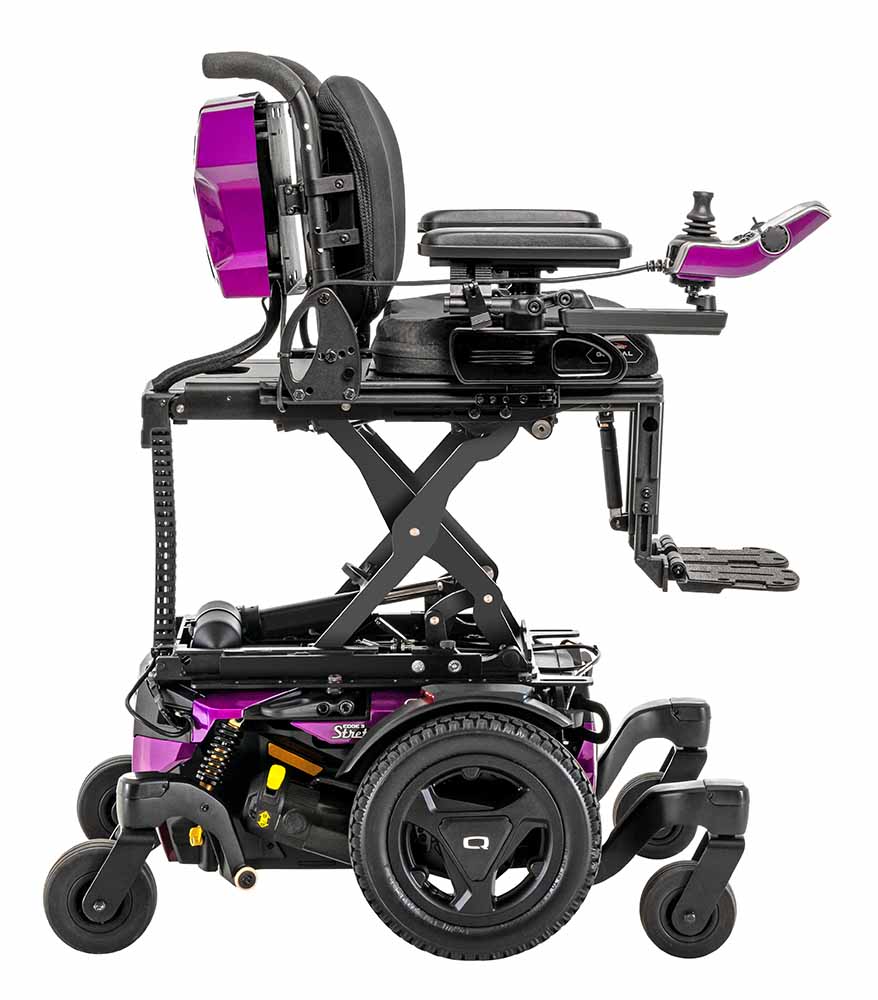
Edge 3 Stretto with iLevel

The search results of providers include contact information such as the provider name, address and phone number. It also shows if they offer iLevel® technology or work with CareCredit. If you are unfamiliar with the address of the provider, you can also view directions and a map. After finding the provider’s information, you can choose to contact the provider yourself, or request to be contacted. Just click the “Request to be Contacted” button on the right and fill out the form. The provider will then contact you directly.

Your son or daughter’s doctor or physical therapist may work with an Assistive Technology Professional (ATP) who works for the authorized Quantum provider. ATPs are certified through RESNA (Rehabilitation Engineering and Assistive Technology Society of North America). Together, the therapist and ATP determine which motorized wheelchair and components benefit your child the most.

Buying a Pediatric Wheelchair Outside of the United States

If you live outside of the United States and are looking to buy a pediatric wheelchair, we work with dealers around the globe. The process differs from the process of finding a dealer in the United States, but it’s not complicated. It’s as simple as contacting us or one of our international subsidiaries, nearest to where you live. Let us know that you are looking to buy a pediatric electric wheelchair and we can have a dealer local to your area contact you.

You can get in touch with us by phone at 1-833-745-3835, through our Facebook page, chatting live with a representative on our website or by filling out a contact form.

To get in touch with one of our international subsidiaries, locate the international drop down menu at the top of our website and click on the corresponding subsidiary, closest to where you’re located. The subsidiary lists contact information, such as email addresses and phone numbers on their page. If applicable, you may also contact them through their social media page.
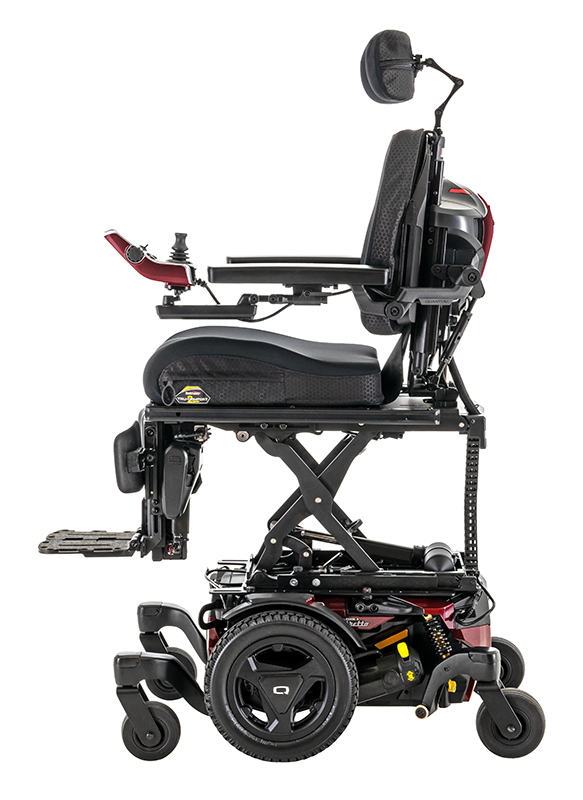

How to Buy a Pediatric Wheelchair

Your child may qualify for a Quantum® Power Chair if he or she has been diagnosed with a medical condition that affects his or her mobility. In order to determine if a power mobility device is right for him or her, you need to follow these steps.

Schedule a Face-to-Face Examination
Edge 3 Stretto with iLevel technology

The first thing you want to do is schedule a face-to-face examination with your child’s physician or physical or occupational therapist. During an exam, a medical practitioner must first consider the use of other mobility aids such as a cane and manual wheelchair before considering the use of a complex rehab wheelchair. If they feel that your child’s mobility needs can only be satisfied with an electric pediatric wheelchair, they will write a prescription and reflect this decision in his or her medical records.

Once you know that your child is ready to buy a pediatric wheelchair, check out our article on where to buy a pediatric wheelchair for more information.

Work with Pediatric Wheelchair Providers

Once you have chosen a provider with whom you’d like to work, have your child’s physician fax or mail the written prescription and medical records to that provider. The mobility product provider must receive the written prescription and medical records within six months from the date of the face-to-face exam. After receiving the documents, the provider will work with you, your child and your physician to determine the appropriate pediatric wheelchair to meet your son or daughter’s needs.

Conduct a Home Assessment

Either before or at the time of delivery of your child’s pediatric wheelchair, the provider you’re working with will conduct a home assessment to ensure that there is enough access and maneuverability space for your child. The purpose of using a power mobility device is to give your child independence and freedom of mobility within your home to perform daily activities such as grooming, bathing, dressing and eating. Because of this, it’s important to determine if your home will accommodate the use of your child’s pediatric wheelchair.

Learn How to Operate Your Child’s Pediatric Wheelchair

Upon receiving your child’s electric wheelchair, your provider will instruct you on how to operate it. It is important to note that the delivery of the pediatric motorized wheelchair must be no more than 120 days following your child’s face-to-face examination.

Funding for Pediatric Wheelchairs

If you are looking for insurance, Medicare or Medicaid coverage for pediatric wheelchairs, we have some resources for you! Check out our articles on funding for pediatric wheelchairs today. You can find them here:

COVID-19 Update: The Safety of Those We Serve

Dear Pride and Quantum customers,

We want to provide a brief update regarding how we are protecting against COVID-19.

The health and safety of our providers and their employees, clinicians, those who use our products, and our employees, is and has always been our top priority. We realize the population we serve is among the most vulnerable and want to assure you we are doing everything we can to keep each person safe.

Here are a few things we are doing:

  • Sick leave – Employees feeling sick with any illness are asked to stay home.
  • Social distancing – Those who can work from home are doing so on a rotating basis. Employees who are on-site are required to follow the CDC recommendations of staying at least 6 feet apart from one another whenever possible.
  • Increased cleaning – We have increased the intensity of daily cleaning in all our facilities. Employees are required to follow proper handwashing guidelines.
  • Travel ban – All non-essential travel has stopped. All international travel is prohibited.
  • Digital meetings – There is a ban on in-person meetings. Meetings that must be held are done so via Skype or phone.
  • No visitors – No outside visitors such as vendors are allowed until further notice.

While we always work hard to keep our environment safe, we are being especially vigilant during this time and are reassessing our policies on a day-to-day basis.

Regards,

Scott Meuser, CEO

Pediatric Wheelchair Medicaid Coverage

Medicaid is the largest program that provides medical and health-related services to those who qualify. Funded through cooperative efforts between the federal and state governments, each state is responsible for administering its own Medicaid program, while remaining within the national guidelines enforced by the federal government. Each state sets eligibility standards and determines the amount and type of services offered, as well as the scope of services, and how long the services are provided. In addition, individual states set the rate of payment for services received.

An individual or family must meet resource and income limits set by their state in order to qualify for Medicaid services. Is your child receiving Supplementary Security Income (SSI)? If so, he or she automatically qualifies for Medicaid services. An individual or child must have a medical need or fall into a specified eligibility category. Is your child living with a serious medical condition, such as muscular dystrophy, spina bifida or cerebral palsy? Your child may qualify for Medicaid coverage of a pediatric wheelchair. A pediatric power wheelchair can give your child greater mobility and independence. Read on to get more information on Medicaid wheelchair coverage guidelines and how a pediatric power wheelchair can change your son or daughter’s life!

Medicaid Pediatric Wheelchair Coverage

For your child to qualify for pediatric wheelchair Medicaid coverage, your child must have a medical need for a specified pediatric wheelchair. A doctor’s prescription is required in writing and the prescription must state the type of pediatric power wheelchair your child needs. Pediatric wheelchairs may be covered as Durable Medical Equipment (DME) under Medicaid, however, circumstances of coverage can vary from state to state. Such variations include:

  • Coverage for vocational or outdoor use
  • Coverage for skilled nursing homes
  • Coverage for pediatric wheelchair accessories (some states have age limits on coverage)
  • Whether pediatric wheelchairs can be rented or purchased
  • Some states may require physical therapy reports or additional forms to be completed

If your child qualifies for both Medicare and Medicaid, Medicaid may cover a portion of the cost of a pediatric power wheelchair that is not covered by Medicare.

Edge 3 Stretto™ Pediatric Power Wheelchair

Edge 3 Stretto with iLevel

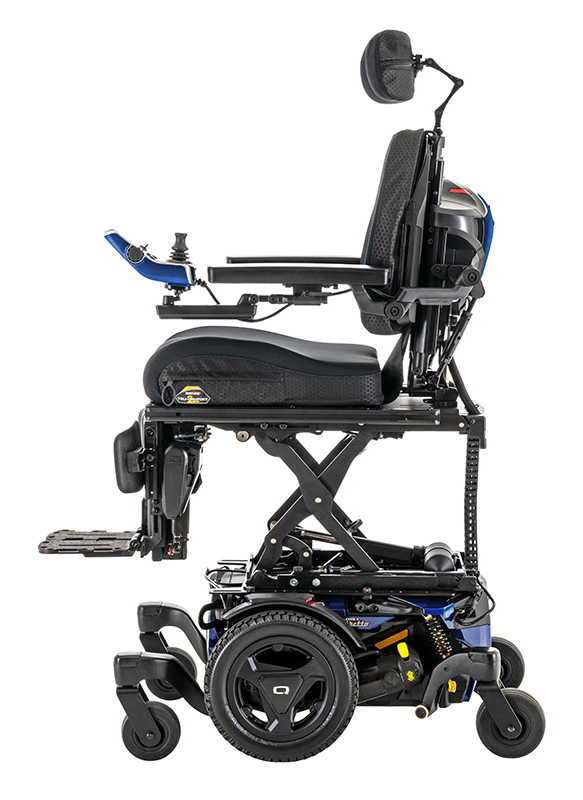
Once you know that your child qualifies for a pediatric wheelchair, it’s time to pick the best wheelchair to meet their needs. The Edge 3 Stretto™ is the ultimate pediatric power chair! With an overall width of 20.75 inches with 12.5-inch drive wheels, the Stretto is a narrower wheelchair that is designed to fit in pediatric-sized spaces! It is equipped with independent SRS (Smooth Ride Suspension) for a smooth, more comfortable ride with increased shock absorption. The Stretto pediatric power wheelchair comes standard with a USB charger port and front and rear LED fender lights.

Want to further boost your child’s independence? The Edge 3 Stretto is available with optional iLevel® technology. iLevel raises the wheelchair’s seat up to 12 inches while driving at speeds up to 3.5 mph. Medicaid may cover the cost of a power elevating seating system on a pediatric wheelchair, like iLevel, on a case-by-case basis. It must be demonstrated that iLevel is essential for Mobility Related Activities of Daily Living (MRADLs), such as reach, transfers, access, safety, communication, and/or supports the educational goals of your son or daughter.

Funding for Narrow Wheelchair Ramps

Having access to transportation opens you to a world of possibilities. Maybe you aren’t living in an area with public transportation nor are in a situation where you can invest in a wheelchair accessible vehicle. There are options available to you. Do you know someone who can give you rides to appointments or take you to get your errands done? Let them know that investing in a vehicle ramp for your narrow wheelchair can be worthwhile. If you are looking to buy a wheelchair ramp for a van, you might be wondering if it’s covered by insurance?

Buying a Narrow Wheelchair Ramp Through Medicare

Medicare is a federally funded program that provides health insurance to people over age 65 and certain people with disabilities. Medicare Part B covers a portion of the purchase or lease of certain approved types of durable medical equipment (DME) that are to be used within the home. Unfortunately, Part B does not cover things like walk-in tubs or wheelchair ramps. To learn more about what durable medical equipment Medicare covers and Medicare’s coverage guidelines, you can check out their website at medicare.gov or speak to a representative over the phone.

Buying a Narrow Wheelchair Ramp Through Your Insurance

Your private insurance may also help pay for a narrow wheelchair ramp. Your doctor’s office may be able to confirm whether your insurance will cover the cost of a narrow wheelchair ramp, however we recommend contacting your insurance to get a clear and direct answer. To find out if they will cover a ramp for your narrow wheelchair, dial the number listed on your insurance card and speak with a representative.

Alternative Financing Options for Buying a Narrow Wheelchair Ramp

If you don’t have Medicare and your private insurance won’t cover the cost of a narrow wheelchair ramp, there are alternative options for financing available. Hundreds of Quantum providers around the country participate with CareCredit. CareCredit is a credit card that allows you to pay for medical equipment and services over time, based on your budget. There are also special promotional financing options available upon credit approval. CareCredit allows you to purchase durable medical equipment such as bath safety products, motorized wheelchairs, ventilators, driving controls and more.  Contact CareCredit to learn more about what items they cover and contact your provider today to find out how you can fill out an application. You can also visit carecredit.com for more information.

Accessories for Pediatric Wheelchairs

Accessories are for everyone, not just grownups! Because we offer pediatric wheelchair accessories, kids can still be kids while experiencing the same benefits from their power wheelchair accessories that adults do. There are plenty of reasons to invest in pediatric wheelchair accessories. Not only are they cool, but they serve a purpose that enhances your child’s experience as they go through day-to-day life. We offer a wide range of accessories to meet the needs of a variety of wheelchair users. When choosing accessories for your child’s power wheelchair, think in terms of both their personality and lifestyle. 

Pediatric Wheelchair Accessories for Safety

We understand that your daughter or son’s safety is at the forefront of your mind and we take that seriously. For this reason, we’ve created pediatric wheelchair accessories that can help your child stay safe while doing daily activities. LED fender lights come standard on the Edge 3 Stretto™ pediatric wheelchair, helping your child to see and be seen while outside in the evening or while he or she navigates low lighted areas. For added safety, another great option for visibility is the reflector kit.

During the daytime, accessories like the rearview mirror will increase your child’s visibility both behind and ahead as he or she navigates through crowds at school or while out with friends.

Mobility goes beyond your child’s motorized wheelchair. Transfer bars on the sides of the chair provide additional support in assisting your child in transferring into and out of his or her power wheelchair, providing independence to get into bed at the end of the day.

Pediatric Wheelchair Accessories for Hydration

In addition to their safety, we also care about your child’s health. Children’s minds are occupied by playing and having fun and we often have to remind them to do things like sneeze into their arm or drink enough water. With the front-mounted cup holder that attaches to our pediatric power wheelchairs, your little ones can carry their favorite drink with them, serving as a reminder to keep hydrated throughout the day.

Another option we have for pediatric power wheelchairs is the hydration system. Children can now enjoy their favorite drink through a fun bendy straw that wraps around the chair towards the front, with a bottle mounted to the back of their motorized wheelchair.

Pediatric Wheelchair Accessories for Storage

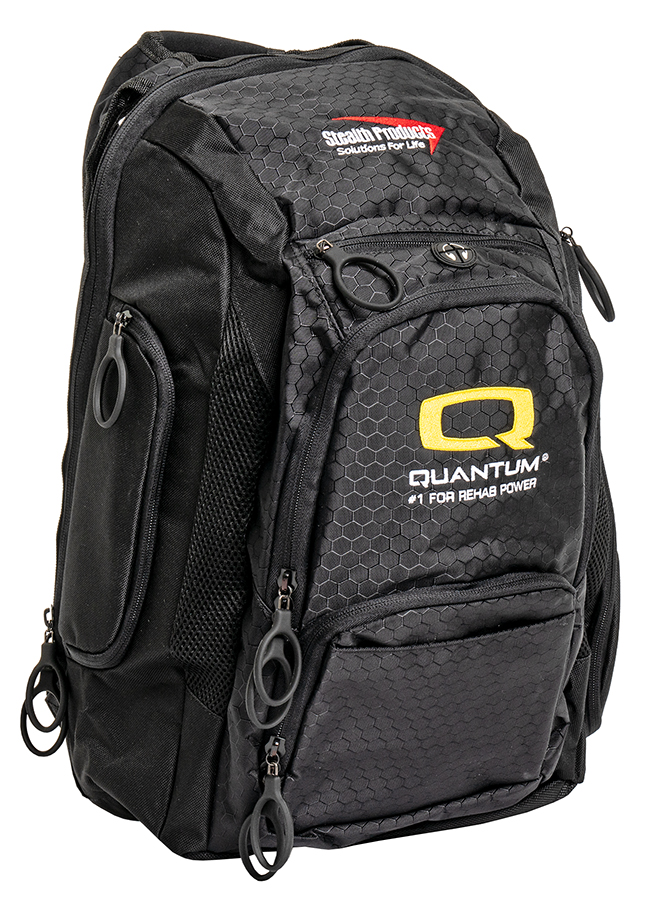
Whether it’s carrying around their favorite toy or collecting cool rocks that they find outside, we offer accessories for storage. Some of these accessories for their pediatric motorized wheelchair include a glove box for smaller items, such as Legos, and a Quantum backpack for bigger items, such as a stuffed animal or snacks. For kids who use the Quantum backpack, a shopping bag, or a tote that you send along with them, we suggest checking out the personal item hook and backpack hook. This allows them to securely carry their personal items handsfree.

Pediatric Wheelchair Accessories for Technology

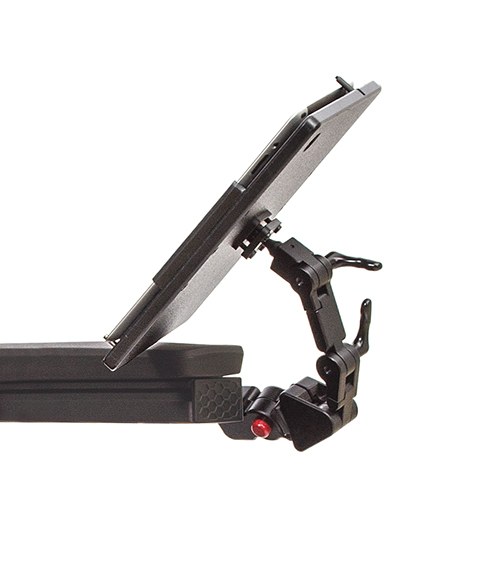
While safety, hydration and storage are all valid reasons to purchase pediatric wheelchair accessories, they might be most interested in accessories for technology. The tablet holder and phone holder make great assistants in holding your child’s electronic devices and pair well with the USB mobile device charger to keep them charged.

It is important to know that not all these accessories are available with every product. Some are only available on TRU-Balance® 3 seating systems. If you are interested in purchasing pediatric wheelchair accessories, you can reach out to a local Quantum Rehab provider. If you aren’t sure who your authorized Quantum provider is, we are happy to help point you in the right direction! Just give us a call at 1-833-745-3835 with the power wheelchair’s serial number. If you aren’t sure where to find the serial number, you can check out our FAQ page to learn more.

Getting Technical Support Away from Home

We can all agree that we want to create memories of a lifetime when we travel, although there are unanticipated situations that also contribute to these memories. While they make for entertaining stories, they’re not the types of situations that we want to happen. If you find yourself away from home and needing technical support on your motorized wheelchair, we have a few steps that you can take to get back to enjoying your trip.

Interactive Assist

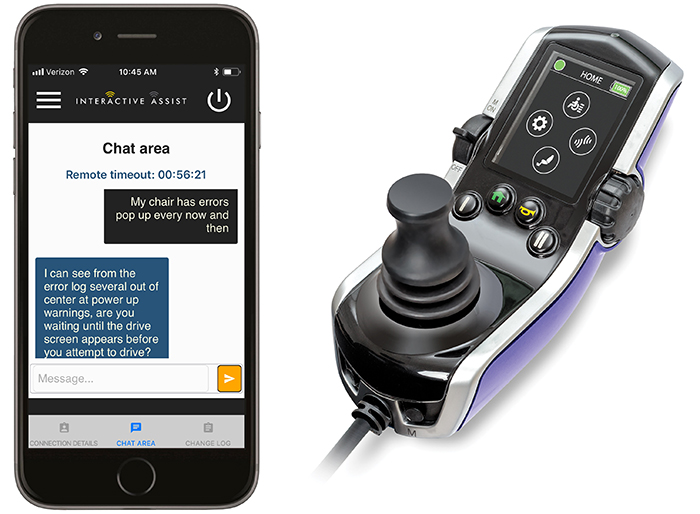
Interactive Assist is a diagnostic app that provides a direct, real-time connection from your power wheelchair’s electronics to a provider’s programming station. If you are away from home, Interactive Assist will provide the technician with full system and diagnostics information, along with tools, such as a real-time mirror image of the power wheelchair’s electronics display.

Any motorized wheelchair equipped with Q-Logic 3 can use Interactive Assist. This app is available for download today on Google Play or the App Store.

Finding a Provider Near You

If you run into a jam while you’re away from home, you can find a Quantum provider using our dealer locator. In just a few simple steps, you can find a provider near where you’re staying who can assist you with your technical needs.

  • Click on “Find a Dealer” at the top of the Quantum website
  • Type your address or city into the search bar
  • Click “Click to Find A Dealer Now!”

You can adjust the distance that you would be willing to go, whether 10 miles, 20 miles, 50 miles, 100 miles or 250 miles from the address you entered.

The search results will display any providers near you, their address and their phone number. This works for locations within the United States and Puerto Rico.

If You are Traveling Abroad

If you run into an emergency while you are outside of the United States, Quantum Rehab has subsidiaries around the world. All you need to do to get technical support regarding your power wheelchair is:

This will take you to the mini site for the subsidiary, which will contain contact information, including a phone number, email address and postal address for the corresponding subsidiary. The subsidiary will then be able to put you in contact with a local provider that can assist you. Either you can contact the subsidiary on your own to get that information or you can get in touch with us to have a local provider reach you.

One Final Option

If you cannot get in touch with a provider near you for assistance, we can try to troubleshoot your motorized wheelchair over the phone. Give our Consumer Services department a call and we would be glad to try and assist you as best as we can from a distance.

If you are not near a provider and need to replace parts, we will gladly send you instructions for how to install the part, but you will have to switch those parts out on your own. Because of this, we recommend traveling with someone who can help switch out the parts, if there is a need.

The best way to handle a potential stressful situation while traveling is by being prepared for it. You can either call ahead or check out our international websites to get the information that you may need before you embark on your journey.

Child Wheelchair Medicaid Coverage

Is your child living with a serious medical condition, such as cerebral palsy or spina bifida? If you believe that a wheelchair for child with cerebral palsy or other medical condition is the solution but aren’t sure how to pay for it, you do have options available to you. If you’ve heard of Medicaid, then you know that it is the largest program that gives medical and health-related services to people who have low incomes. If your child has a medical condition that affects his or her mobility, he or she may qualify for coverage through your state’s Medicaid program. Read on to obtain additional information on child wheelchair Medicaid eligibility requirements and how wheelchair technology can enhance your child’s life!

Understanding Medicaid Programs

Funded through cooperative efforts between state and federal governments, each state administers its own Medicaid program, while staying within general national guidelines enforced by the federal government. Each state sets its own standards for eligibility and decides what type of services are offered. Individual states determine the scope of services, the amount of services offered and for how long. In addition, each state is responsible for setting the rate of payment for services received by Medicaid recipients.

Child Wheelchair and Medicaid Eligibility

For your child to qualify for Medicaid, your family must meet resource and income limits. Your child must have a medical need or fall into a specified eligibility category that is specified by your state. Any child that receives Supplementary Security Income (SSI) automatically qualifies for Medicaid services.

For Medicaid to cover the cost of a power chair, the child must have a medical need for the specific wheelchair. A written prescription from a doctor is required and the prescription must specify the type of child power wheelchair he or she needs.  A child power wheelchair may be covered as Durable Medical Equipment (DME) under Medicaid, although circumstances do vary from one state to the next. These variations can include coverage for outdoor or vocational use; coverage for skilled nursing homes; Wheelchair accessory coverage, as some states have age limits for coverage; whether the wheelchair for child with cerebral palsy (for example) can be rented or purchased. In addition, some states require physical therapy reports or forms to be completed. 

It’s important to understand that if your daughter or son qualifies for both Medicaid and Medicare, Medicaid may cover the portion of the cost of a child power wheelchair that is not covered by Medicare.

Medicaid Funding for Edge 3 Stretto®

Edge 3 Stretto Wheelchair

If your daughter or son qualifies for a child power wheelchair, why not consider the narrowest power chair in America? The Edge 3 Stretto® has a narrower width for exceptional maneuvering in tight spaces. With an overall width of 20.47 inches with 12.5-inch drive wheels, the Stretto is perfect for navigating cramped living quarters, narrow school hallways and small spaces on the playground. Equipped with independent SRS (Smooth Ride Suspension), the Edge 3 Stretto provides a smoother, more comfortable ride with increased shock absorption. The power chair also comes standard with a USB charger port and front and rear fender lights. Most importantly, the Stretto is available with optional iLevel® technology, that raises the child power wheelchair’s seat up to 12 inches, while driving up to 3.5 mph.

Medicaid may cover the cost of a power adjustable seat height on a child wheelchair, such as iLevel, on a case-by-case basis. It must be shown that iLevel is essential for your child’s daily living activities, such as transferring, reaching and accessing, as well as safety, communication and/or supports educational goals.

Understanding a Huntington’s Disease Diagnosis

When faced with a diagnosis of a severe medical condition or disability, individuals and their loved ones may have a lot of questions and concerns. It’s important to get answers and be highly knowledgeable in what to expect. Patients living with or recently diagnosed with huntington’s disease need to understand the huntington’s disease definition, as well as the prognosis and symptoms. Read on to obtain more information on this progressive medical condition and speak to your healthcare provider regarding any questions you may have.

Huntington’s Disease Definition

Huntington’s Disease refers to degeneration of brain cells in the regions of the brain that control motor skills, as well as other areas of the brain. This disease is inherited, caused by a mutation in the gene for a protein that is known as huntingtin. A child living with the condition usually inherits the altered gene from one parent. There is also a slight risk that someone who did not inherit the gene, but has a parent with the mutation, may possibly pass the genetic sequence onto his or her children.

Symptoms of Huntington’s Disease

Symptoms of huntington’s disease progress over time, and include uncontrollable movements, abnormal body postures and changes in judgment, cognition, behavior and emotion. The condition can also cause impaired coordination, difficulty feeding and swallowing, as well as slurred speech. In terms of cognitive activities, individuals with the condition have trouble paying attention or may have difficulty in thinking through the steps of an activity. They usually struggle with multi-tasking.

Diagnosing Huntington’s Disease

One way to diagnose huntington’s disease is through a complete evaluation that includes medical history, as well as neurological and laboratory tests. People who have a family history of huntington’s disease may also consider genetic testing and family planning options. For parents who are presumed to be high risk for passing the gene onto their children, it is recommended to meet with a genetic counselor.

Treatment and Huntington’s Disease Prognosis

Currently, there is no cure or treatment for huntington’s disease. We hope that through research, a huntington’s disease cure will be developed. Medications are used to treat some of the symptoms of the disease. Approved by the Food and Drug Administration, tetrabenazine (Xenazine) is designed to suppress the involuntary jerking and writhing movements that can occur with Huntington’s disease. When patients are experiencing psychiatric symptoms, other drugs are recommended, such as haloperidol (Haldol) and chlorpromazine, have a side effect of suppressing movements. Generally, from the initial onset of symptoms, patients have a lifespan of 15 to 20 years.

Edge 3 Wheelchair with iLevel technology

Complex Rehab for Huntington’s Disease

Quantum Rehab® offers a wide range of power wheelchairs and complex rehab technology components that are highly customizable, to provide positioning and functional support. Specialty drive controls can be selected and added to a power wheelchair base, enabling the user to operate the power chair easily. Power positioning and power adjustable seating can be added to the wheelchair to ensure individuals with huntington’s disease are fully supported and have complete access to their environment. Get more information on Quantum power wheelchairs for huntington’s disease.

Huntington’s Disease Society of America

A non-profit organization, the Huntington’s Disease Society of America is dedicated to improving the lives of both individuals and families affected by the disease. The organization assists with community services, outreach, education, advocacy and research. The group strives for a world free of huntington’s disease. If you or someone you love is affected by huntington’s disease and need help, visit the Huntington’s Disease Society of America website for a complete list of resources.

Taking the Reins on Life

“I elevate myself so that the big horses can see me a lot better. You’re less intimidating at their level.”

— Christina Myers, Quakertown, PA

Old habits die hard, as well as old preferences. Christina Myers had used a manual wheelchair for several years. Over time, she needed multiple surgeries and as a result, it was suggested that she move into a power chair. However, she preferred using a manual wheelchair.

“I didn’t want to get lazy by using a power chair,” Christina stated, describing herself as an active person, as well as a bit competitive.

Her preference for using a manual wheelchair remained until she met Quantum Rehab’s Mark Smith. After they spoke, she saw that a power chair wasn’t going to prevent her from doing things, but rather open the door to more opportunities.

Christina lives her life doing what she loves, much opposite of what she thought her life might look like in a power wheelchair. From cooking to archery to taking care of horses, she is living her life to the fullest. While she loves every feature that she has on her Edge 3 with iLevel®, she cited some of the features she uses in her daily life, including when cooking and baking.

“I made chicken soup and muffins and could move from the counter to the oven. It makes life accessible. The kitchen isn’t fully accessible, but this helps me cook safer and easier.”

Safety when cooking and baking is one thing, but safety when it comes to working outside is a horse of a different color.

“I work with little and big horses. That’s where iLevel comes in. I elevate myself so that the big horses can see me a lot better. You’re less intimidating at their level. I’m safer elevated with them. With the old chair, they couldn’t see me as well and I had to dodge them.”

Christina is passionate about horses, so she spends a lot of time outdoors. She noted the temperature regulating feature of her Edge 3’s cushion, the TRU-Comfort 2.

“I was out in the cold weather the other day, doing activities with my horses at 8 or 9. I didn’t even have a coat on because I didn’t know how cold it was. It regulated my temperature!”

Sometimes life is a smooth ride, and other times, it can get a little bumpy. Christina notes the importance of having good suspension as a wheelchair user, citing her experience with her Edge 3’s SRS (Smooth Ride Suspension).

“I can go over different terrain. It’s always a smooth ride and it absorbs a lot. You don’t have a bumpy ride. I have cerebral palsy so the more bumps I get, the more problems I get,” she explained.

The SRS on Christina’s Edge 3 power wheelchair consists of three coil-over, gas-charged shocks that provide an ultra-smooth and quiet ride. Additionally, it adds stability to optional iLevel® Power Adjustable Seat Height on the Edge 3 motorized wheelchair.

Christina’s love for horses goes back to when she was just three years old and her mother found a program for horseback riding. It wasn’t long until they learned how beneficial horseback riding was for her wellbeing.

In addition to attributing her history with horses to her parents, she said, “My parents are very supportive and involved. I’m very thankful for them.”

Taking her passion to a whole new level, Christina frequently competes with her horses. Most recently, she competed in the National I Area Show in Harrington, Delaware and was a bit of a dark horse herself. She won several ribbons, including 2nd place as the only disabled contestant in a group of able-bodied individuals. She also made Reserved Champ this season at her local club.

Throughout her success in showing horses, Christina has remained humble and looks to motivate others.

“Do what you love and love what you do. It’s not just about competing for me when I get into the show ring. It’s about teaching others, inspiring, and pushing yourself past your limits to success.”

Not only has Christina been successful in her shows, but she has also been successful in leading a life she loves as an example for others. We are chomping at the bit to see what she does next!