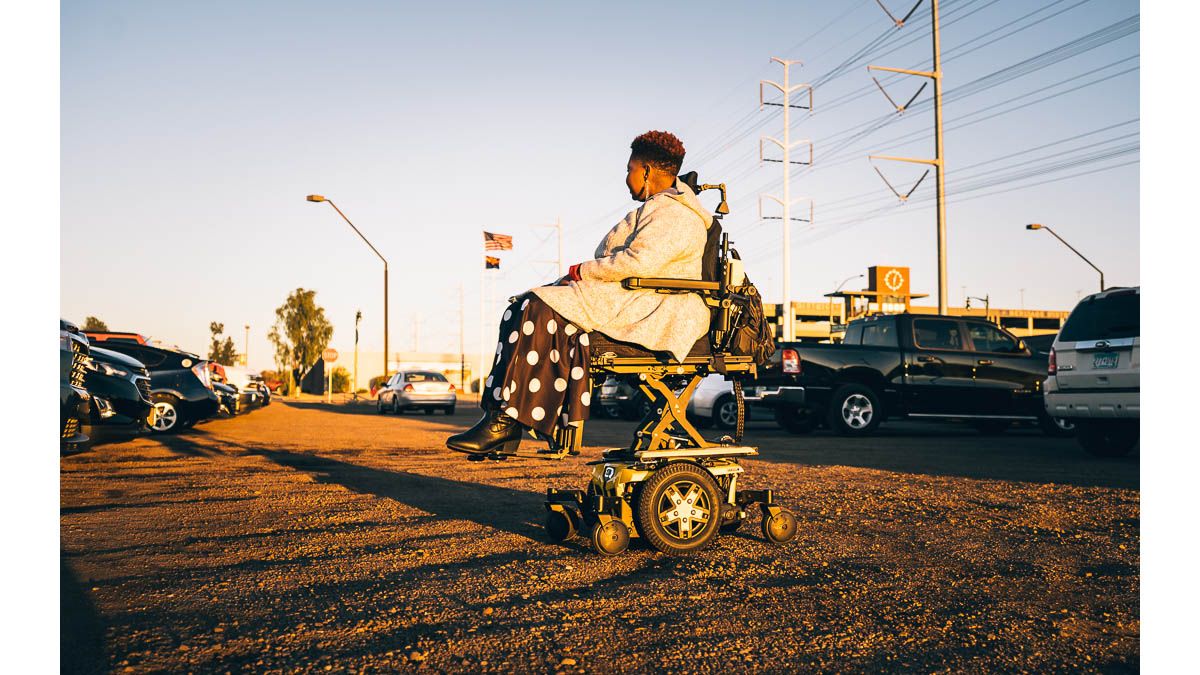
Searching for Businesses That Cater to the Disability Community

Although I have been blessed with an active and satisfying life but one aspect of being disabled keeps rearing its ugly head. I still have some problems getting services for things I want. I am a woman who is into fashion, makeup, hair styles, skin health and more. At times, maintaining a moderate but substantial beauty profile requires visits to businesses that in most cases do not cater to or have any contingency for people in wheelchairs.

Finding a New Stylist
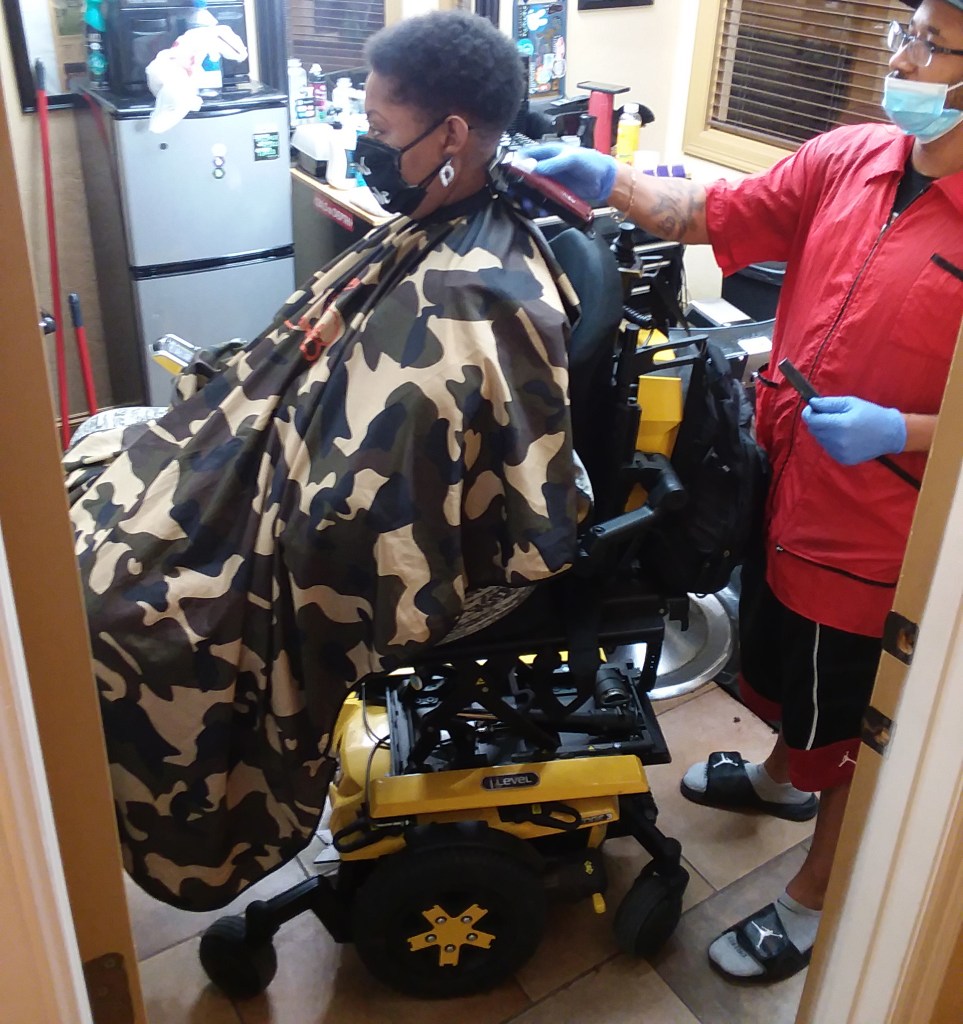
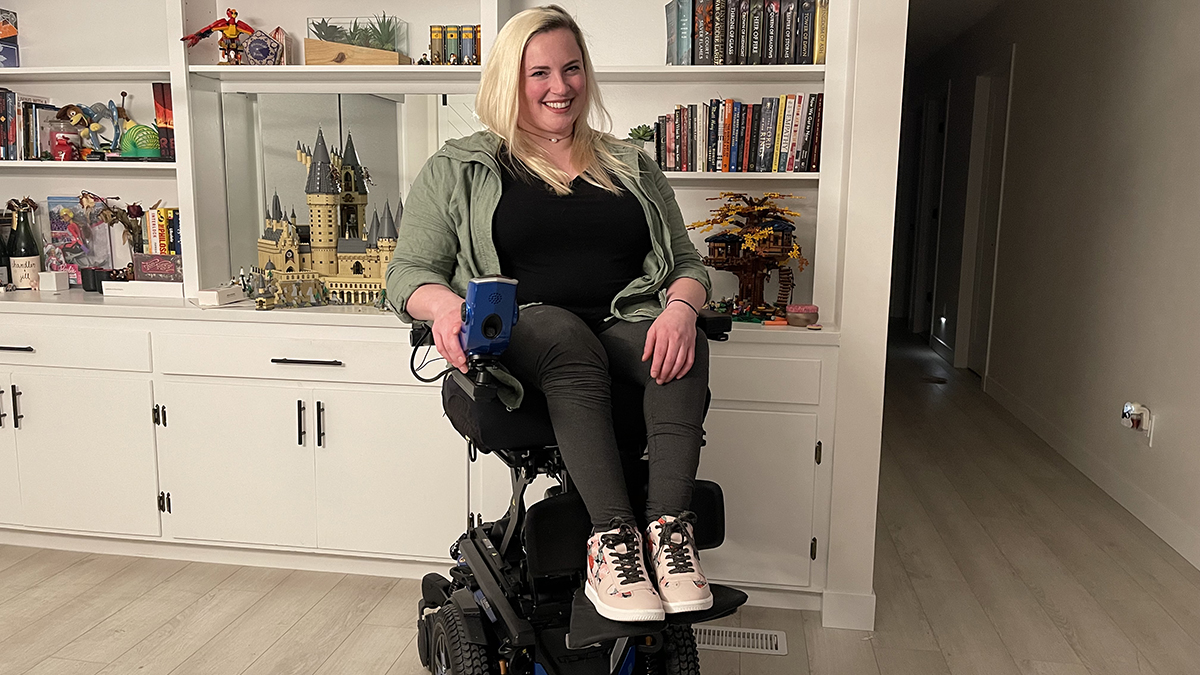
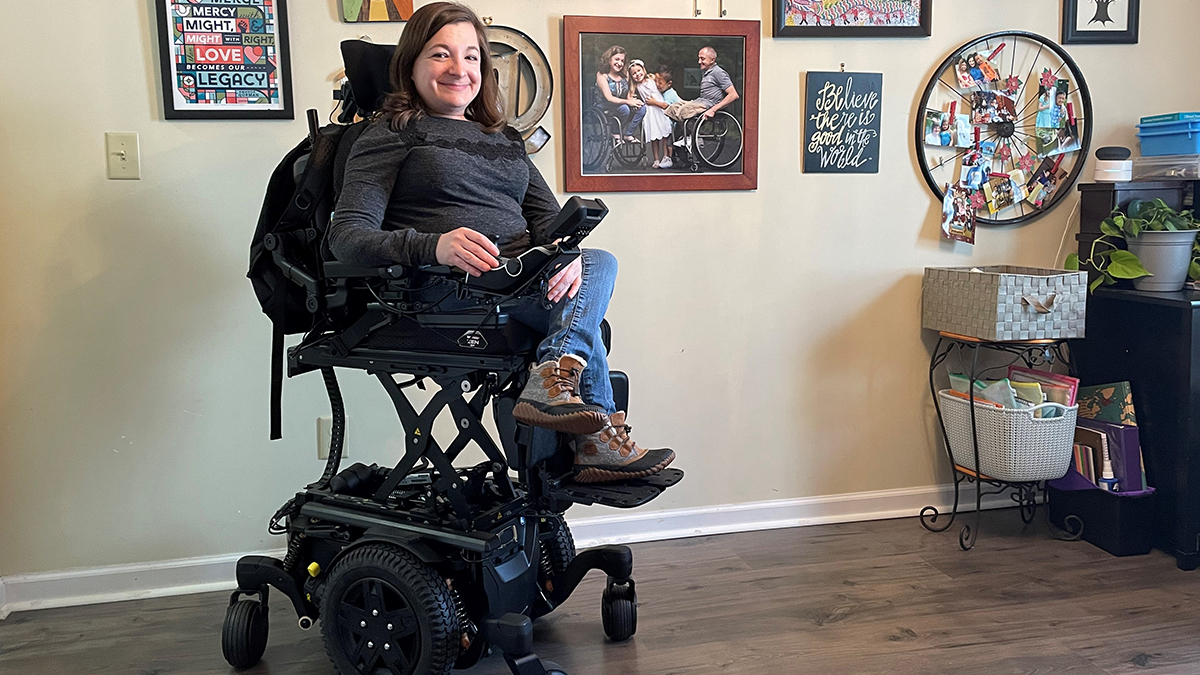
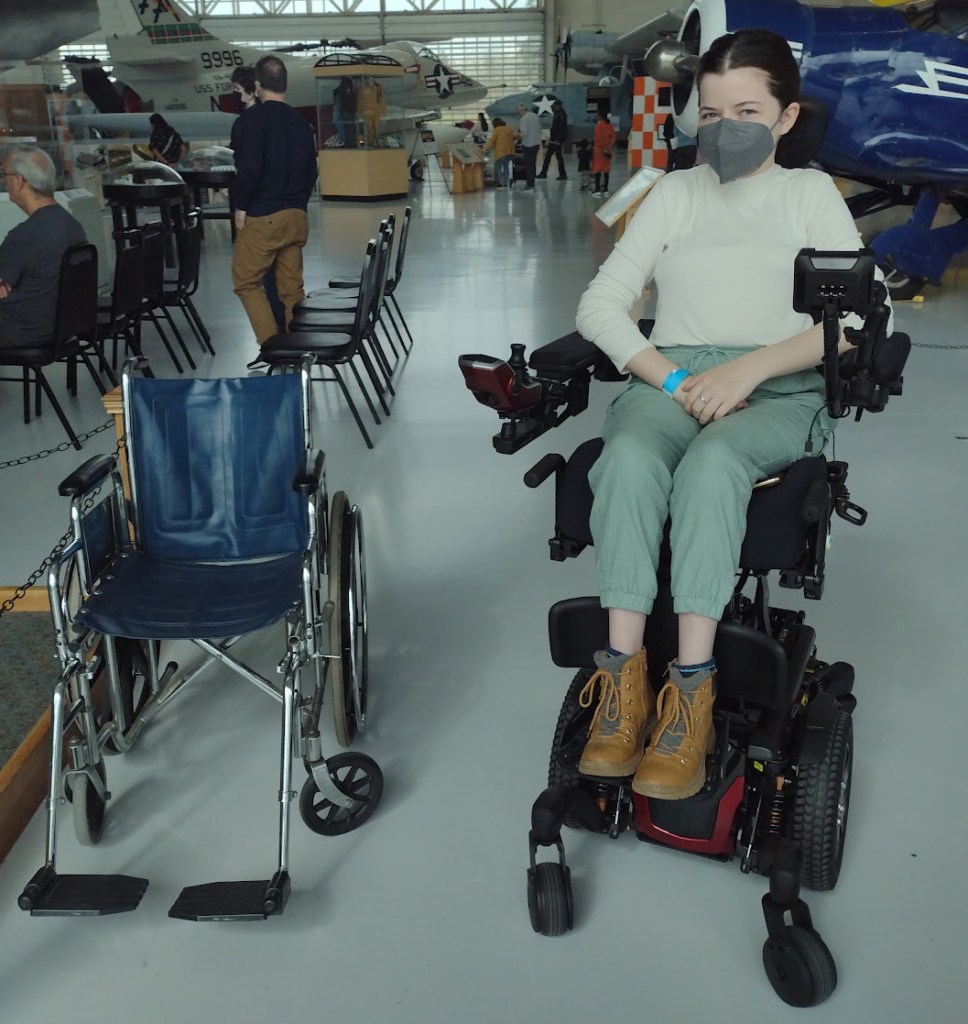
About ten years ago, I switched to a short, easy-to-maintain hairstyle that required me to go to a barber or a stylist who could cut my hair in several different styles. Once I became disabled and adjusted to a power wheelchair, I found it increasingly hard to find a barber or stylist who has the space, inclination, and skills to cut my hair while I am in my power wheelchair. I have a difficulty transferring from my iLevel® Power Chair to a barber’s chair. Luckily, after some trial and error, I have found a dependable professional who uses the many different positions of my Edge 3 Power Wheelchair with iLevel to give wonderful haircuts that keep me looking marvelous!

Finding Accessible Businesses to Meet My Needs
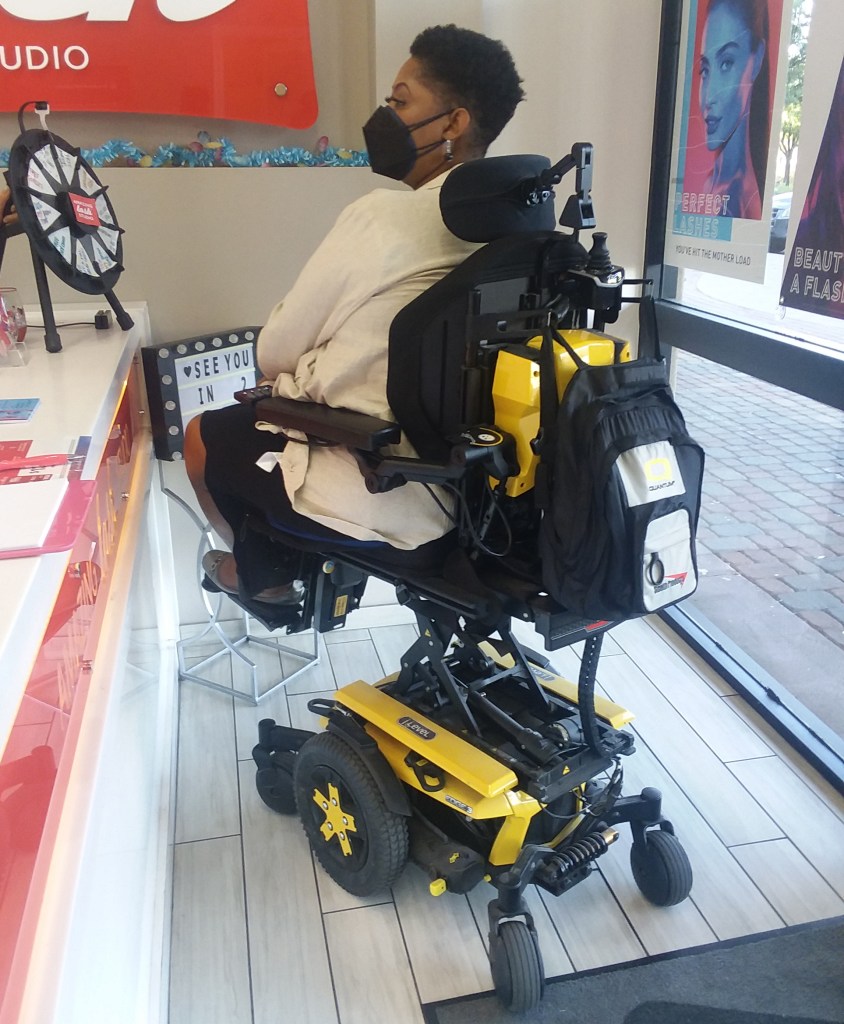
Many places that I used previously for services are not accessible to me. It’s just not finding a good nail salon, spa, aesthetician or stylist (for color treatments), but finding a business that offers the extra assistance I need to have a quality experience. Many places simply say that they do not have the facilities or accommodations to service my needs. This can be extremely frustrating for myself and my husband, who has diligently been searching for businesses that offer services to disabled people. I have watched him become upset after Googling and calling business after business to inquire about specific accommodations, which they do not offer.

Missed Opportunities to Reach New Customers

According to a 2018 BBC News story, businesses are losing trillions per year by not catering to or even ignoring disabled consumers. That’s a lot of commerce that all global economies need, now more than ever. It is estimated that approximately 15 percent of the world’s population experience some form of disability. It seems that many businesses and business owners are not factoring in what they are losing, as well as what they are failing to offer.

Services That Come to Me

I have found several independent providers that will come out to your house to offer services. Most charge a premium just to come out to your location. Several informed me that they charge mileage if you are outside their area of operations. I really want a full-service pedicure but not for almost $200! Also, I’m still apprehensive about letting people in my house who may not have been vaccinated or take precautions with COVID-19.

A Positive Experience

I am still on the hunt to find services who can cater to my needs. Recently, I was pleasantly surprised when I called the wonderful ladies of the Amazing Lash Studio. I wanted to have some lash work done. I called with my questions ready.

  • What are your prices for various services?
  • What are your COVID-19 precautions?
  • Can you provide services to someone in a wheelchair who cannot transfer to your examination table?

Soon, I received a call from the manager who told me that the Amazing Lash Studio could accommodate me and would be more than happy to have me come in for services.

My appointment was great, and my Edge 3 Power Wheelchair allowed me to lay flat just like the exam table! I was so comfortable in my chair that I slept through a long stretch of the appointment. Being able to raise and lower my power chair as well as adjust the back portion of the chair independently allowed my technician a closer view when it was needed to get my lashes perfect.

My experience at this lash studio restored some hope that I will be able to find services that can accommodate me. Without my Edge 3 Motorized Wheelchair with iLevel technology, this experience would not have been possible.

About Merlisha Henderson: Merlisha uses an Edge 3 Power Wheelchair for mobility and lives in Arizona with her family. As a wife, mother and disability advocate in her community, she stays active and independent, working toward bringing equality and access to all. Click here to learn more about Merlisha.


For more great blogs from our brand ambassadors and Q Roll Models, visit lifeatilevel.com today!

Return to the Life At iLevel page
People with Disabilities and Understanding Voting Rights

The right to vote has not always been a luxury for all Americans. Non-landowners, African Americans, Native Americans, and women have not always been afforded the luxury of voting. Individuals with disabilities have not always had the necessary accommodations to vote. 

Through the years, various amendments to the constitution and Voting Rights Acts have been implemented so that all Americans now have the right to vote. As a woman with a disability, I understand that my right to vote did not just happen. It was a long, hard battle that was fought by those that came before me. 

Voting Early

When living with a disability, you never know what might come up to prevent you from being able to vote on Election Day, so it’s nice to have the option of early voting, which is offered to residents of Hamilton County, where I live. Plus, voting early helps reduce the wait time for others on Election Day. 

Laws on Voting

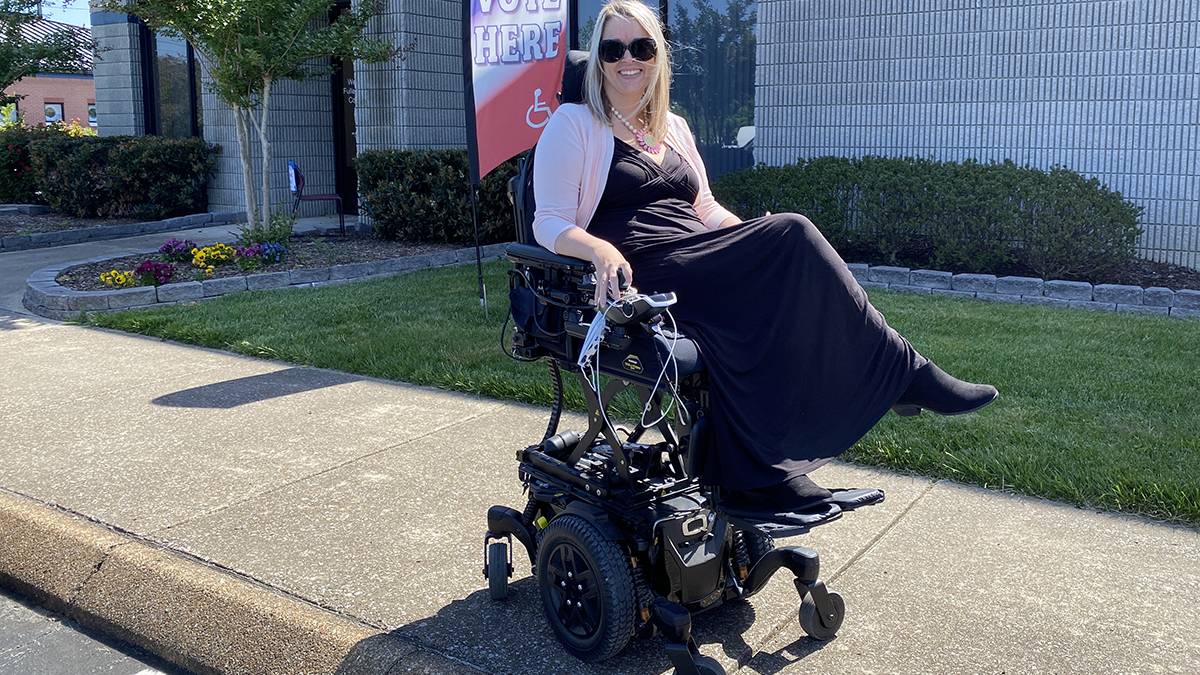
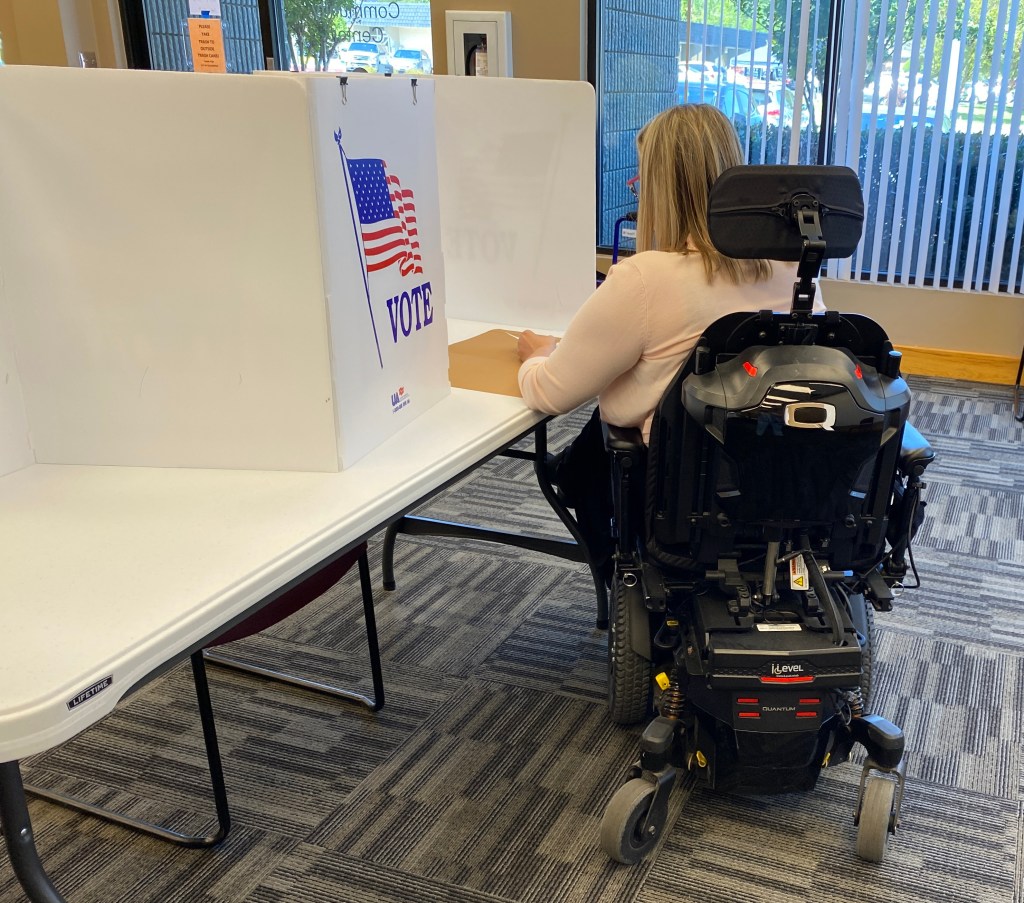
Bliss votes in her Stretto Power Wheelchair

I have always been aware of accessibility laws for voters with disabilities but didn’t realize what all that entailed. While at the early voting precinct, I had an extensive discussion with one of the election workers about the laws and accommodations in place for individuals with disabilities. 

Several federal laws protect the voting rights of Americans with disabilities. These include the Americans with Disabilities Act (ADA) and the Help America Vote Act (HAVA). Voter accessibility laws ensure that people with disabilities or language barriers are able to vote. More than 35 million Americans with disabilities are eligible to vote in the United States.

The Rights of Voters with Disabilities

All voters with disabilities have the right to vote in private, without help. All polling places must be fully accessible with voting machines for voters with disabilities. In addition, polling places must have:

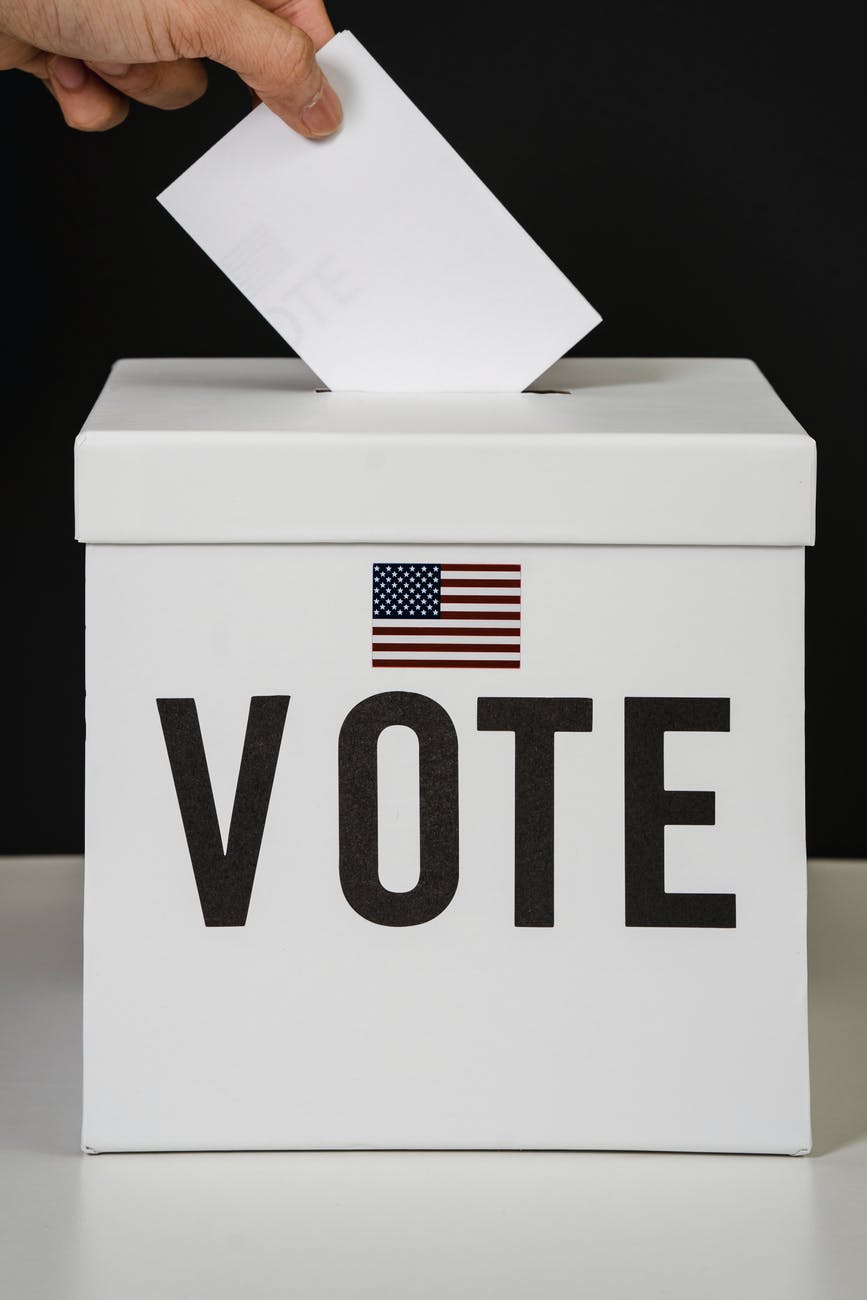
photo of person dropping a vote
Photo by Sora Shimazaki on Pexels.com
  • Wheelchair-accessible voting booths
  • Entrances and doorways that are at least 32 inches wide
  • Handrails on all stairs
  • Voting equipment for people who are blind or visually impaired

If you have a disability, you may seek help from poll workers trained to use an accessible voting machine or bring someone to help you vote. You can also ask your election office what other options you have. Some states offer curbside voting, when a poll worker brings everything you need to vote to your car. Local organizations may provide transportation to the polls. Many states let people with disabilities vote by mail.

If you know you’ll need accommodations on Election Day, contact your state or local election office to find out what to expect at your polling place. With all these accommodations in place, every individual with a disability should take the time to exercise their right to vote!

About Bliss Welch: Bliss is a Quantum® brand ambassador and Ms. Wheelchair Tennessee 2013. Bliss is actively involved in the disability community. She enjoys traveling and spending time with her daughter. Click here to learn more about Bliss.


For more great blogs from our brand ambassadors and Q Roll Models, visit lifeatilevel.com today!

Return to the Life At iLevel page
The Other Side of the Hospital Room

Growing up, hospital rooms felt more like home to me than my actual home. It might sound wild to you, but I LOVED going in for surgery. I was the youngest of three kids. I shared a bedroom with my sister and we only had one TV in our house when I was little. So, going in for surgery meant that I got to skip school, have alone time with my mom, have my own room and have complete control over the TV! Plus, with every surgery, I got a new stuffed animal to accompany me into the operating room. What could be better? 

I had a ton of surgeries growing up. So many, in fact, that hospital food still comforts me more than a home-cooked meal. But my surgeries stopped by the time I was 13. I think my parents strategically timed it so that I would have all my major procedures when I was young and then I could enjoy my teenage years. It wasn’t a bad plan, actually. It has, however, left me craving hospital food for a long time. 

Maybe that’s why I didn’t flinch when my husband told me that he needed surgery and that he’d be in the hospital for a few days. Instead of being nervous, I instinctively packed my bags, got my snacks, and headed for the door. The only problem was that this time, the surgery was not on me. It suddenly dawned on me. I have tons of experience being the patient, but absolutely no experience being the support person! What does one do in a hospital when they’re not the one laying in the bed? Here’s what I learned:

Pre-Op

During pre-op, I took on the role of paperwork reader, question asker, and comic relief. Perhaps it’s the lawyer in me or maybe it’s the wife in me, but I was not about to have my husband sign paperwork allowing people to cut into him before I read every last word of it. After reading all the papers, I told a handful of jokes about how the nurses and doctors did not know what to do when the support person for a person in a wheelchair is another person in a wheelchair. My husband laughed, and some of the nurses did too. Other people on the medical team just gave awkward looks revealing that they actually had no idea what to do in a situation like this.

Surgery

Okay, so it turns out there’s not actually much to do while someone you love is in surgery. I guess I should have figured this one out by now, but I was always the one who was going under the knife. So, how was I supposed to know that being a support person just meant waiting for hours on end?

opened door
Photo by Erkan Utu on Pexels.com

As a fun bonus, I decided to be the keeper of my husband’s valuables while he was in surgery and this included his wheelchair. Why? Because our wheelchairs have gotten lost in airports and many other places, so I have trust issues. I had no intention of leaving his wheelchair somewhere in a hospital and just hoping it would find its way back to him later. So, in addition to waiting, I got to be a spectacle by sitting in my bright pink wheelchair and pushing my husband’s wheelchair all over the hospital with me for hours as I waited.

Post-Op

This is where the fun began! I met Ryan on his hospital floor and prepared his room for his arrival. I tried to remember all the things my mom did for me when I stayed in the hospital, like opening the shades for light instead of turning on the lights in the room. It hurts your eyes to stare up into lights. I placed the remote and his phone next to him. Then I kicked up my efforts. I told the food and nutrition team that they could skip my husband’s room because I would be taking care of all his meals. I immediately went to the fancy coffee shop in the lobby to get him a nice iced coffee to soothe his throat after the anesthesia tube left him sore. I also went to the hospital cafeteria to scope out all of the good stuff. I came back with chicken tenders and a grilled chicken salad. Then, to ensure that all the nurses knew how much we appreciated them, I ordered a sub tray, sushi, and a bunch of fancy cookies and dropped it off at the nurse’s station. After that, all the nurses loved my husband.

I was with my husband during his entire stay and found that being a support person is completely exhausting! I have so much more respect for my mom now. I had no idea how uncomfortable those hospital recliners were! My mom slept in those things for months on end. I only had to sleep in it for two nights and I was miserable. It’s a lot of work to care for someone you love while they’re in the hospital and I now have a much deeper respect for all the support persons who do this much more frequently than I do! 

About Stephanie Woodward: Stephanie is a brand ambassador advisor for Quantum Rehab® and works as a disability rights activist. She has received many awards for helping communities become more accessible, as well as for her actions in fighting for the rights of disabled individuals as it relates to Medicaid and other support services. Click here to learn more about Stephanie.


For more great blogs from our brand ambassadors and Q Roll Models, visit lifeatilevel.com today!

Return to Wheel Talk

Air Travel by Persons Who Use Wheelchairs

white united airlines plane
Photo by Pascal Renet on Pexels.com

On Thursday, March 24, 2022, the U.S. Department of Transportation held an all-day virtual public meeting on the subject of air travel by persons who use wheelchairs. Over 600 people attended the meeting. At the meeting, we heard from representatives from the Department of Transportation, including the Secretary himself. We also heard from airline industry representatives and members of the public. Many wheelchair users provided comments and testimony about the barriers and frustrations they have experienced in air travel, and they also provided suggestions for solutions moving forward. 

The Public Offers Their Input

After the virtual meeting, the Department of Transportation invited the public to provide comments until April 25th on the topic of air travel by persons who use wheelchairs. Over 178 people submitted comments, many of whom were people with disabilities urging the Department of Transportation to take more action on ensuring that people with disabilities are treated equitably by airlines. 

Submitting Feedback and Comments

I submitted comments and found it difficult to summarize my thoughts on this subject because air travel for wheelchair users is such a broad topic that causes so much frustration. Every time I travel by air, I experience anxiety because I never know how the airlines will break my wheelchair. It’s never a question of if they break my chair, but how. Even though I take many precautions, including putting signs on my chair with precise instructions on how to handle my wheelchair, nothing seems to ensure that my chair is returned to me in the same manner that I left it at the gate. 

I know that my experiences are not unique. Many wheelchair users have gone through the same nightmares as I have. They’ve had their wheelchairs broken or even lost by the airlines. I am so glad that the U.S. Department of Transportation is finally taking the time to discuss this issue and I hope that real change comes as a result. 

About Stephanie Woodward: Stephanie is a brand ambassador advisor for Quantum Rehab® and works as a disability rights activist. She has received many awards for helping communities become more accessible, as well as for her actions in fighting for the rights of disabled individuals as it relates to Medicaid and other support services. Click here to learn more about Stephanie.


For more great blogs from our brand ambassadors and Q Roll Models, visit lifeatilevel.com today!

Return to Wheel Talk

Return to Wheelchair-Accessible Travel

Why it’s So Important to Give Back

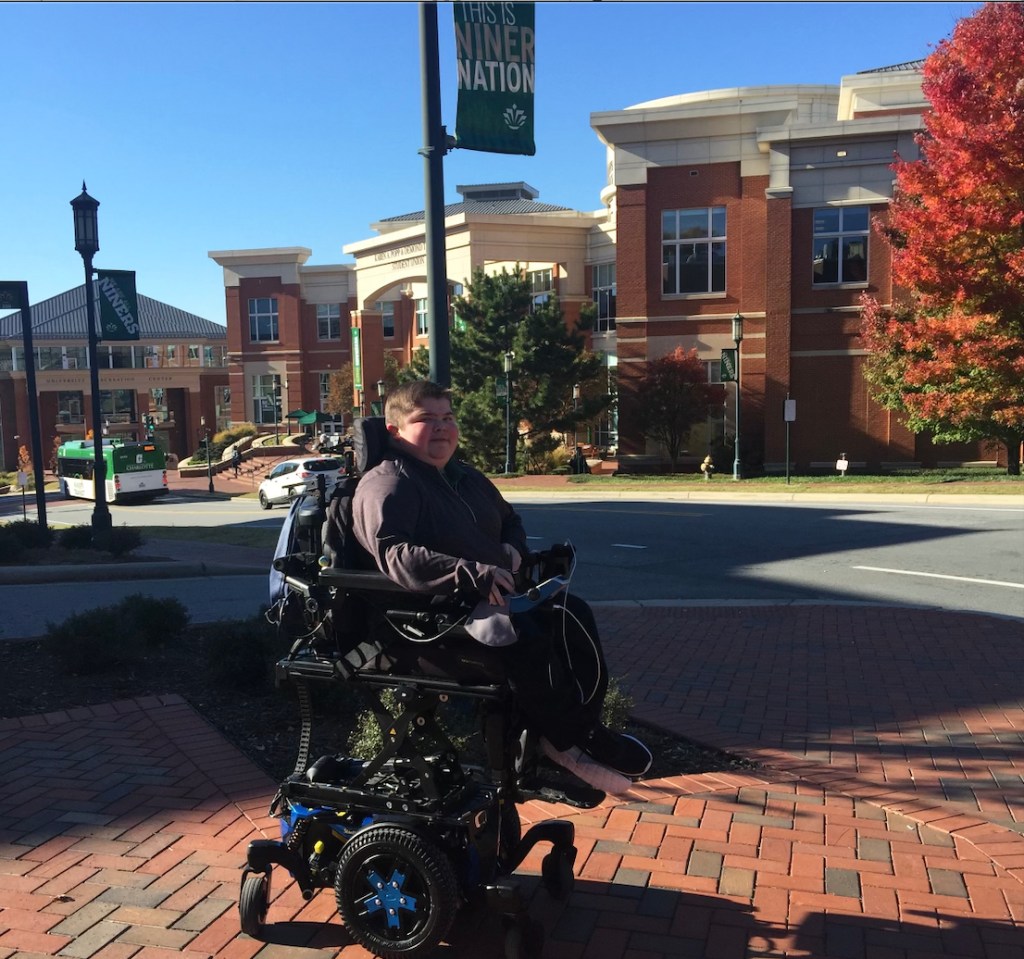
The name “49er” honors those who moved across the country to dig in the Gold Rush from 1848 to 1855. These miners were looking to become rich from the gold they found while providing for their families. This is a representation of what being a Charlotte 49er means. We are looking to find our gold by leaving an impact on the surrounding area. It is a great honor and privilege to be a part of a prestigious institution.

Giving Back to the Community

My peers and faculty encourage students to donate their time. Upholding the gold standard of giving back is our responsibility, and it allows us to take pride in our university. Showing school spirit is done as stewards of the community. I have found ways to give back, allowing me to bring a positive light to Charlotte. As a brand ambassador for Quantum Rehab, I’ve had lots of opportunities to give back to the disability community. Here are some other ways I give back.

I have started working as a board member for the Ronnie Sherrill Project. The project is looking to give members of the disabled community a sense of belonging by pairing community members with a individual affected by neuromuscular disease to foster friendships.

I have also been the head announcer and counselor for Vex robotics competitions and summer camps in North Carolina. These tournaments and camps give elementary and middle school students the chance to build a robot while learning engineering and teamwork skills. My work with Vex Robotics is a massive part of my identity.

Showing School Spirit

A way to show school spirit is through fellowship with peers. The students at Charlotte have a close bond and are united. I am involved with many organizations that have provided me with opportunities to meet new people. I am the assistant sports editor for the student-run newspaper on campus, The Niner Times. The paper has allowed me to know people from different backgrounds. We are constantly working with the student body to make their voices heard.

I am also a part of the Honors College, which has provided opportunities to serve the community. Working with the Crisis Assistance Ministry and the Second Harvest Food Bank has been eye-opening as you realize that people don’t have the necessities to survive.

As a student, I take pride in whatever is happening on campus, allowing us to eliminate the divides we see in the world. I am so glad that I decided to attend UNCC. I think that Charlotte has some great qualities and the people make the university what it is. The students are given opportunities to achieve great things while learning more about themselves as we do it. We have a responsibility to give back, and I am so thankful to attend a university that prides itself on helping meet the needs of local communities.

About Bryson Foster: Bryson is a Friend of Quantum and lives in North Carolina. He advocates and raises funds for the development of treatments for muscular dystrophy. He loves sports and cheers for his favorite basketball team, the North Carolina Tar Heels. Click here to learn more about Bryson.


For more great blogs from our brand ambassadors and Q Roll Models, visit lifeatilevel.com today!

Return to the Life At iLevel page
New Policy Restricts Flights for Wheelchair Users

On average, I fly two to three times a year. Within the last six months, it has been difficult to book flights due to the size of my power wheelchair. Due to recent policy changes by the Department of Transportation, airlines are no longer required to accommodate power wheelchairs on smaller aircrafts if the chair does fit within the cargo space dimensions. This causes difficulties for many wheelchair users, who can only book flights on larger aircrafts.

The Struggle to Find Flights

photo of airplane
Photo by Matt Hardy on Pexels.com

I am from the Metro Detroit area in Michigan. I have a friend from Milwaukee, Wisconsin. We frequently fly back and forth to visit one another. When I fly, I prefer to fly with Delta airlines. Delta has informed me that due to size of my wheelchair I must fly on a flight with an Airbus aircraft.

In October, I booked a flight to go to Milwaukee for New Year’s Eve. I contacted the Delta disability services line to confirm my flight and power wheelchair. I was told by the customer service representative that I had to change my flights to flights with an Airbus aircraft to accommodate my power wheelchair. At the time, the flights with airbuses were red eyes. While these accommodations were not ideal, at least they were available to me. 

Limited Flight Accommodations

As of April 2022, ALL flights between Milwaukee and Detroit (and the surrounding airports in Chicago) are flown with a Boeing 717 (a smaller aircraft) for the foreseeable future. Thus, no flight accommodations are available to me.

I have been planning to attend the Abilities Expo in Chicago in June for over a year. Now, due to the new cargo space policy, we must go to the Abilities Expo in Dallas in December. We even checked flights for the Abilities Expo in Miami in November, but no airlines had flights from Michigan with airbuses.

I understand that my chair does not fit on smaller planes and I need to fly on a larger aircraft. Yet, flights with larger aircrafts are not offered in all locations, limiting my right to fly. 

About Isabella Bullock: Isabella, or Izzie for short, is an employment specialist for the Center of Independent Living. She is an iced coffee enthusiast who enjoys getting lost in a good book. Click here to learn more about Isabella.


For more great blogs from our brand ambassadors and Q Roll Models, visit lifeatilevel.com today!

Return to the Life At iLevel page
Return to Wheelchair-Accessible Travel

Great Tips on Protecting Your Wheelchair in the Rain

I’m sure you have heard of the expression: “April showers being may flowers.” Well, April tends to be one of the rainiest months on record during the year. I would rather have rain than snow. Even though I enjoy how the snow looks on the ground, it’s harder for me to go out in my power wheelchair. The cold affects my muscles and my ability to stay warm.

raindrops
Photo by Vlad Chețan on Pexels.com

So, the rainy season is more than welcomed in my book. Usually, I’m down south during the winter and in Florida. It pretty much rains every day. The rain comes from out of nowhere and rains for a short period of time. Then, the sun returns with clear skies. So, I have a few tricks to keep the rain off my power wheelchair.

Keep a Poncho at Hand

The first thing I keep with me is a folded-up poncho. You can buy one of these cheap ponchos for $10 at any big box retailer. Because the poncho is pretty flat, I actually store mine in between my seat cushion and seat pan. If it suddenly starts raining, both my power wheelchair and I don’t get wet in a downpour.

Keep an Umbrella Handy

Another thing I do to protect my motorized wheelchair from rain is keep an umbrella in my wheelchair-accessible van. This helps when you know it’s going to rain. Sometimes you might not have enough time to go to your vehicle to get umbrella, so that’s when I end up pulling out the poncho.

Have Towels Ready

Another thing I do to prepare for rainy weather is I keep a hand cloth and a towel in my car. I use these to wipe any moisture off my Q-Logic 3 controller on my motorized wheelchair. I also may be sitting on electronic components. You don’t want to leave any water sitting on your chair. defiantly make sure you wipe water off your chair. I’m wondering if anyone has any rain remedies that they would like to share. I’m curious abound what you do when your caught in a downpour, so you don’t get wet.

About Josh McDermott: Josh is a brand ambassador for Quantum Rehab®. He is a public speaker and has served as a goodwill ambassador for the Muscular Dystrophy Association. Josh lives in New York and loves to travel. Click hereto learn more about Josh.


For more great blogs from our brand ambassadors and Q Roll Models, visit lifeatilevel.com today!

Return to the Life At iLevel page

My Mentoring Relationships with Disabled Girls

National Mentoring Month passed back in January, but as this year has progressed, I seem to find myself reflecting on mentoring a lot. Over the past year, I’m extremely proud to have found myself in a mentoring role for not one, but two fantastic young disabled women.

Disability EmpowHER Network

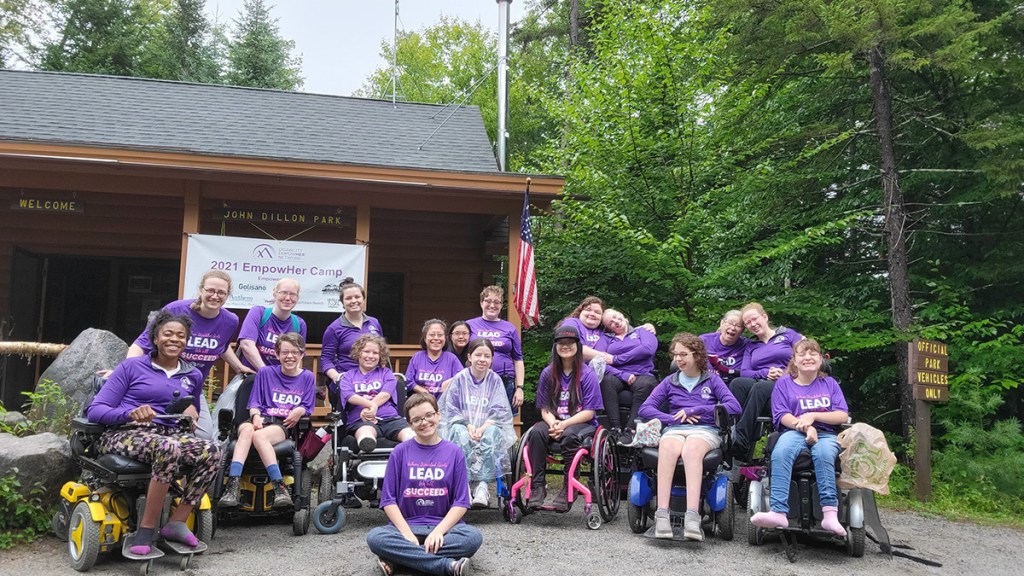
While January was a month to celebrate mentoring, my role has persisted and only continues to grow more meaningful. Back in early spring of last year, I participated in a public radio show with Stephanie Woodward, executive director of Disability EmpowHer Network and Maddie Kasten, a fellow Q Roll Model. We discussed the importance of having disabled female mentors in life when Stephanie and Maddie casually mentioned EmpowHer Camp. Naturally, I texted Stephanie in a frenzy to get all the details on camp and to find out what it would take to join. After careful consideration (including Facetime calls to indeed prove I could start a fire), I was invited to camp. So, eight disabled women and I headed to the Adirondacks to lead a camp for nine teens with disabilities.

My Experience at EmpowHER Camp

At camp, we learned emergency preparedness skills, leadership, did A LOT of singing, and most importantly, discussed disability in a way I never had. This environment was carefully curated. This ensured that every woman with a disability who entered the space had the chance to explore their disability (the good, the bad and the ugly) in a safe and positive way. We learned independence and also interdependence, and every single one of us left camp a part of a fierce girl gang.

The following year, each camper selected a mentor from our staff and worked on an emergency preparedness project in their communities. This July, we’ll all meet again for a reunion in Washington DC. We’ll present our projects to legislatures and most importantly, reconnect with our friends from camp.

Forging Mentoring Relationships

I was fortunate enough to leave camp with two amazing girls who even in their teenage years, are moving mountains. Both of my girls, Mia and Riley, decided on their projects at camp and I’m continuously impressed as to how they move forward. Mia has become an ambassador for inclusion and established a criteria to audit a homeless shelter to ensure it can support people with disabilities in the event of an emergency.

On the opposite side of the country, Riley is forming a core advisory group in her community to connect emergency management with the disabled community. In my role, I’m proud to be a supporter and a champion for these young powerhouses. I’m astounded by everything they accomplish, how they carry themselves, and the friendships I found. I didn’t grow up knowing very many women with disabilities. Now, we’re all part of this network together. Both women will achieve incredible things and I’m simply proud I get to claim association with them. Our relationship is certainly not limited to only one official mentoring month.

About Jill Moore White: Jill is an inclusive play specialist, bringing accessible playgrounds to local communities. She volunteers with disability organizations, including the Disability EmpowHER Network. Jill enjoys music, sketching and playing video games. Click here to learn more about Jill.


For more great blogs from our brand ambassadors and Q Roll Models, visit lifeatilevel.com today!

Return to the Life At iLevel page
Birthday Party Planning as a Parent in a Wheelchair

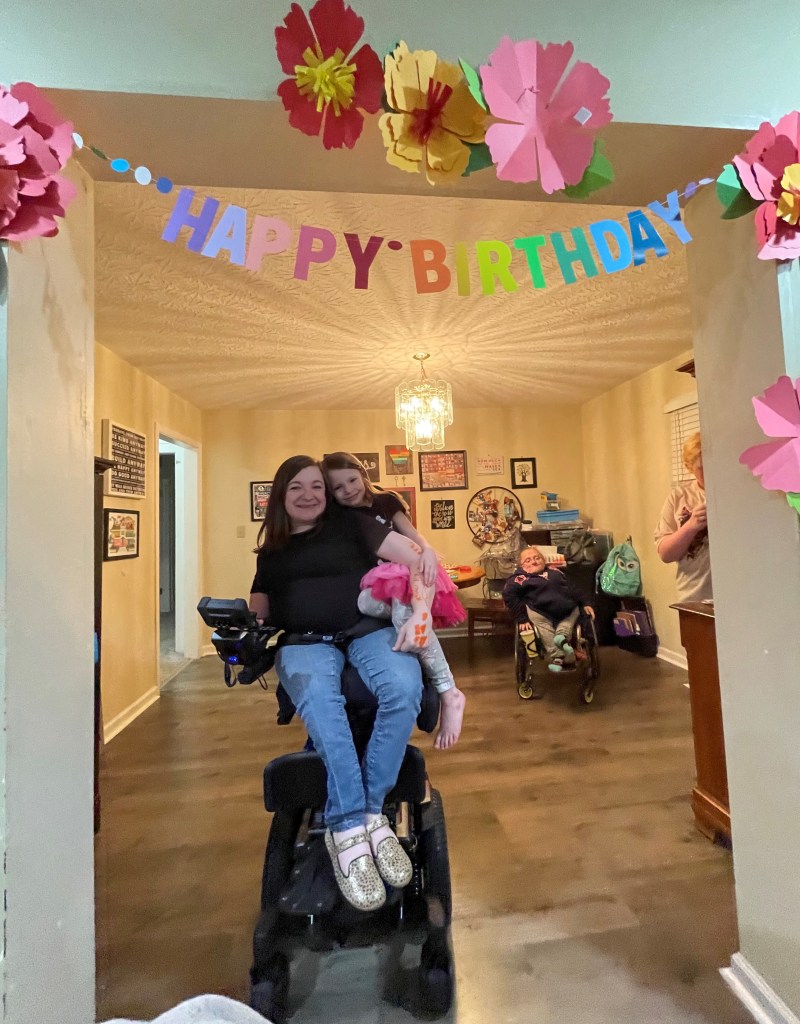
Planning birthday parties is among my favorite parts of parenthood. This year feels even more special because we haven’t gone all out in a couple of years. Our youngest’s 3rd birthday party in 2020 was our last large family gathering. Many of us have not seen each other in months or longer! This year, we’re celebrating Riley’s 5th birthday and a lot has changed!

Coming Up with a Theme

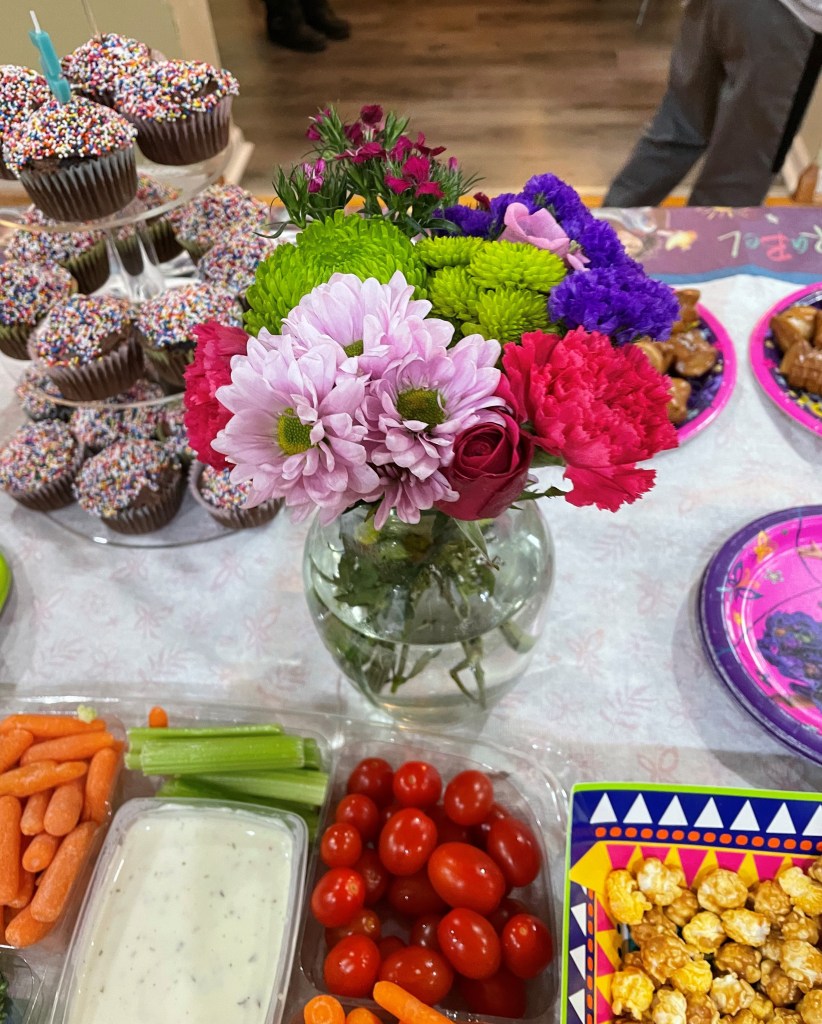
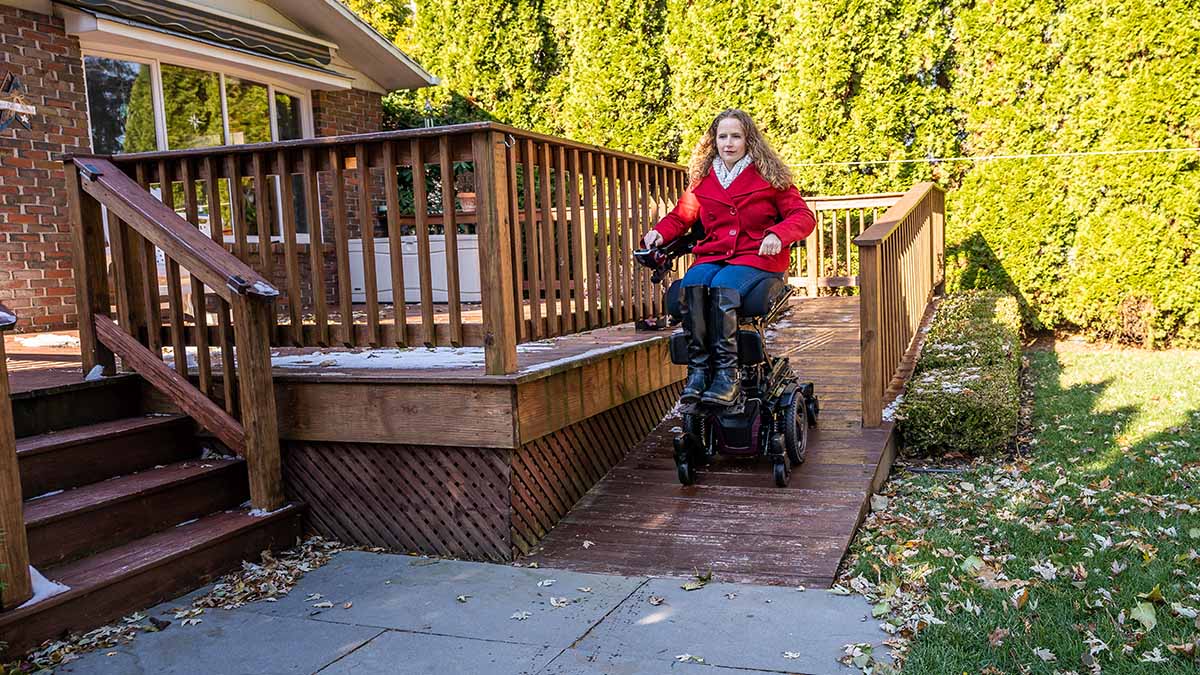
The first step to birthday party planning is choosing a theme. Surprisingly, Riley didn’t hesitate or waiver this year. She wanted an Encanto-themed party! We found giant paper flowers and a flower garland to hang. My Stretto Power Wheelchair with iLevel® technology allowed me to elevate and help with decorating. I usually splurge on a personalized cake topper from Etsy because it’s a nice centerpiece and the kids’ hang it on their door after the party. We found Encanto-themed table clothes, plates, and napkins from Party City and I always get balloons and fresh flowers the morning of the party.

Creating Encanto-Themed Activities

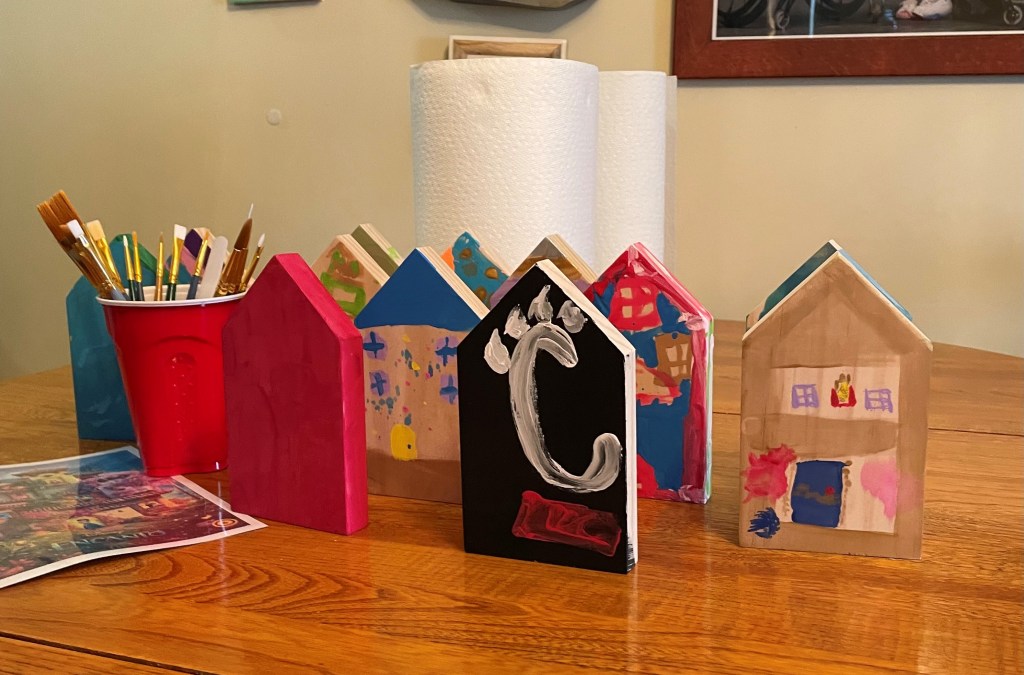
Since Encanto is still relatively new, there weren’t as many suggestions for games or activities as I’d hoped on Pinterest. I found some wooden house cutouts on Etsy and pitched the idea that the kids could each paint their own casita (the life-like house of the family in the movie). Riley loved it and it ended up being a great activity for the kids to do together for an amount of time that matched their attention spans! They were dry by the time the party was over and I popped them in favor bags to go home.

We also played a pin-the-donkey-on-the-Luisa game that my 11-year-old came up with the night before the party! We printed and cut out donkeys from the scene in the movie where Luisa carries them and then Hannah and my mom sketched a Luisa. The kids loved it and I could adjust the height of my power wheelchair to tie their blindfolds.

Meeting the Parents

This year’s party was Riley’s first where she invited friends of her own, whose parents I had never met. I am always anxious about how these interactions will play out with her friends meeting me and her dad (also in a wheelchair) and their parents meeting us. Prior to this party, I had the most incredible gift of one of her friend’s parents sharing something about their identities over the phone because they, too, wanted our meeting to go smoothly. It was the perfect opportunity to add, “Well while we’re on the subject of what makes our families unique….” It’s never easy to put ourselves out there but we also never know when we’ll be inviting someone else to come along and join us.

The party itself was a success! Riley proclaimed it “the best day ever” and we are still listening to the Encanto soundtrack on repeat. Thanks to Ohio weather (70 and sunny the day before but below freezing the day of), this party was inside but I’m looking forward to using my Stretto for outside parties this summer. I’d love to connect and hear your party planning ideas. Reach me @DrKaraAyers on Twitter or @KaraAyers on Instagram.

About Kara Ayers: Kara is a mother of three and lives in Ohio. She is an associate professor at Cincinnati Children’s Hospital and Medical Center. In 2021, Kara spoke to the Biden-Harris COVID-19 Equity Taskforce about the need for people with disabilities to access the COVID-19 vaccine. Click here to learn more about Kara.


For more great blogs from our brand ambassadors and Q Roll Models, visit lifeatilevel.com today!

Return to the Life At iLevel page

Discovering New Ways to Live with Charcot-Marie Tooth Disease

Charcot-Marie Tooth (CMT) is a neuro-muscular disease that can impact everyone differently. There are a few variations of a CMT diagnosis, but I have never been given a specific diagnosis. The diagnosis test generally involves a form of electrical nerve stimulation which is very painful, so I just avoid it. I never needed testing because it was clear during stages of childhood development, as I learned to walk a little later than most babies. In my childhood, the signs of CMT were loud and clear because of how I walked or ran.

Accepting My Need for Mobility Aids

As I have progressed throughout childhood and my young adult years, I have needed many different mobility accommodations. Some were easier to acknowledge than others. I have regularly needed to check in with myself and recognize my own internalized ableism. For a long time, I felt like I did not need a power wheelchair because I could walk. It took me years to really understand how to manage my energy with mobility aids (braces, crutches, etc.)

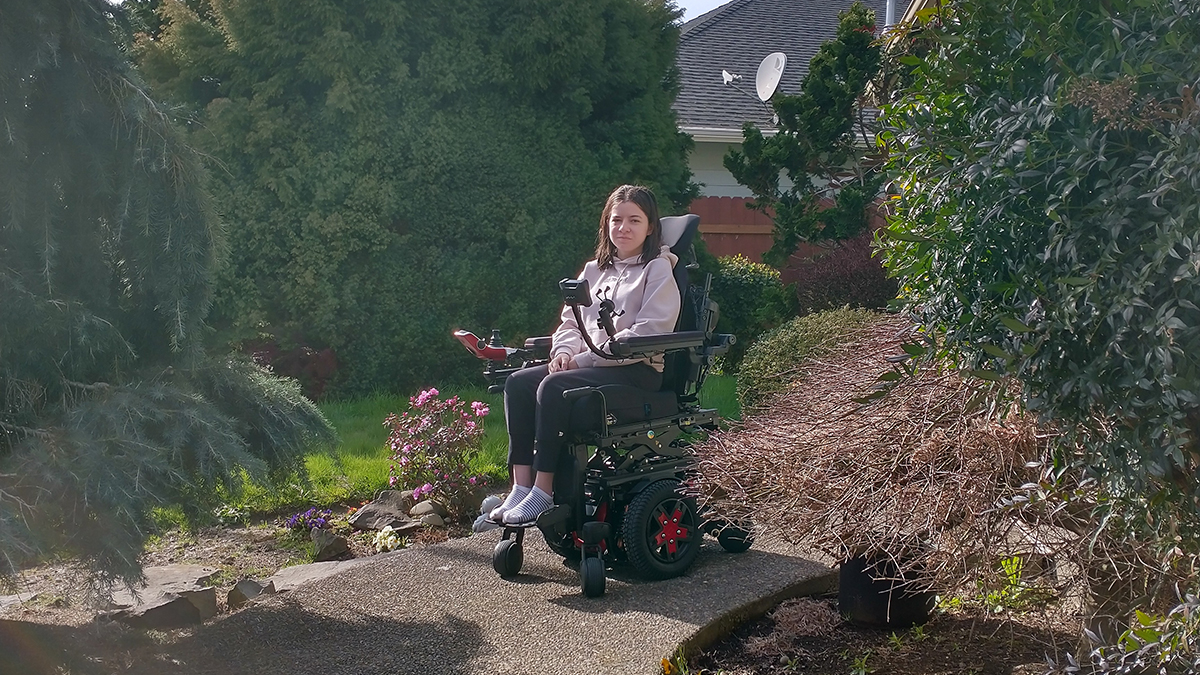
Whether you just acquired a disability or have had one for many years, give yourself time to understand how your disability is evolving. As you notice changes, making accommodations for yourself becomes easier. One of my favorite mobility aids is my Stretto Power Chair. It is my first power wheelchair ever and it serves many purposes for my mobility.

How I Use My Stretto Power Wheelchair

I choose to use my power wheelchair when I plan to walk long distances. Because of CMT, I have a weird mixture of footdrop and plantar fasciitis which can make walking difficult. I also like to use my wheelchair when I am going somewhere at night. Visually, walking in dark spaces can throw my balance off. I also like to have the support of my power chair when I know I will be standing for long periods of time. For example, when I groom my dogs, I am standing for over three hours. Using my wheelchair is a simple way for me to conserve energy and keep myself safe while using scissors or clippers. For the same reasons, I use my power wheelchair when cooking and baking in the kitchen.

As I discovered what worked for me, I had a great support system. Those individuals encouraged me to try new things and develop a sense of pride. I hope your transition to using mobility aids allows you to experience support from new friends as well.

About Riley Hurt: Riley lives in Salem, Oregon, and uses a Stretto Power Wheelchair for mobility. Riley is enrolled in college, pursuing electrical and computer engineering. She hopes to make her future field more inclusive for people with disabilities. Click here to learn more about Riley.


For more great blogs from our brand ambassadors and Q Roll Models, visit lifeatilevel.com today!

Return to the Life At iLevel page