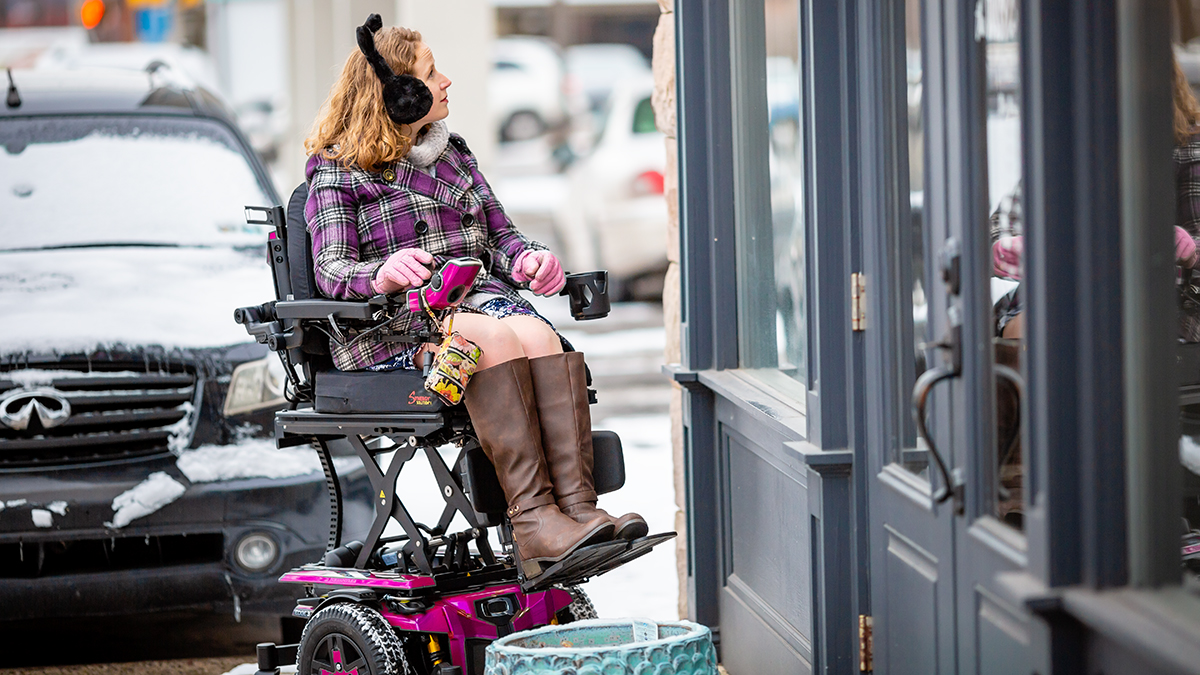
What to Do with Your Old Power Wheelchair

The day when I receive a new power wheelchair is easily one of my favorite days ever! The feeling of getting a fresh wheelchair that fits your body and is ready to help you live your best life just feels amazing. Then, you’re left with the question: What do I do with my old wheelchair? I usually end up doing one of two things: keeping it as a backup or donating it. Both have their benefits, so I’ll share a bit more about each option. 

Keep it as a Backup

In my mind, having a backup wheelchair is never a bad thing. After all, you never know when you might need a repair to your current chair. If you need an in-depth repair that requires your provider to take your chair into the shop, you would probably rather have your old chair that fits your body than a loaner chair from your provider.

jet cloud landing aircraft
Photo by Pixabay on Pexels.com

Another reason that I like to have a backup wheelchair is for travel! Traveling by airplane is scary for a wheelchair user because airlines always break our wheelchairs. I would much rather the airlines break my backup chair than break my beloved everyday chair.

Lastly, I am notorious for forgetting to charge my wheelchair. Actually, it’s not just my wheelchair I forget to charge my phone, my laptop and just about anything else that requires a charger. With most other things, it’s no big deal if I forget to charge it. With my wheelchair, forgetting to charge means that I can’t move. If I have a backup chair that I can switch to, however, while my main chair charges, I am never left stranded. 

Donate it

There are many organizations that accept used wheelchair donations. For example, there are organizations that run loan closets that accept used wheelchairs and other assistive technology. Loan closets then loan out this equipment to people with disabilities who cannot afford the equipment or do not have insurance coverage.

For example, once I donated my old power wheelchair to a loan closet and they loaned it out to several different people. Here’s a few that I know they loaned it to.

  • A manual wheelchair user who was considering switching to a power wheelchair. She wanted to try it out in her home first.
  • a man who had multiple sclerosis that was slowly progressing. His doctor and social worker were working with insurance to try to get him his own power wheelchair, but in the meantime, he borrowed the one I had donated because he simply couldn’t wait for the lengthy insurance process to finish. He needed a power wheelchair immediately
  • A woman with a disability that caused fatigue who planned a vacation out of state. She worried that her fatigue would interfere with her ability to enjoy her vacation. So, she borrowed the power wheelchair that I donated to help conserve her energy and was able to fully enjoy her vacation. 

About Stephanie Woodward: Stephanie is a brand ambassador advisor for Quantum Rehab® and works as a disability rights activist. She has received many awards for helping communities become more accessible, as well as for her actions in fighting for the rights of disabled individuals as it relates to Medicaid and other support services. Click here to learn more about Stephanie.
Return to Wheel Talk

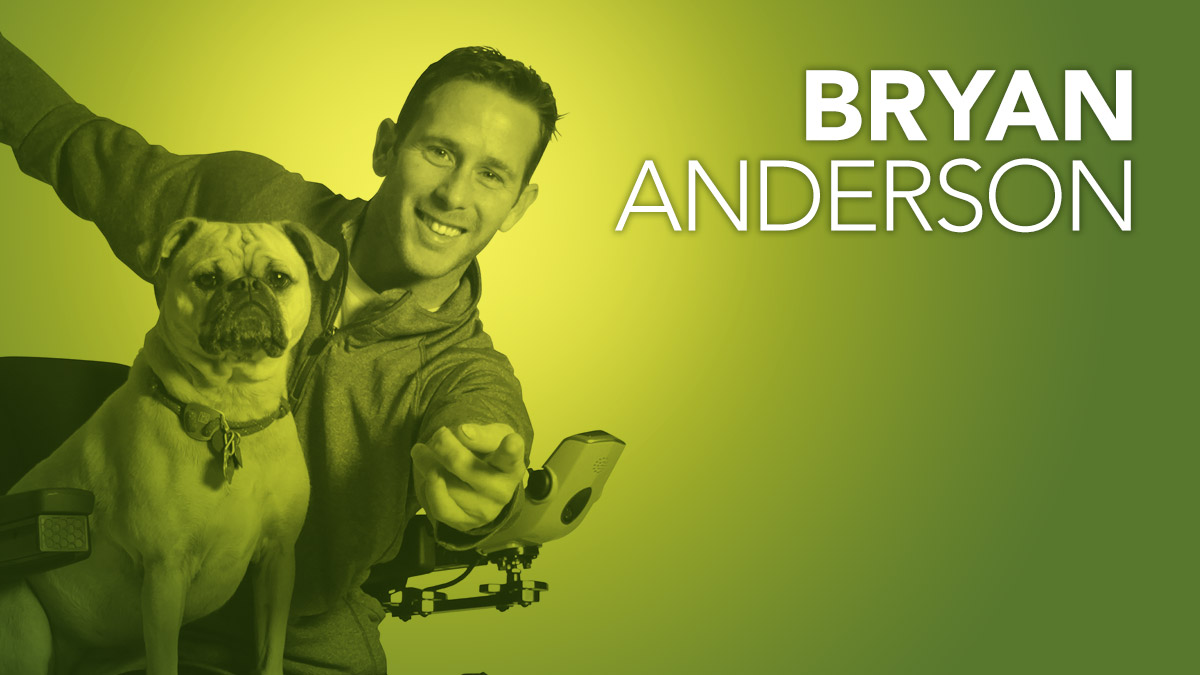
Bryan Anderson is Living His Life without Limits

Bryan grew up and currently resides in Rolling Meadows, IL., near his parents, Jim and Janet, identical twin brother Bobby, and sister Briana. In addition to academic excellence, Bryan excelled in sports during his high school years and competed as an accomplished gymnast in state level competitions. Following graduation, he worked for American Airlines as a ground crew chief at O’Hare Airport.

Serving His Country

Bryan enlisted in the Army in April of 2001 and shipped out on September 11, 2001. He served two tours of duty in Iraq and was stationed in the Baghdad area. He attained the rank of sergeant in the military police and conducted police training courses in Iraq. He gained additional law enforcement experience at Leavenworth Federal Penitentiary as a prison guard.

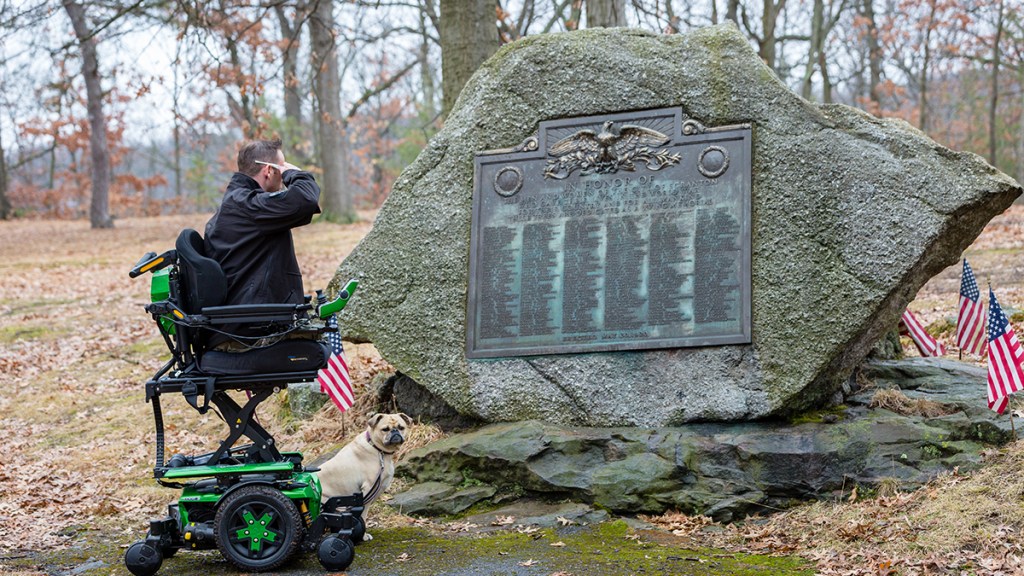
In October 2005 at just 24 years old, Bryan was injured by an Improvised Explosive Device (IED) that resulted in the loss of both legs and his left hand. Due to his injuries, he was awarded a Purple Heart. Bryan rehabilitated for 13 months at Walter Reed Army Hospital. He is one of the few triple amputees to have survived his injuries in Iraq.

Delivering a Message of Perseverance

Bryan’s story has received extensive media coverage including a cover story in USA Today, two feature articles in Esquire Magazine (one a cover shot in January 2007), as well as numerous articles in major newspapers and publications, from his hometown Chicago Sun Times, to the LA Times and New York Times. He also appeared in a 60 Minutes segment profiling Gary Sinise.

Bryan uses the Edge 3 Power Chair with iLevel® to maintain his independence in his daily life. He travels the country making numerous personal appearances while delivering his message of perseverance and determination in major rehab facilities.

Making a Difference in the Lives of Others

In addition, Bryan is an ambassador for the Gary Sinise Foundation and is a spokesperson for USA Cares, a national non-profit organization based in Louisville, KY., that is focused on assisting post 9-11 veterans in times of need. He works with the Center for Courageous Kids in Scottsville, KY. He also supports Wounded Warriors of Texas, Smoky Mountain Service Dogs, the Chris Kyle Foundation and Children of the Blue Grass.

.stk-0e6037f{height:50px !important}

Recognition and Awards

Bryan has a passion for acting and has made numerous appearances in television shows and movies. He appeared in the HBO Documentary, “Alive Day Memories: Home from Iraq,” and in an episode of “CSI: New York” titled “DOA for a Day” as a murder suspect. He appeared in the Golden Globe Award winning film “The Wrestler,” starring Mickey Rourke and Marisa Tomei, and the blockbuster film, “American Sniper” starring Bradley Cooper. Bryan appeared in an episode of “Hawaii 5-0” and the daytime drama, “All My Children.” He was the subject of the Captain America comic, “Theater of War – to Soldier On,” released in August 2009. Bryan has also published a biography on his life titled, “No Turning Back.” He hosted a PBS show in the Chicago area, “Reporting for Service with Bryan Anderson,” which received an Emmy Award. He also received a Telly Award for his work on a Quantum Rehab product video titled “Life Beyond Limits.” Most recently, Bryan appeared in the Adam Sandler movie, “The Week Of.”

Bryan is an energetic and enthusiastic individual who enjoys challenging his limits. He enjoys snowboarding wakeboarding, white water rafting and rock climbing. He loves to travel and meet new people.

Return to Testimonials

Great iLevel Benefits When Staying at Hotels

I am so thankful for iLevel® technology when I travel, especially when I am staying at hotels. Each hotel is different. I find that I need to adjust the seat height on my power wheelchair for different things all the time, even if I get an accessible room. Here are a few ways that iLevel helps me at hotels.

Check In

While most hotels do have at least one lower counter at check in, I still find that it’s better for me to elevate when I am checking in. It’s easier to hear the person standing behind the desk (especially when there’s loud music in the lobby) and it’s easier to reach to hand them my credit card. 

Bed Heights

There is no standard bed height for hotels. I never know how high the bed will be in my room. Before I had iLevel technology, I couldn’t get into the bed if it was too high. Now, I can adjust my power wheelchair height to whatever height the bed is in order to transfer easily in and out of bed. 

Seeing in the Mirrors

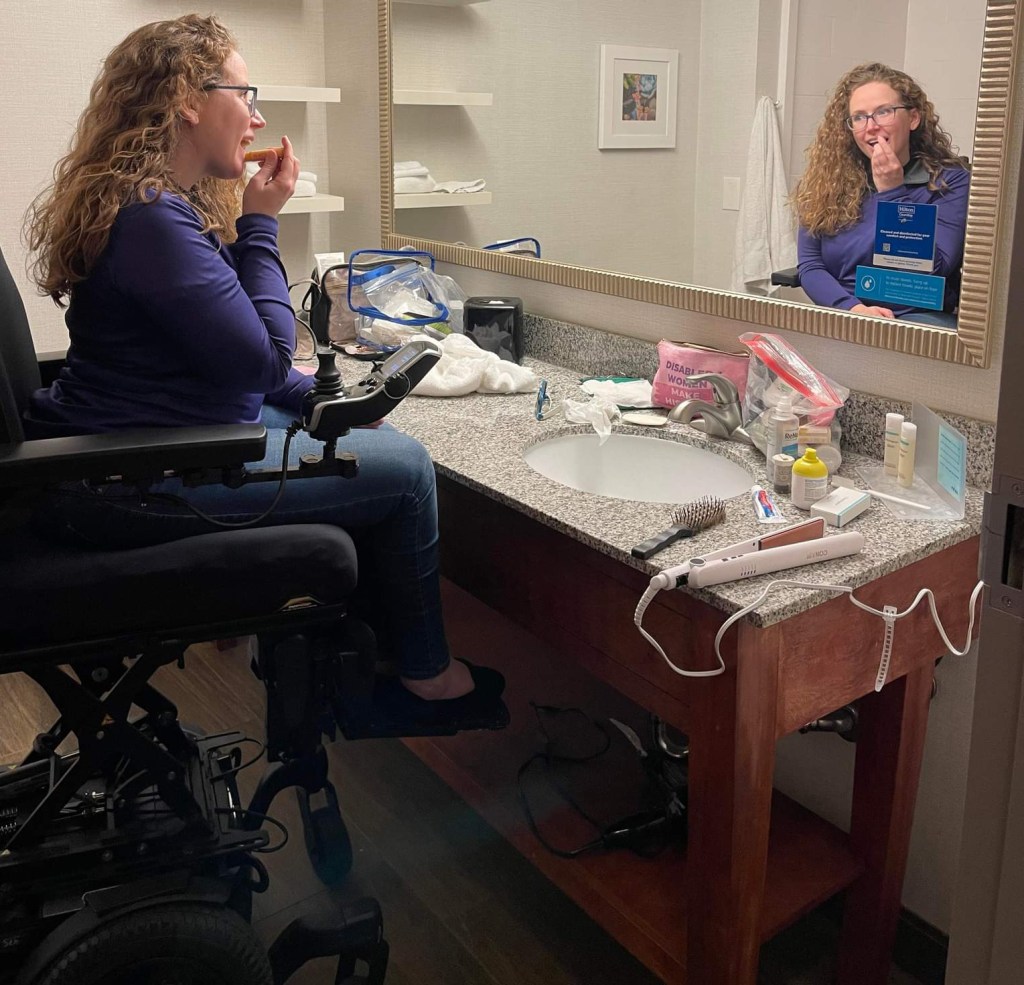
Whether I am in an accessible hotel room or a standard hotel room, the mirrors are often too high for me to see into when sitting at a standard wheelchair height. I often use iLevel when putting on my makeup in the morning and taking out my contact lenses at night.

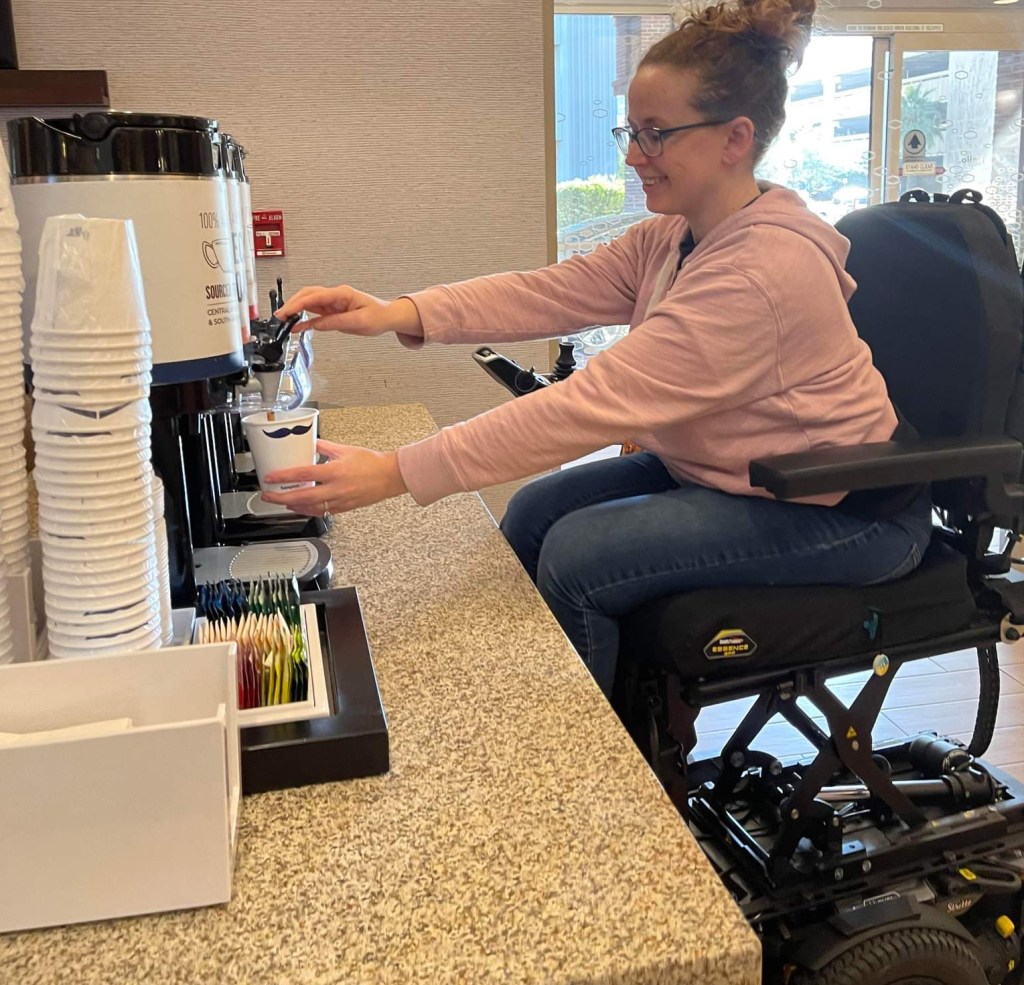
Stephanie gets coffee with the help of her Stretto motorized wheelchair
Stephanie can see into the mirror thanks to iLevel on her motorized wheelchair

Looking Through the Peephole 

In accessible rooms, sometimes the peephole is adjusted to be lower. Yet, when I look out of it, all I can see is a person’s waist. That does not help me at all when I want to know who is knocking at my door. For this reason, I always elevate to use the higher peephole to determine if it is a stranger or someone I know before I open my door. 

Grabbing Coffee and Breakfast

Many hotels I stay at offer complimentary coffee and breakfast. Often, the breakfast and coffee bars are too high to reach from a standard sitting position. I know the staff would help me if I asked, but I prefer to grab my stuff myself. So, I always use iLevel in the morning to grab my cup of joe and a plate to go. 

About Stephanie Woodward: Stephanie is a brand ambassador advisor for Quantum Rehab® and works as a disability rights activist. She has received many awards for helping communities become more accessible, as well as for her actions in fighting for the rights of disabled individuals as it relates to Medicaid and other support services. Click here to learn more about Stephanie.

Return to Wheel Talk

Great Tips for Using Your Power Chair When Announcing

As a PA announcer, I have many tips for announcing, especially while using my Stretto Power Wheelchair with iLevel® technology. My iLevel Power Chair has changed the game for me when it comes to announcing. So, I want to share with others how you can use your power wheelchair effectively when announcing sports, performing or public speaking.  

The Best Way to Hold the Microphone

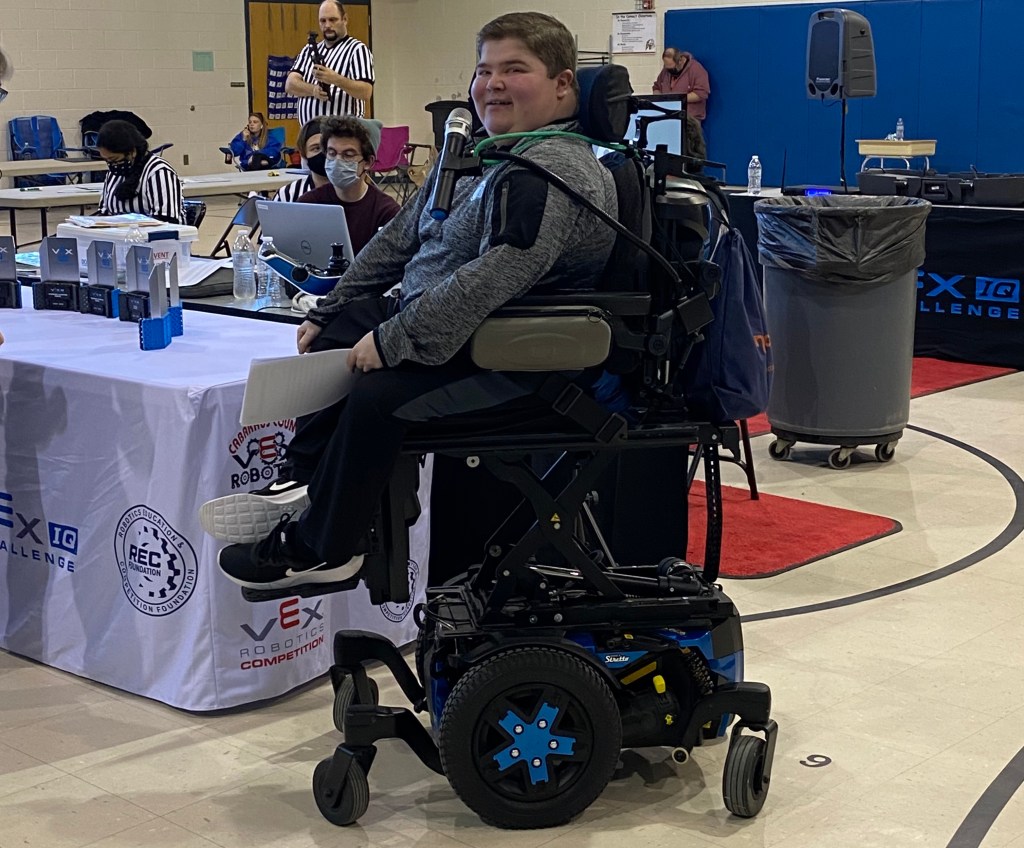
The first tip is to use your power wheelchair to hold your microphone. Currently, I don’t have much strength in my arms, so holding a microphone for countless hours is hard to do. I have a mic stand which hooks onto the back and wraps around my power chair so I can announce without the physical strain. My Stretto serves as my arms and has made the announcing process easier. If you cannot buy modifications through Amazon or other online stores, putting your microphone in your cupholder is another option.

Use Power Seat Elevation on Your Wheelchair

My second tip is to use iLevel when observing the action. The primary sport I announce is robotics, so being able to elevate to see the fields where the competition is has been a game-changer. My Stretto with iLevel allows me to be in the action by having a front-row seat to the festivities.

When I announced women’s soccer in high school, the press box had a long desk that was hard to see over when I was in the lowered position. So, I elevated above the desk using iLevel and was right back in the game.

Maneuver Your Wheelchair to See Everything

Bryson in his Stretto Power Chair

My last tip is to use iLevel to efficiently maneuver and position to view the activities. When announcing robotics, we usually have four fields operating simultaneously. So, having the ability to turn my wheelchair a full 360 degrees allows me to see multiple areas at once. This has made announcing easier and more fun because I can report on two matches at the same time. If one team isn’t scoring as much, I can see what else is going on by switching between matches.

These tips have been developed through trial and error, yet finding what works is critical. I no longer worry about my arms giving out from the stress of holding a microphone. Announcing has become a passion of mine. iLevel has allowed me to continue to live fully and independently by doing what I love.

About Bryson Foster: Bryson is a Friend of Quantum and lives in North Carolina. He advocates and raises funds for the development of treatments for muscular dystrophy. He loves sports and cheers for his favorite basketball team, the North Carolina Tar Heels. Click here to learn more about Bryson.


For more great blogs from our brand ambassadors and Q Roll Models, visit lifeatilevel.com today!

Return to the Life At iLevel page

Occupy Your Mind: Great Indoor Hobbies for Wheelchair Users

I feel it’s important to have hobbies and interests, find new ways to occupy your brain with stuff. Hobbies or sports that get you thinking or moving are great options. For me, I like to play video games, watch TV and movies. It’s how I learned to act! Watching TV and movies was great research for me. Here are some other activities I enjoy.

Playing Wheelchair Rugby

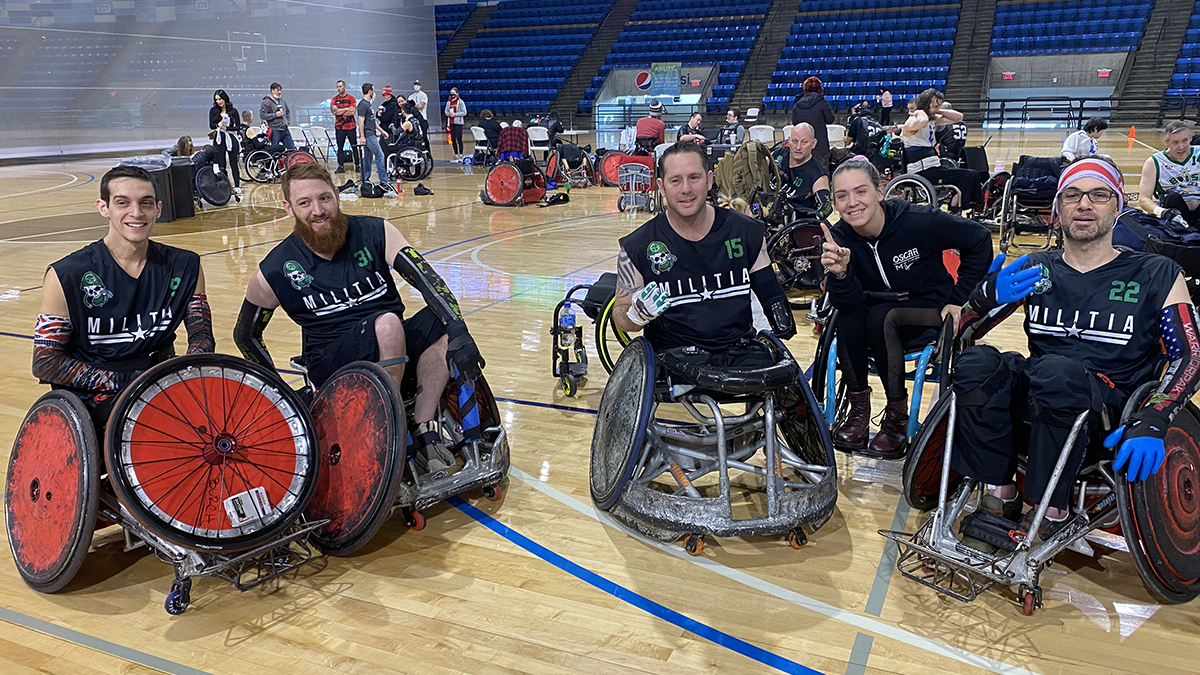
I really enjoy playing wheelchair rugby. I’m a part of a team called Oscar Mike Militia. It’s my rookie season but I’m having a lot of fun. The game is very physical. When we play wheelchair rugby, we use special chairs that are designed to be tough. We usually end up ramming the crap out of each other.

Growing Bonsai Trees

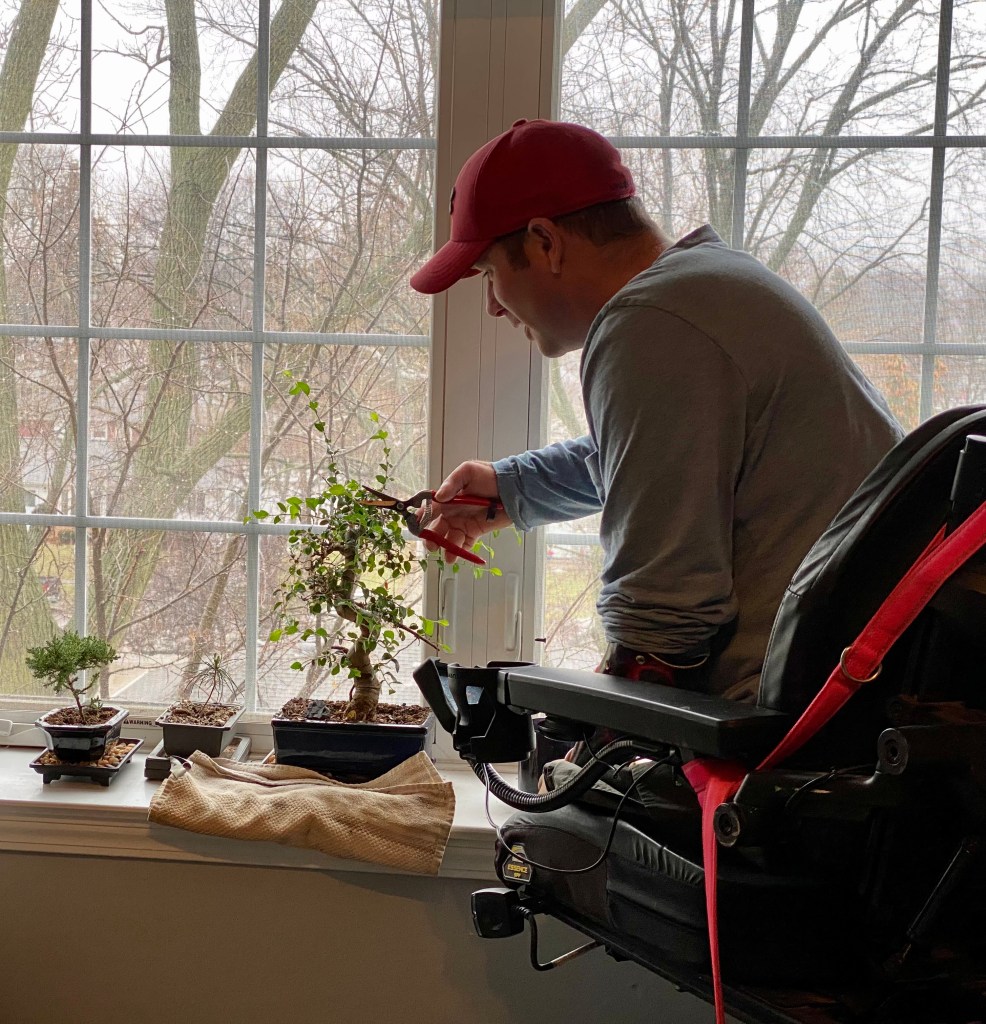
Last year, I took on a challenge to grow some bonsai trees. A bonsai tree is a Japanese art form where you grow small trees in containers that mimic the size, shape and scale of real trees.  They are so cool! A bonsai tree can be passed from one generation to the next, like a family heirloom. The trees are so intricate and small. You can shape them however you want, which is really cool. For the last year, I’ve been raising one of my own and it keeps me engaged, putting my mind at work. When you occupy your mind, you tend to feel a lot better. You feel accomplished. So, I suggest or challenge you to do something that occupies your mind.

About Bryan Anderson: Bryan grew up and resides in Illinois. Injured by an IED in October 2005, Bryan is one of the few triple amputees to survive his injuries in Iraq. He is an ambassador for the Gary Sinise Foundation and a spokesperson for USA Cares, which is focused on assisting post 9-11 veterans. Click here to learn more about Bryan.


For more great blogs from our brand ambassadors and Q Roll Models, visit lifeatilevel.com today!

Return to the Life At iLevel page

Finding New Ways to Express My Art After SCI

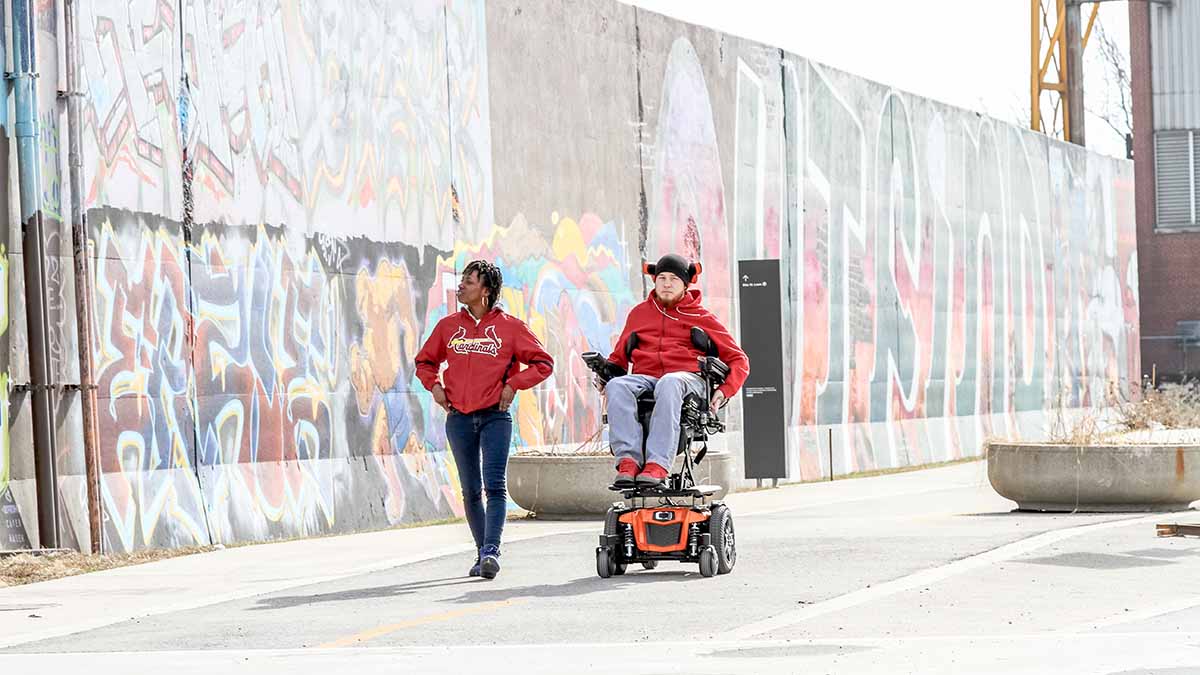
I’ve been doing graffiti actively for over 20 years. Most of that time was before my accident. Today, I am a C3 and C4 quadriplegic. I use a power chair with iLevel® technology for mobility and to maintain my independence.

How I Got into Graffiti Art

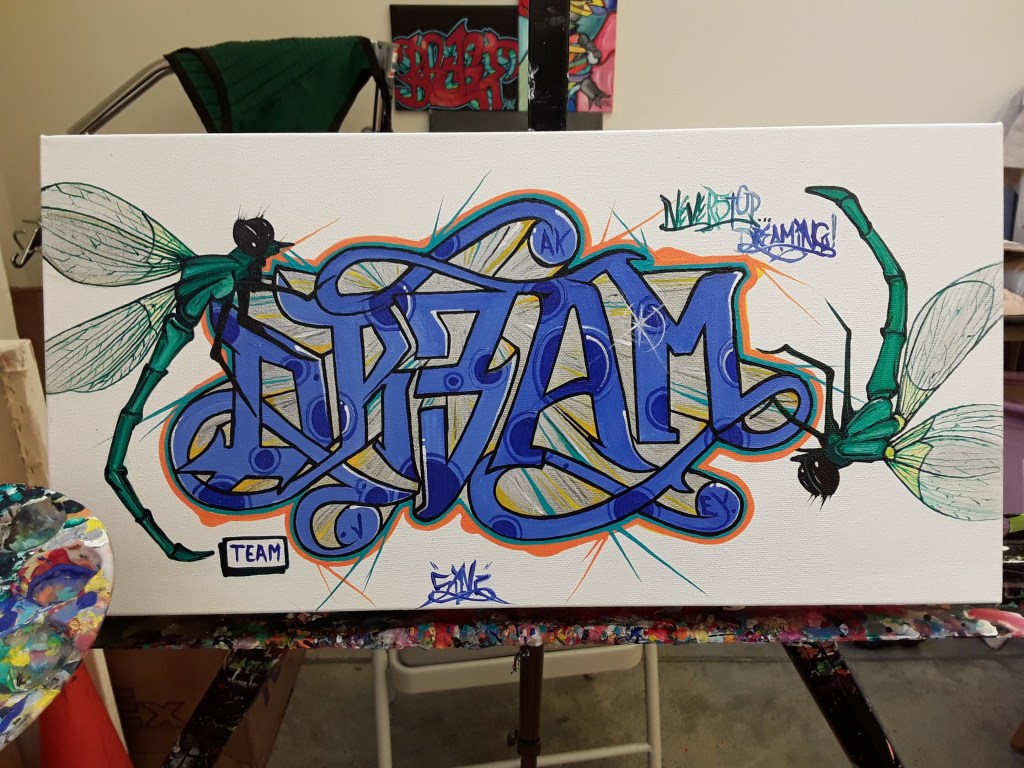
You may know how I originally got into graffiti from previous blog posts. I started off with sketching with my hands and learned how to shape letters. I discovered the different traits of graffiti through other people’s experiences. From there, I started to develop my own style. I learned how to incorporate letters, colors and other styles to make my tag stick out. This way, people know who it is when they see your art.

Creating Graffiti with Spray Paint

Controlling spray paint is not like any other feeling. You can manipulate it, blend it with other colors. Plus, there’s ways you can make your own caps. Now, you can buy any kind of cap you want for spray paint cans. Today’s colors are so much vibrant compared to what it was when I was younger.

Mouth Painting with a Brush vs. Spray Paint

Fast forward to after my accident. I had to relearn how to sketch and paint. I started using a paintbrush for the first time on canvas. This was a different texture, a different kind of paint and just a whole new world for me. It’s so different from spray paint. Now, don’t get me wrong. I’m so appreciative for my abilities and being a mouth painter. I’m still learning, even after 12 years. Unfortunately, mouth painting doesn’t feel the same as spray painting. Yes, I can mix and manipulate colors but it doesn’t have the same feel. A spray can has so much more grace that can create shapes in the sprays. There’s nothing else like it.

At the end of the day, if it wasn’t for my love for graffiti, sketching and putting in the work, and then upgrading to spray paint, I would never have found a way to sketch and paint with my mouth. So, if it wasn’t for my past, I would not be able to continue doing what I love to do.

About Jesse Cuellar: Jesse is an artist and a brand ambassador for Quantum Rehab®. An accident left him paralyzed from the neck down, so he uses his mouth to paint and expresses himself through his art. Jesse lives in St. Louis, Missouri, and enjoys painting and hanging out with his friends. Click here to learn more about Jesse.

We’re App-solutely Excited!

Pride Mobility and Quantum Rehab have released an update to the PQ-365 app that offers new features to help providers and therapists learn, save time and provide feedback.

New features include:

  • Education area: Register for in-person or virtual events and continuing education courses, and access the Pride Learning Institute.
  • Quick Tips search bar – One tap keyboard display: Directly selecting the search bar or selecting one of the Quick Tips makes the cursor and keyboard active for text input, reducing clicks.
  • Serial number/order tracking screen quick search: A quick search function in serial number/order tracking results allows the search for a specific component. Select the complete part assembly (invoiceable) or the individual part item (serviceable).
  • User survey: Lets users submit valuable feedback.

The PQ-365 app is available for download via the App Store and Google Play.

Healthy Eating When You Have a Disability

If you live in the northeast, from December until March, it is very cold. Normally, my goal is to stay warm. I don’t really go outside the house much if I’m not snow birding in Florida. If I am up north at my parents’ house in New York, I make a pact with myself to make sure that I take care and put myself first by watching what I eat.

Making Good Decisions About Food

several fruits in brown wicker basket
Photo by PhotoMIX Company on Pexels.com

During the winter months, it is so easy for us to make really bad decisions when it comes to food. Usually, I stick with a strict eating regimen: I only have bread twice a week, I limit my carbs and I try to eat things with high fiber, like fruits and vegetables. When I do eat healthy, I have a clear mind and I notice a difference with how I move and transfer. Growing up, I never really paid much attention to this. I ate whatever I wanted. As I got older, I noticed that when I eat healthy, it improves my health, both physically and mentally.

Food Affects How We Feel and Move

Whether you have a disability or not, I’m sure you’ve had a day where you eat a very carb-inducing meal and afterwards you fall asleep or you feel sluggish the next morning. There’s nothing wrong with that. The trick is to find balance. Unless you were born with some incredible gene where you can eat as many calories as you want and you don’t put on any weight, it’s a good idea to watch what you eat. If you have a disability and want to make a change to your eating habits, I highly recommend putting yourself first. Try eating healthy for a while and see how it affects your daily life over time. I’m not saying that you need to give up everything that you love. You can eat those things too, but in moderation. You probably aren’t doing much physical activity in the winter because when it’s 20 degrees out, no one wants to be outside.

By watching what you eat, you can help yourself feel better, both physically and mentally. If you have a disability, eating right can make a big difference when completing transfers and other activities that may be challenging for you otherwise. One more thing: make sure you always take at least one day a week where you treat yourself and indulge for all your hard work.

About Josh McDermott: Josh is a brand ambassador for Quantum Rehab®. He is a public speaker and has served as a goodwill ambassador for the Muscular Dystrophy Association. Josh lives in New York and loves to travel. Click here to learn more about Josh.


For more great blogs from our brand ambassadors and Q Roll Models, visit lifeatilevel.com today!

Return to the Life At iLevel page

Taking an Awesome Road Trip with My 4Front 2

I’ve always been a lover of adventure and one of my favorite things to do is travel. Prior to the pandemic, I traveled on planes for work or leisure at least once a month, and sometimes, more than that. As a result, I’d grown adept at navigating my way through an airport, from security all the way to the doors of the plane. Through trial and error, advice from friends, and a ridiculous number of damaged wheelchair reports, I also became very comfortable with flying. I can explain to airline employees how to handle my power wheelchair. This eliminates or at least reduces the potential damage to my power wheelchair.

How the Pandemic Affected Traveling

Then COVID-19 hit, and my travels halted. Both work and leisure plans were canceled and many of us were left with an unsatisfiable itch to go new places and try new things. For over a year, many of us stayed glued to our homes or very close to them. After some commiserating with friends, we realized we needed to take a break from our stressful day-to-day lives. We decided to reinstitute an activity that I hadn’t enjoyed in years: the ROAD TRIP. For us, packing our bags and finding ways to adventure while social distancing was just what we needed!

Hitting the Road with My 4Front® 2 Power Chair

So, I rolled into my wheelchair-accessible van with my 4Front® 2 Power Chair and hit the road! We traveled along the West Coast over the course of a few months. It has been the lifesaver I’ve needed, with all that is happening in the world.

We’ve adventured everywhere, from the snowy mountains of Sedona, Arizona, to the beach waters of Oceanside, CA. Having the ability to recline and elevate my legs in my 4Front 2 Power Wheelchair as a passenger makes trips truly enjoyable. It’s even great for napping! Traveling by vehicle with my Quantum Power Wheelchair has ensured I can maintain my sense of adventure while maintaining my comfort and independence.

About Andraéa LaVant: Andraéa is a disability consultant and worked as an impact producer for Crip Camp, a feature-length documentary on Netflix. Andraéa lives in Tempe, Arizona, and uses a 4Front 2 Power Chair.


For more great blogs from our brand ambassadors and Q Roll Models, visit lifeatilevel.com today!

Return to the Life At iLevel page

Being Disabled and in Love

Love, dating and relationships are hot topics in and outside the disability community. There are many questions, concerns and emotions conveyed, but the bottom line is that people with disabilities are worthy of love just like anyone else.

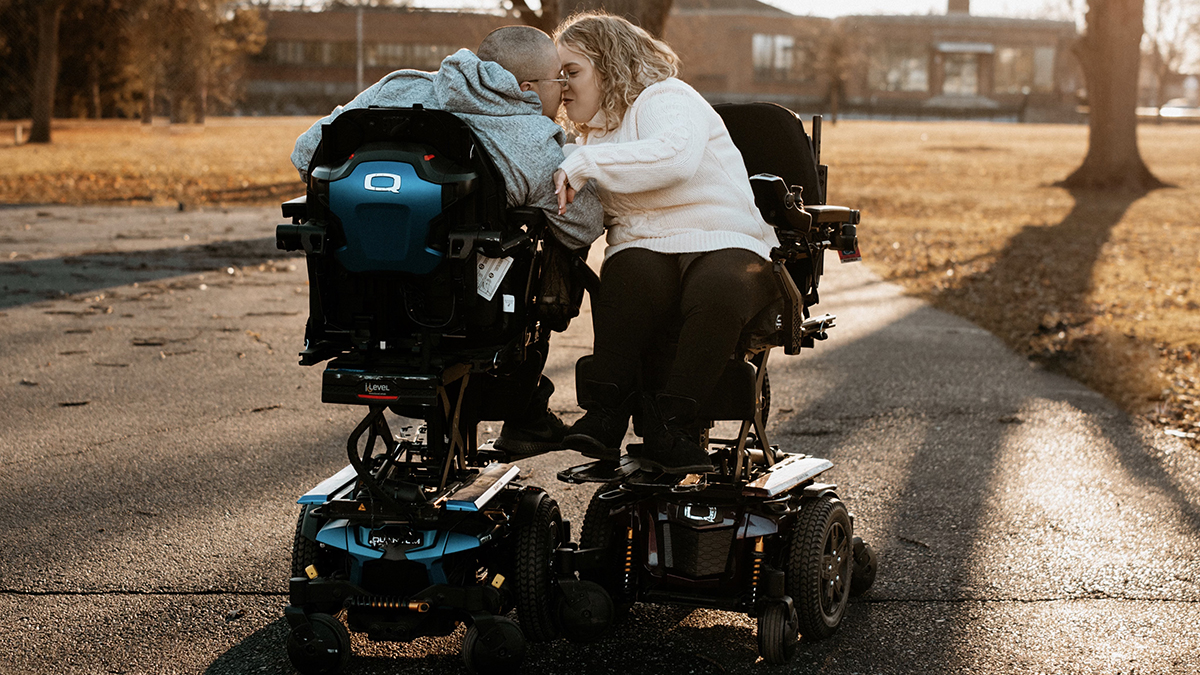
I met my fiancé while in high school. Before him, I never wanted to date another disabled person. Growing up, I did not really know anyone else like me, as all of my friends and classmates were non-disabled. I spent most of my childhood convincing myself and everyone that I was just like everyone else and not one of “those people.” I tried my hardest to separate myself from my disability. 

Falling in Love and Finding Acceptance

When I started high school and the senior boy who had cerebral palsy and used a wheelchair liked me, I was not interested. I convinced myself that being with another disabled person would be too hard and that it would never work. I told David we should just remain friends. We continued texting every day for months. 

Throughout our conversations we shared things with each other that we never told anyone else, connecting on things that made us often feel alone. We found full acceptance in one another. Together, we both agree that being in a relationship with another disabled person is the hardest thing we both have done. 

Dealing with Barriers

We have to consider our personal barriers, as well as other person’s personal barriers, which may be different from our own. Our date nights are not as intimate as we wish. We lack the privacy or even respect other couples receive. Some people viewing our relationship as childlike or insignificant. Yet, I would not change our love for the world. We fully accept one another, seeing every side of the other person and choosing to love regardless. There have been many awkward and embarrassing moments that turned into private jokes. We celebrate our accomplishments, whether big or small. Helping each other is a team building exercise and we can have our bad days with no explanation. Most importantly, our love for one another taught us to love ourselves.

About Isabella Bullock: Isabella, or Izzie for short, is an employment specialist for the Center of Independent Living. She is an iced coffee enthusiast who enjoys getting lost in a good book. Click here to learn more about Isabella.


For more great blogs from our brand ambassadors and Q Roll Models, visit lifeatilevel.com today!

Return to the Life At iLevel page